When ExxonMobil recently advised President Donald Trump that Venezuela remains “uninvestable,” the company was not making a political judgment. It was offering a commercial one. Despite some of the world’s largest proven oil reserves, Venezuela’s political fragmentation, economic mismanagement, sanctions exposure, and payment risk continue to outweigh the attraction of its geology.
That assessment provides a useful frame for Libya today.
Libya, like Venezuela, is a resource-rich country, producing a higher-quality oil that is light and sweet in comparison to the heavy “sour” oil that Venezuela produces. And in principle, Libya could produce far more than it does. Libya’s National Oil Corporation (NOC) has long cited an installed capacity of roughly 1.6 million barrels per day (bpd) and has periodically pointed to the potential for higher output with sustained investment. In practice, however, Libya’s post-2011 experience has demonstrated how hard it has been to translate Libya’s geological potential into successful new energy production involving even the most committed international oil companies (IOCs).
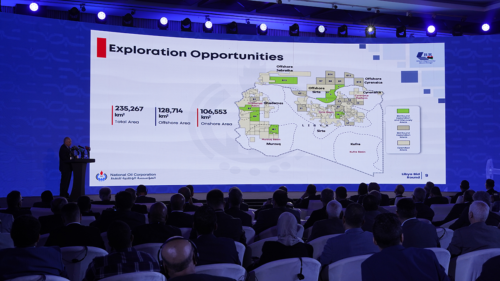
That difficulty has not prevented renewed interest. Libya’s first exploration bid round in more than 17 years has drawn strong international attention, with the NOC offering 22 onshore and offshore areas under production-sharing terms and reporting interest from foreign companies. Several major operators have resumed or expanded upstream engagement: Eni has restarted offshore exploration drilling after a multi-year hiatus, BP and Shell have signed agreements with the NOC to study hydrocarbon potential at multiple oilfields, and a broad set of international firms, including BP, Chevron, ExxonMobil, Eni, OMV, Shell, Sonatrach, and TotalEnergies, are qualified to participate in the bid round. On January 24, Libya announced the signing of a 25-year development deal with TotalEnergies and Chevron that would see the French and American majors invest an estimated $20 billion in the North African country to boost oil production by as much as 850,000 bpd. Additional deals may be in the offing as well. Speaking during the Libya Energy & Economic Summit over the weekend, NOC Chairman Masoud Suleiman said the results of the new bid round would be announced on February 11.
The question facing IOCs is not whether Libya has oil and gas to develop. It does. The question is whether the country’s current political, economic, and security conditions allow that potential to be converted into reliable returns — and whether near-term changes could alter that calculation.
Oil and fuel as political instruments
Libya’s political fragmentation remains unresolved. The country continues to operate under competing centers of authority, with an interim government in Tripoli whose mandate expired years ago, a rival eastern administration aligned with General Khalifa Hifter, and national institutions that are formally unified but routinely constrained by political interference. These continuing divisions shape fiscal behavior, security dynamics, and control over revenue.
The NOC continues to be the sole authority for hydrocarbon contracting under Libyan law. Foreign companies must contract exclusively through it. Any alternative creates acute legal, operational, political, and reputational risk. But the NOC’s ability to function as a credible counterparty depends on budgets, cash flow, and institutional protection. These all are currently lacking.
In January 2026, NOC Chairman Suleiman stated publicly that the corporation had received no approved operating budget throughout 2025 and that debts to service companies and suppliers had continued to accumulate. The situation does not reflect a technical problem, but rather political decisions by rival authorities to retain leverage over the country’s primary revenue-generating institution. In Libya’s past, mounting arrears have been among the clearest leading indicators of deferred maintenance, service-company pullbacks, and subsequent production decline.
Headline crude production figures illustrate both resilience and fragility. Average crude output rose to roughly 1.37 million bpd in 2025, up from approximately 1.14 million bpd in 2024 and the highest annual average in a decade. That recovery followed a dramatic collapse in 2020, when production fell below 400,000 bpd during the civil war triggered by Hifter’s failed attempt to seize Tripoli, backed by Russia, the United Arab Emirates, Egypt, and, more quietly, France, and reversed only after Turkish military intervention.
The lesson for investors is not simply that production can recover. It is that Libyan oil output remains vulnerable to political and military decisions unrelated to commercial performance.
Disruptions in Libya’s oil and fuel systems are not incidental. Armed groups, local communities, political factions, and institutional actors have routinely blocked fields, pipelines, export terminals, fuel imports, or domestic distribution to extract concessions, signal dissatisfaction, or renegotiate access to patronage. For example, in August 2024, rival political factions used control over oil production and export infrastructure as leverage in a dispute over central bank authority, leading to the shutdown of multiple oilfields and export terminals, with more than half of Libya’s output going offline for weeks. Exports at major ports including Es Sidra, Ras Lanuf, and Zueitina were halted as eastern authorities threatened closure until political demands were met, underscoring how energy infrastructure is weaponized in domestic disputes.
The threshold for disruption is often low. Delayed payments, exclusion from revenue streams, or perceived disrespect can be sufficient. On the production side, even limited local control can halt output. On the consumer side, fuel shortages can be engineered or prolonged through diversions of imports, storage, and distribution, even when aggregate supply exists. The pattern is systemic rather than episodic.
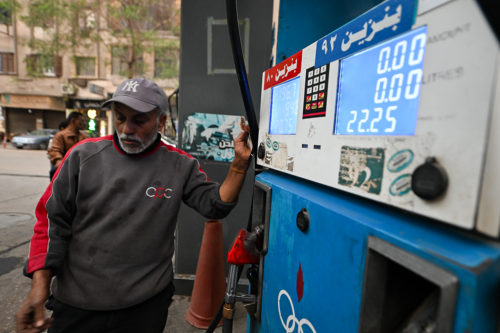
In 2025, investigative reporting by the anti-corruption NGO The Sentry found that Libya’s subsidized fuel imports — necessitated by insufficient and unreliable domestic refining capacity — were widely diverted into smuggling networks controlled by armed and politically connected actors, with an estimated $6.7 billion worth of fuel siphoned off in 2024 alone. While the report does not quantify the precise share of imports diverted, it characterized the scale as systemic rather than marginal, describing the phenomenon as a “major national crisis.” These diversions substantially reduced the volume of imported fuel available for legitimate domestic consumption and contributed to chronic shortages and elevated prices in the internal market, even as gross import volumes remained high.
Gas as an early warning signal
Gas production provides a particularly clear indicator of systemic stress. Unlike crude oil, gas requires continuous maintenance, reliable power, and sustained funding. When those conditions weaken, gas output is often the first casualty.
Libya’s gas exports to Italy via the Greenstream pipeline fell by roughly 30 percent in 2025, declining to about 1.0 billion cubic meters from approximately 1.4 billion cubic meters the year before, despite far higher theoretical capacity. The decline reflected underinvestment, infrastructure degradation, power constraints, and fiscal stress rather than geological factors.
Weakness in gas production also has domestic consequences. Gas supplies power generation and petrochemical facilities, meaning reduced output directly contributes to electricity shortages and broader economic disruption. When gas falters, it signals that there are deeper institutional and fiscal problems affecting the energy sector as a whole.
The economic constraint: Currency, corruption, and parallel states
Libya’s fiscal and monetary pressures threaten the arrangements that currently sustain both western and eastern authorities. With oil prices hovering in the $60 per barrel range, hydrocarbon revenues are insufficient to cover public wages, fuel imports, and foreign currency demand simultaneously.
The imbalance is now stark. On January 13, 2026, the Central Bank of Libya (CBL) reported that oil revenues deposited so far in January totaled $287 million, while foreign currency sales during the same period reached approximately $1 billion. Some of that outflow likely reflects accelerated food and commodity imports ahead of Ramadan. Roughly three-quarters of Libya’s food is imported. But the scale of the gap is striking and over time such mismatches can create mounting risks for creditors. According to the CBL, as of mid-January 2026, outstanding letters of credit from 2025 amounted to roughly $4.3 billion.
Currency markets have responded accordingly. During January 2026, the parallel exchange rate briefly reached 9 Libyan dinars to the dollar, signaling expectations of further devaluation and tightening access to foreign exchange. A week later, the CBL devalued the Libyan dinar by about 14.7 percent, citing ongoing fiscal pressures, political division, and weakening oil revenues, with the official exchange rate moving to approximately 6.37 dinars per US dollar. This followed the previous devaluation by the CBL in April 2025 that reset the official rate at approximately 5.6 Libyan dinars per dollar after years of defending an unsustainable peg.
These pressures cannot be understood without reference to Libya’s post-2014 fiscal history. For years, eastern authorities financed spending through counterfeit dinars printed in Russia without authorization from the Tripoli-based central bank, enabling unconstrained expenditures outside any unified fiscal framework. To prevent complete monetary fragmentation, the unified CBL later absorbed much of this currency, monetizing a parallel fiscal state.
At the same time, two governments have co-existed, cooperated, and competed, both drawing on oil revenues and central bank liquidity to sustain patronage networks. Corruption is not incidental to this system; it is structural. Multiple exchange rates, discretionary letters of credit, fuel subsidies, and barter-style arrangements have transferred vast resources to politically connected actors, often with little corresponding delivery of goods or services and fueling inflation.
For foreign investors, the implications are direct. Payment risk is not hypothetical. The CBL has historically delayed or withheld payments to foreign contractors for political and liquidity reasons unrelated to contract performance. Unless addressed, this payment risk alone is sufficient to disqualify further investment by major IOCs.
Infrastructure decay and compounding risk
Libya’s infrastructure is aging, under-maintained, and increasingly fragile. The ongoing degradation includes not only oil and gas facilities, but also electricity generation, transmission networks, water systems, ports, and logistics corridors. Years of deferred maintenance, politicized budgeting, and fragmented authority have led to unplanned outages, environmental catastrophe, such as the September 2023 dam collapse that killed more than 4,300 Libyans and destroyed much of the eastern port city of Derna, and sharply higher future capital requirements.
Energy infrastructure does not fail in isolation. Oil and gas production depends on reliable power, functioning ports, intact pipelines, and predictable logistics. When electricity supply becomes erratic, processing facilities shut down. When ports or storage facilities degrade, exports back up. When water systems fail, workforce stability and public health suffer. Each failure compounds the next.
For Libyans, unreliable electricity and water impose daily economic and social costs, fueling frustration, protest, and political volatility. For investors, the implications are operational and financial. Infrastructure decay undermines assumptions about uptime, cost control, and project timelines, and increases exposure to force majeure events that are formally contractual but practically unrecoverable.
In this environment, energy projects cannot be insulated from systemic risk. Investors must assume that weaknesses in electricity, water, transport, and public services will increasingly shape operational outcomes. The Libyan government needs to invest in this infrastructure to meet the needs of its own people. Left unremediated, these risks also shape outcomes for foreign operators.
Why political support is not enough
External political engagement — whether by foreign governments or the United Nations — cannot by itself lower the risks of investing in Libya in the absence of domestic institutional reform.
The UN-facilitated political process remains stalled, constrained by unresolved disputes among Libyan institutions, most notably between the House of Representatives and the High State Council. There is little reason to believe this process will yield tangible political outcomes in the foreseeable future, and even less reason to expect it to resolve Libya’s economic or commercial constraints.
More importantly for investors, the UN mission has played only a limited facilitative role in Libya’s economic governance. During some periods, the UN Support Mission in Libya (UNSMIL) has supported specific processes, such as central bank audit and reunification efforts and crisis consultations. But it has not been an implementing actor on fiscal policy, budget execution, payment discipline, or exchange-rate management, which ultimately play a large role in determining whether energy investments are viable. When institutions are weak, operating budgets uncertain, payments discretionary, corruption entrenched, infrastructure degrading, and security contingent, political encouragement alone does not make projects bankable.
In some cases, political signaling can worsen outcomes. It can raise expectations without improving execution, encourage Libyan actors to hedge rather than commit, and prompt foreign firms to preserve optionality rather than deploy capital. The result is a familiar pattern: memoranda of understanding rather than final investment decisions; feasibility studies rather than capital commitments; announcements rather than sustained spending.
For Libya, this gap between political rhetoric and commercial reality has become structural. Until the underlying economic mechanics change, political support, however well intentioned, is unlikely to alter investment behavior, except where a sponsoring foreign government is prepared to act as a commercial backstop by absorbing or subsidizing risks that the Libyan system itself cannot credibly manage.
The instability factor
Libya’s current level of oil production has been sustained by a fragile military equilibrium, shaped in part by external involvement but not reducible to it. Since Turkey’s intervention to prevent Hifter from seizing Tripoli in 2020, Ankara has acted to deter renewed large-scale offensives by either side. That posture has helped constrain the conflict and has reduced the likelihood of an outright military resolution. It has not, however, resolved Libya’s underlying political or institutional fragmentation, nor has it eliminated other sources of instability. Internal political shocks, leadership changes, militia realignments, or shifts in external calculations could all disrupt the current balance even without a Turkish withdrawal.
For investors, uncertainty about Libya’s longer-term political stability remains decisive. The military equilibrium that has allowed continued production and exports does not rest on domestic institutions capable of enforcing contracts, resolving disputes, or providing predictable security. It is contingent, external, and subject to recalibration. Any significant change in Libya’s internal political configuration, or in the posture of key external actors, risks reviving uncertainty over territorial control, contract enforceability, and asset protection. In that sense, the same military conditions that have helped sustain production also reinforce Libya’s investability problem. Some stability now exists, but it is partial, potentially reversible, and could prove insufficient to anchor long-term commercial commitments.
What would change the calculation
Near-term steps could improve Libya’s investability at the margin, not by eliminating risk, but by reducing uncertainty in ways that matter to commercial decision-making.
First, a credible, approved operating budget for the NOC, paired with a transparent and time-bound plan to clear arrears to service companies, would materially reduce operational risk. Regularized budgeting would stabilize contractor relationships, enable preventive maintenance, and reduce the likelihood that arrears translate into sudden service withdrawals and production losses. For investors, the central issue is not the absolute level of debt, but whether payment obligations are predictable and honored.
Second, predictable payment mechanisms for foreign contractors would address one of Libya’s most persistent deterrents to investment. Ring-fenced escrow structures funded directly from oil revenues would reduce discretionary interference in payments and allow companies to price risk more clearly. Without insulation from political liquidity pressures, even technically successful projects remain commercially fragile.
Third, exchange-rate reform is unavoidable. Maintaining a fixed official rate while rationing access to dollars transfers rents to politically connected importers, entrenches corruption, distorts prices, and drains public resources. Moving to a floating exchange rate would collapse much of the arbitrage that now dominates Libya’s political economy. Combined with replacing generalized fuel and commodity subsidies with direct cash stipends to households, such reform would redirect resources away from rent-seekers and toward ordinary Libyans, while restoring fiscal transparency and policy credibility.
Fourth, clarity around licensing and contract authority is essential. While the NOC is the legally mandated body for hydrocarbon contracting, other Libyan officials have recurrently blurred lines of authority and reopened settled decisions. Investors need confidence that licenses and contracts will not be revisited, contested, or renegotiated as political leverage shifts.
Finally, visible improvements in gas infrastructure, power generation, and basic utilities would signal institutional capacity. Gas output, electricity supply, and water systems are not peripheral to energy investment; they are enabling conditions. Investors will not commit long-term capital if the systems that support operations are visibly deteriorating or dependent on crisis management.
None of these steps require elections or a comprehensive political settlement. All of the measures outlined require political restraint, institutional discipline, and a willingness by Libya’s most influential political actors to reduce discretionary control over revenues and rents — conditions that may be harder to secure if meaningful foreign investment proceeds in the absence of reform.
Tests of seriousness
For US companies considering re-entry, several observable indicators will matter far more than rhetoric.
Are service companies being paid on time, with arrears stabilizing or declining rather than continuing to accumulate? Are gas exports and domestic gas supply stabilizing quarter over quarter, or continuing to deteriorate? Is the gap between official and parallel exchange rates narrowing in a sustained way? Are letters of credit processed and settled predictably rather than selectively? Are fuel shortages in Tripoli easing, or becoming more frequent and more politicized? Are new licenses and approvals honored consistently across political divides? And when disputes arise, are they resolved by institutions — or by shutdowns?
Until these indicators move decisively in the right direction, Libya is likely to remain a familiar category for energy executives: geologically attractive, politically supported, but commercially constrained.
Conclusion
Libya is not Venezuela. Its reserves are more valuable and easier to develop, its oil is of higher quality, and its NOC retains a level of technical competence that Venezuela now lacks.
But the comparison remains instructive. Resource wealth does not equal investability. And political enthusiasm does not overcome structural risk.
For now, Libya remains a country where existing operators struggle to extract consistent value, and where new entrants face barriers that political backing alone cannot resolve. Whether that changes will depend less on announcements and diplomatic signaling than on whether Libya’s institutions can do what investors ultimately require: pay on time, honor contracts, maintain infrastructure, and keep the lights on.
Jonathan M. Winer has been the United States Special Envoy for Libya, the deputy assistant secretary of state for international law enforcement, and counsel to United States Senator John Kerry. He has written and lectured widely on US Middle East policy, counterterrorism, international money laundering, illicit networks, corruption, and US-Russia issues. He is a Distinguished Diplomatic Fellow at the Middle East Institute.
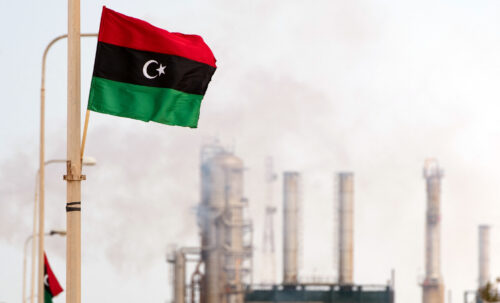
Photo by Hazem Turkia/Anadolu via Getty Images
The Middle East Institute (MEI) is an independent, non-partisan, not-for-profit, educational organization. It does not engage in advocacy and its scholars’ opinions are their own. MEI welcomes financial donations, but retains sole editorial control over its work and its publications reflect only the authors’ views. For a listing of MEI donors, please click here.