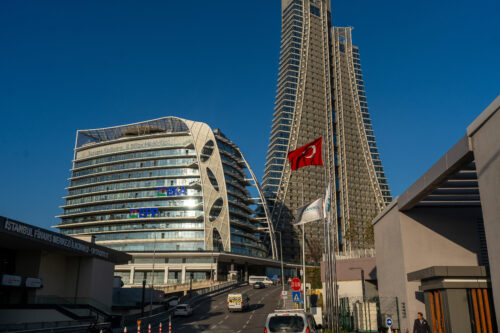
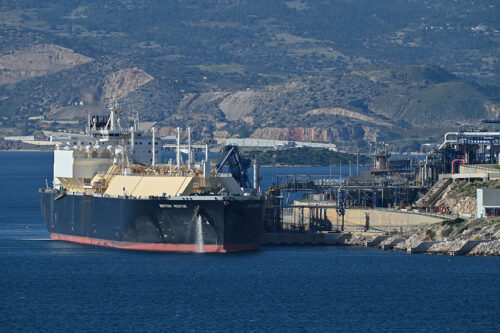
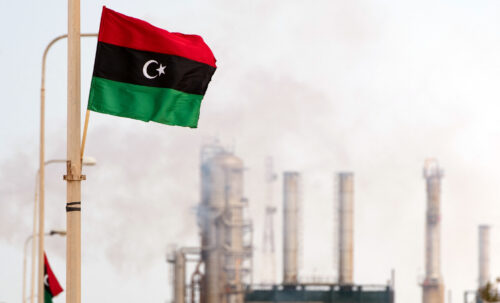
The Eastern Mediterranean holds major strategic potential in the energy security sphere, with massive hydrocarbon fields found off the coasts of Cyprus, Egypt, and Israel promising these countries significant revenue streams as well as abundant natural gas volumes for both domestic and international markets. However, the outlook is significantly more nuanced than it first appears. The geopolitical web of competing claims over these offshore resources remains exceedingly complex, colored by international sensitivities and a shifting configuration of alliances involving three regional players with outside roles in this space — namely, Greece, Libya, and Turkey. And despite the abundance of the energy finds, the technical and economic prospects are less than ideal, undermined by a global supply glut, rising domestic needs in Egypt and Israel, Cyprus’s still-nascent production and export capacity, and decreasing projected demand in Europe.
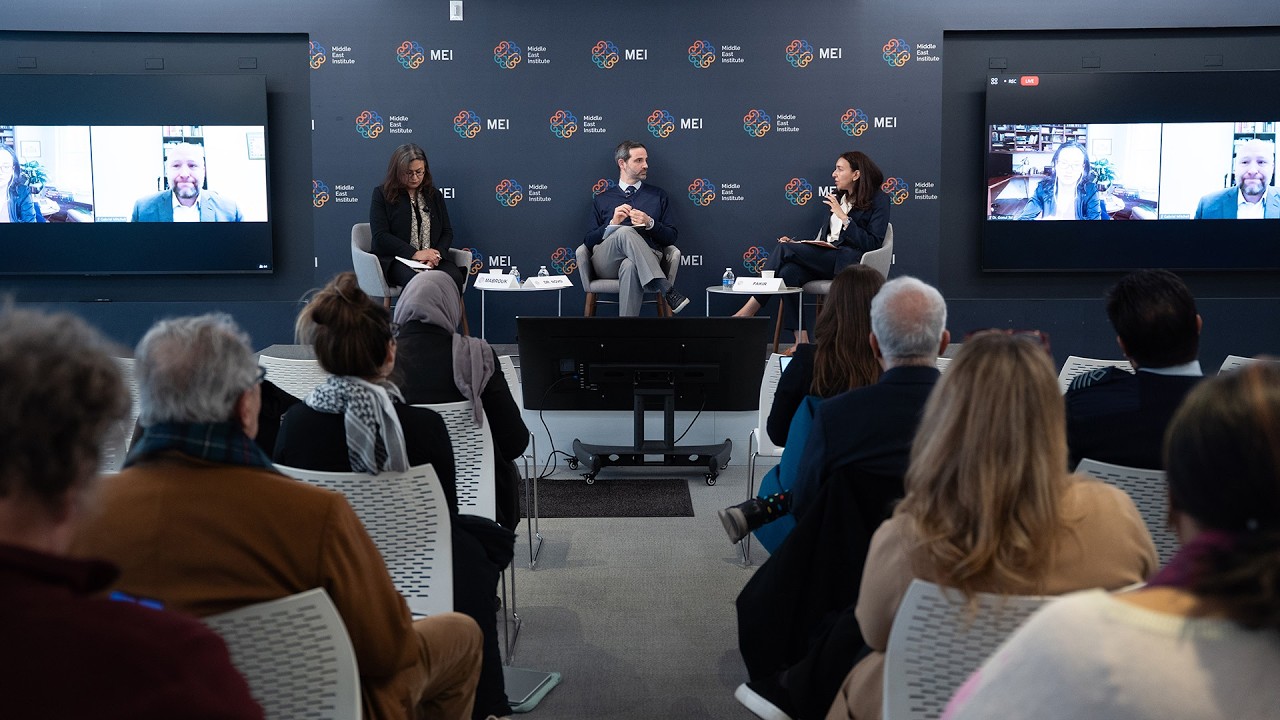
Please join us for this half-day conference exploring the promises and complexities of the Eastern Mediterranean’s energy landscape. The first panel, The Politics of Energy: How Regional Geopolitical Tensions May Affect Energy Exploration and Production, will discuss the role international politics play in energy production and export. The second, The Gas Supply Outlook, East Med Production, Regional Deliveries and New Investment Opportunities, will look at both the technical and investment aspects of the issue.
Event Agenda
10:00 AM – 11:30 AM: Panel 1 The Politics of Energy: How Regional Geopolitical Tensions May Affect Energy Exploration and Production
Mirette F. Mabrouk Senior Fellow, Middle East Institute Gabriel Mitchell Senior Policy Fellow, Mitvim Institute, and Visiting Fellow, German Marshall Fund Dr. Andrew R. Novo Professor of Strategic Studies, National Defense University Dr. Gönül Tol Senior Fellow, Middle East Institute Intissar Fakir (Moderator) Senior Fellow, Middle East Institute
11:30 AM – 12:00 PM Lunch
12:00 PM – 13:30 PM: Panel 2
The Gas Supply Outlook, East Med Production, Regional Deliveries and New Investment Opportunities
Colby Connelly Senior Fellow, Middle East Institute, and Head of Middle East Content, Energy Intelligence Anne-Sophie Corbeau Global Research Scholar, Center on Global Energy Policy, Columbia University Laury Haytayan Director for Middle East and North Africa, Natural Resource Governance Institute Ira Joseph Senior Research Associate, Center on Global Energy Policy, Columbia University Dr. Karen Young (Moderator) Senior Fellow, Middle East Institute, and Senior Research Scholar, Center on Global Energy Policy, Columbia University
Extended Speaker Biographies
Mirette F. Mabrouk is a Senior Fellow at the Middle East Institute, where she focuses on economic development, regional security, and sustainable development issues in the Middle East and North Africa. Prior to joining MEI, Ms. Mabrouk served as the Deputy Director and Director for Research and Programs at the Rafik Hariri Center for the Middle East at the Atlantic Council. She was also a fellow at the Project for US Relations with the Middle East at the Brookings Institution and was based in Cairo, where she was the Director of Communications for the Economic Research Forum (ERF). Ms. Mabrouk also comes from a long career in journalism and is the founding publisher of The Daily Star Egypt.
Gabriel Mitchell is a Senior Policy Fellow at the Mitvim Institute and a Visiting Fellow at the German Marshall Fund. Mitchell is an expert on matters pertaining to energy security, connectivity, Israeli foreign policy, and Eastern Mediterranean geopolitics. He previously covered these topics for think tanks including Mitvim – The Israeli Institute for Regional Foreign Policies and the Hudson Institute, and for Shalem College. He has written widely for publications including Ha’aretz, War on the Rocks, The National Interest, Newlines,and via his Substack newsletter, Invisible Boundaries.
Dr. Andrew R. Novo is a Professor of Strategic Studies at the National Defense University in Washington, DC. An expert in ancient and modern European history and strategic studies, Dr. Novo also teaches in The Johns Hopkins University’s Global Security Studies program and at the Georgetown School of Foreign Service. He is also a contributor to think tanks such as the Atlantic Council, Brookings Institute, the European Institute of the Mediterranean, and Policy Forum Armenia.
Dr. Gönül Tol is a Senior Fellow at the Middle East Institute, where she focuses on Turkish politics, US-Turkey relations, and regional dynamics in the Middle East. A frequent commentator, Dr. Tol has written extensively on Turkish domestic and foreign policy for publications such as Foreign Affairs, The New York Times, Foreign Policy, and TheFinancial Times.
Intissar Fakir is a Senior Fellow at the Middle East Institute, where she focuses on the geopolitics of North Africa and the Sahel. Her work explores the intersection of political, social, and economic trends at both the national and regional levels. She is a member of several advisory groups, including serving on the supervisory board of the Council for Mediterranean Diplomacy (Diplomeds) and as a Board Member of the Global Initiative against Transnational Organized Crime (GI-TOC). Before joining MEI, Ms. Fakir was a fellow at the Carnegie Endowment for International Peace, where she also served as the Editor-in-Chief of Sada, the bilanguage (English and Arabic) Middle East platform.
Colby Connelly is a Senior Fellow at the Middle East Institute, where he focuses on oil and gas markets, liquified natural gas (LNG), aboveground risk, corporate strategy, and the impact of the energy transition on oil- and gas-producing states. He is also the Head of Middle East Content at Energy Intelligence, where he works with the firm’s research and advisory practices. Before joining MEI, Mr. Connelly was a Research Associate at the Arab Gulf States Institute in Washington, where he specialized in the economies of the Gulf Cooperation Council (GCC) region, with a particular focus on national oil companies and domestic energy markets.
Anne-Sophie Corbeau is a Global Research Scholar at the Center on Global Energy Policy at Columbia University’s School of International and Public Affairs. Her research focuses on hydrogen and natural gas. Mrs. Corbeau has over 20 years of experience in the energy industry and is a recognized expert on natural gas. She is the author of many publications focusing on gas, LNG markets, Asia, China, India and Africa, including the book LNG Markets in Transition: The Great Reconfiguration (Oxford, 2016). She is also a member of the Gastech governing body. Prior to joining the Center, Ms. Corbeau was a Senior Leader and Head of Gas Analysis at BP, where she was responsible for advising the leadership team on gas market developments and long-term pricing assumptions.
Laury Haytayan is the Middle East and North Africa Director at the Natural Resource Governance Institute (NRGI). Ms. Haytayan sets NRGI’s strategic trajectory in the Middle East and North Africa and oversees the implementation of programs and projects. Prior to becoming Regional Director, Ms. Haytayan was NRGI’s MENA Senior Officer in charge of media and parliamentary capacity building programs. She played a significant role in establishing the Middle East and North Africa Regional Extractive Industries Knowledge Hub in Lebanon in 2014. She has written several publications on the subject and regularly comments in the media on oil, gas, and energy in Lebanon, the East Mediterranean, and the wider region.
Ira Joseph is a Senior Research Associate at the Center on Global Energy Policy at Columbia University. Until 2022, he was the Global Head of Global Generating Fuels and Electric Power Pricing at S&P Global Platts, with over 30 years of experience in the sector. Prior to his pricing role, he was Global Head of Gas and Power Analytics at Platts. Mr. Joseph joined S&P Global Platts during the acquisition of PIRA Energy Group in 2016, where he started the firm’s European Gas and Power and Global LNG services in 1999. Before PIRA, he worked at Energy Intelligence Group, where he was the Editor-in-Chief of World Gas Intelligence and authored versions of the International Crude Oil Handbook and the original Global Gas Handbook.
Dr. Karen E. Young is a Senior Fellow at the Middle East Institute, where she leads the Economics and Energy Initiative. She is also a Senior Research Scholar at the Columbia University Center on Global Energy Policy. A political economist, her work focuses on the Gulf and broader Middle East and North Africa (MENA) region, with particular attention to the intersection of energy, finance, and security. She was previously a Resident Scholar at the American Enterprise Institute and a Senior Resident Scholar at the Arab Gulf States Institute in Washington.