Iran entered the current conflict in a structurally weakened position. Years of sanctions had battered the economy, and its once formidable network of regional proxies had been degraded by successive confrontations with Israel and the United States since Israel went on the offensive after the 7 October 2023 attacks. Public frustration with the Islamic Republic had also grown after years of repression and economic decline, compounded by the late Supreme Leader Ali Khamenei turning a deaf ear to popular demands for reform.
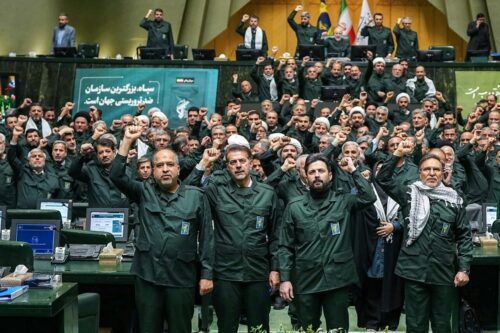
To many observers, these conditions seemed to point to one conclusion: that a prolonged war could bring the system down. But structural weakness does not automatically translate into regime collapse. History suggests that wars often produce the opposite effect. Under external pressure, political systems consolidate power around the actors best equipped to fight wars and ensure survival.
The Middle East Institute (MEI) is an independent, non-partisan, not-for-profit, educational organization. It does not engage in advocacy and its scholars’ opinions are their own. MEI welcomes financial donations, but retains sole editorial control over its work and its publications reflect only the authors’ views. For a listing of MEI donors, please click here.