Decapitation strikes unlikely to topple Iran’s regime
External Publication
March 18, 2026
Share
Leadership decapitation has long appealed to outside powers as a shortcut to regime collapse. Remove the figure at the top, the theory goes, and an authoritarian system will fracture under the weight of its own rivalries. That is not what has happened in Iran, at least not so far.
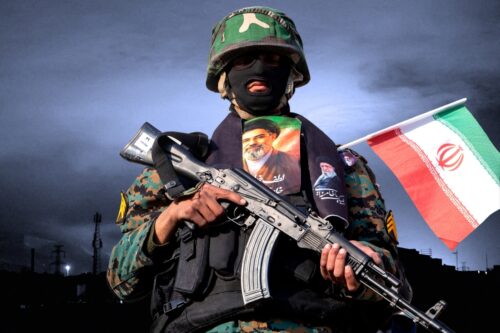
Following the killing of Ali Khamenei in the opening days of the US-Israeli war on Iran, the regime moved quickly to elevate his son, Mojtaba, to the position of supreme leader. However, the more important development wasn’t the succession itself; it was the further consolidation of power by the Islamic Revolutionary Guard Corps (IRGC)—the one institution built to operate precisely under these conditions of war, disruption, and fear. US intelligence assessments judge the regime likely to remain in place for the moment, weakened but more hardline, with the IRGC exercising greater control.
The Middle East Institute (MEI) is an independent, non-partisan, not-for-profit, educational organization. It does not engage in advocacy and its scholars’ opinions are their own. MEI welcomes financial donations, but retains sole editorial control over its work and its publications reflect only the authors’ views. For a listing of MEI donors, please click here.