In the early hours of Sunday, May 3, Jordanian F-16 fighter jets crossed into Syrian airspace and launched strikes on at least six locations in the southern province of Sweida. In a statement issued hours later, Jordan’s military said that “Operation Jordanian Deterrence” had targeted “factories, facilities and warehouses used by trafficking groups as launch points for smuggling operations into Jordan.”
This was the fifth time Jordan had launched military strikes in Sweida since the fall of Bashar al-Assad’s regime in December 2024, and the third round since the area fell under the control of Israel-backed Druze militia groups, known as the “National Guard,” in July 2025. That dynamic — in which most of Sweida falls solidly outside the control of Syria’s transitional government — developed in the wake of a week of brutal hostilities and the death of as many as 1,700 people last July, as localized conflict between Druze militias and Bedouin tribal members triggered a government intervention and a flurry of vicious reprisals that then drew the intervention of Israel’s air force. A U.N. investigation into the fighting found government forces, Bedouin tribal members and Druze militias all implicated in war crimes, with the government most complicit.
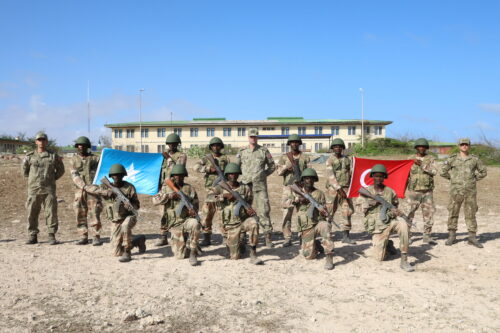
Photo by Anadolu /Getty Images
The Middle East Institute (MEI) is an independent, non-partisan, not-for-profit, educational organization. It does not engage in advocacy and its scholars’ opinions are their own. MEI welcomes financial donations, but retains sole editorial control over its work and its publications reflect only the authors’ views. For a listing of MEI donors, please click here.

Israel/Palestine: What the Iran War Broke and What May Yet Be Salvaged