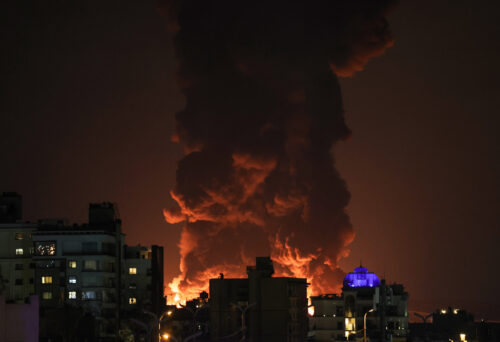
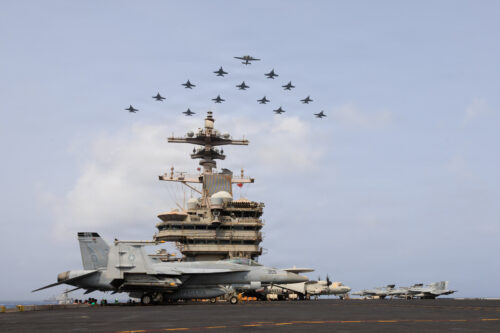
The decision U.S. President Donald Trump made to attack Iran was a high-stakes gamble. The gamble is not really in the military campaign itself, which is unfolding in jaw-droppingly competent fashion. The two most capable, battle-tested air forces in the world, those of Israel and the United States, are working seamlessly together to hammer a variety of targets in Iran with remarkably few unintended civilian casualties or other gaffes. When the campaign ends, whether in a week or in a month, it seems highly likely that Iran will have been stripped of much of what was left of its nuclear program, most of its ballistic missile capabilities, its ability to project power by air or sea, and key elements of its infrastructure of repression. It’s an outcome that will be a considerable benefit to the United States, the Middle East, and most of the world.
The gamble, instead, is whether a massive air campaign can trigger a popular rebellion that takes down the regime in Tehran. This could pay off brilliantly, but it could also fail miserably. The accomplishments of the military campaign do not necessarily translate to regime change. Even if the Iranian people seize this opportunity to revolt, there is no guarantee they can overturn the government. And if the United States fails, it will leave an angrier and more aggressive version of the theocratic regime in place, one likely seeking revenge and nuclear weapons.
There are, however, steps the United States can take to make it more likely that this time, revolt turns to revolution.
The Middle East Institute (MEI) is an independent, non-partisan, not-for-profit, educational organization. It does not engage in advocacy and its scholars’ opinions are their own. MEI welcomes financial donations, but retains sole editorial control over its work and its publications reflect only the authors’ views. For a listing of MEI donors, please click here.