
“President Donald Trump’s erratic actions since the fragile cease-fire that began in April have inadvertently strengthened the Iranian regime's hand just after it suffered the most serious blow it has experienced since coming to power. The June 14 agreement will further increase Tehran’s vise grip on its own people — without eliminating the regime’s ability to continue threatening US partners and interests in the region.
A deal is better than more fighting, but the war America and Israel prosecuted against Iran has fallen short of achieving its stated objectives. This agreement is mostly about cleaning up an unnecessary mess and putting the best face on it.”

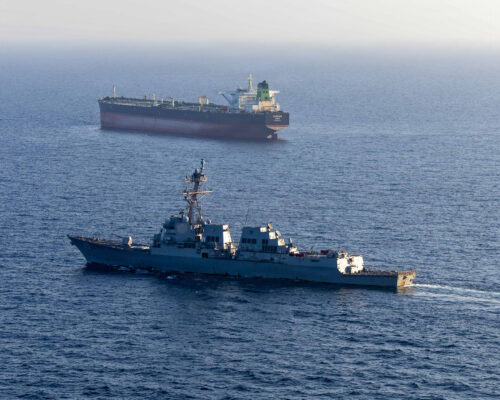
“The preliminary US-Iran agreement offers a potential path towards reopening the Strait of Hormuz and reversing the largest oil and gas supply disruption in history. This development comes as welcome news for both energy producers in the Gulf and consumer nations around the world that have suffered from months of high energy prices. The recovery of maritime traffic through the strait is paramount to ramping up energy production across the region once again, but this process will take months, and individual producers face unique constraints, meaning that the pace of production restarts across the region will be uneven. Restoring confidence in shippers' ability to transit the strait must be the first order of business; only once this is completed can producers address second-order challenges, such as storage backlogs, supply chain constraints, and other factors that will act as barriers to reaching pre-conflict production levels.”

“The US-Iran deal ends a war but not a crisis. The agreement covers Lebanon, at Iran's insistence, but says nothing about Gaza, where 2 million people remain under a cease-fire that has killed nearly 1,000 of them and where Israel controls 64% of the territory and is pushing toward 70%. Tehran fought to protect Hizballah, its most important regional asset. Hamas, which refused to open a front when Iran went to war in February, was not worth a single clause. The deal formalizes what has been building for months: Gaza's structural exclusion from every diplomatic settlement the region's wider conflicts have produced. Watch whether the signing in Switzerland on June 19 absorbs the diplomatic oxygen that the disarmament talks in Cairo, where 14 of 15 items have already been agreed, desperately need to survive.”

“Iran accepted the cease-fire as part of a broader strategic calculation that further escalation would bring diminishing returns while diplomacy offers a better opportunity to consolidate military gains, reduce economic pressure, and open the door to sanctions relief. The agreement enjoys support from much of Iran's political establishment because it has been presented as negotiating from strength rather than making concessions, with the military, diplomatic team, and senior leadership portrayed as acting in concert. Although ultraconservative factions oppose the deal, they remain politically isolated and are unlikely to block it so long as the top decision-making institutions continue to view the agreement as serving Iran's strategic interests.”

“The focus for the past several decades has been on the presumption that a nuclear breakout capacity would give Iran, in addition to a path to a nuclear weapon, considerable regional influence. Focusing only on the nuclear file now obscures the likelihood that the regime in Tehran will have new ways to project regional power. How it integrates its nuclear, missile, and drone capabilities and its support for militias into a new security paradigm that includes the capacity to disrupt the Strait of Hormuz and undermine the economies of its Gulf Cooperation Council neighbors is the million-dollar question. Iran’s latest security paradigm was a product of the last major war it had fought, the Iran-Iraq war of 1980-88. This most recent war is likely to forge a new security paradigm that will only be apparent in the coming months and years. But it will likely lead to an integration of its new and old capabilities, making it either more cooperative or more confrontational, or a combination of the two. How that plays out will depend on the shape of Iran’s new leadership and to what degree rebuilding Iran’s economy becomes a priority.”

“A potential end to the hot war is welcome news, but significant uncertainty remains around issues that are critical to countries in the region. The future of Iran’s ballistic missile program, its nuclear ambitions, and its network of proxies have yet to be determined. Of these, the regime’s nuclear program is perhaps the most consequential. The war has likely reinforced the view among Iran’s leaders that nuclear weapons are necessary to deter future attacks and prevent similar conflicts. That prospect leaves regional states deeply unsettled. If Iran ultimately succeeds in developing a nuclear weapons capability, the consequences for proliferation across the Middle East could be profound.”

“If we start to see increased export crude volumes from the Strait, that should continue downward price pressure, and there are plenty of vessels laden and ready to exit. There are signals that increased production in some places in the Gulf could come on line within weeks. So that all is good for increased supply to market. Meeting the refilling of inventories over time will be a boost to global demand, but that too will not be consistent across all countries or regions. I am wary though of any real return to the same traffic flows of pre-February 28 in the Strait, but with pipelines we can get to similar overall exports relatively quickly, especially if Iran has the right to export without sanctions or impediments. But this depends entirely on a cease-fire that is unlikely to hold in Lebanon and real insecurities from Iran's potential retaliations in the region.
This war will create a structural change to regional oil exports. Iran has increased the threat premium, making pipelines a necessity, and will likely prompt capital investment in other regions, including the Americas and Africa, as a balance of energy security for importers. It weakens OPEC cohesion too, as Gulf exporters will seek to offer discounts against each other.”
“Lebanon is once again on the brink. Iran has stepped in as Hizballah’s savior. Hizballah, in turn, has already telegraphed its next move: pressuring Beirut to reverse the very decisions that offered Lebanon its best opportunity for a new beginning, while threatening those who stand in its way. Israel has made equally clear that it will neither withdraw nor accept a Hizballah victory by default. Yet at the very moment clarity is most needed, Washington has left both friends and foes asking the same question: Does the United States still intend to pull Lebanon out of Iran’s orbit, or has it surrendered Lebanon to the Islamic Republic?
The United States now faces a defining choice. It can double down on strengthening the Lebanese state, or it can acquiesce to the return of a self-defeating arrangement with Hizballah. The first path would demonstrate that America stands by its partners and that Iran’s proxies do not dictate the region’s future. The second all but guarantees renewed conflict, a stronger Iran, and an avoidable strategic setback for the US.
The foundations of a different Lebanon already exist. What is needed now is not a new policy, but the resolve to finish the one Washington already started.”

“The cease-fire has elicited an oddly shared sense of disillusionment among many in Israel and the US, but for different reasons. Israelis privately claim that this agreement will both embolden Iran and weaken America’s position and credibility in the region, having not "finished the job." Some in the US see the same outcomes but argue that they stem from the US-Israeli decision to launch the war, not from Trump cutting his losses.
For Prime Minister Benjamin Netanyahu, this is a significant setback, strategically but also politically, with Israelis generally viewing the cease-fire as a major loss and a sign of divergent US and Israeli interests. Where the US now focuses on the global energy crisis and yet-to-come and still-vague negotiations over the nuclear issue, Israelis focus on what Iran's financial gains from the deal would mean for the regime's ballistic missile program and its proxies, especially the Lebanese Hizballah. The militia remains a powerful force that the Lebanese state has not been able to subdue, and the potential for further Israel-Hizballah fighting remains high.”