This individual is a guest contributor. MEI is not able to assist with contact requests.
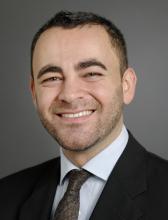
Ali Alfoneh is a nonresident senior fellow at Rafik Hariri Center for the Middle East at The Atlantic Council. Mr. Alfoneh’s research areas include civil-military relations in Iran with a special focus on the role of the Islamic Revolutionary Guards Corps (IRGC). Previously, Mr. Alfoneh was a senior fellow at the Foundation for Defense of Democracies, resident fellow at American Enterprise Institute, a research fellow at the Institute for Strategy at the Royal Danish Defence College, and has taught political economy at the Centre for Middle Eastern Studies at the University of Southern Denmark.
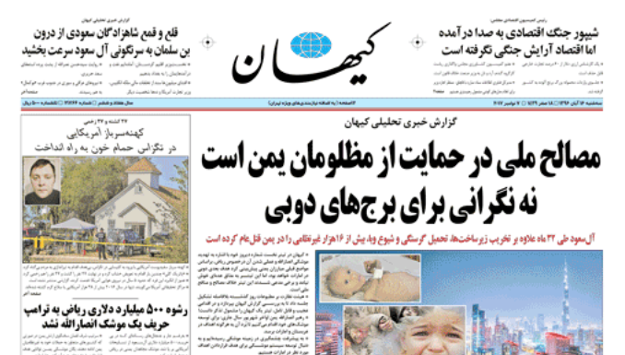
The Houthi missile attack against King Khalid International Airport in Riyadh on Saturday not only heightened tension between Saudi Arabia and Iran, but also triggered a war of words between media outlets representing different factions in the Islamic Republic.
Hariri’s Resignation Alarms Tehran about Lebanon’s Future
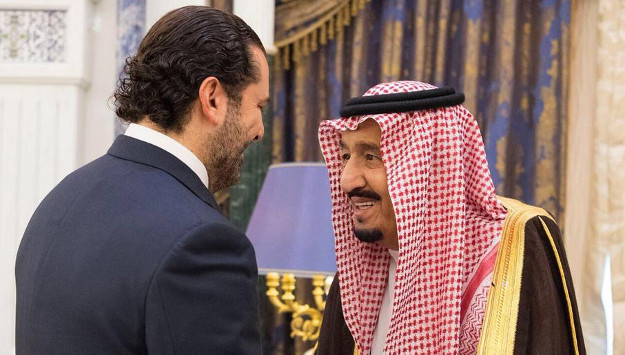
The resignation of Lebanese Prime Minister Saad Hariri on Sunday has sent shockwaves in Tehran. While Iranian leaders and their regional allies try to appear measured and confident, they fear that political instability in Lebanon and a potential war between Israel and Iran’s ally Hezbollah – particularly at a time when Hezbollah and other Iranian proxies are still engaged in the Syrian war – could adversely impact Tehran’s regional ambitions.
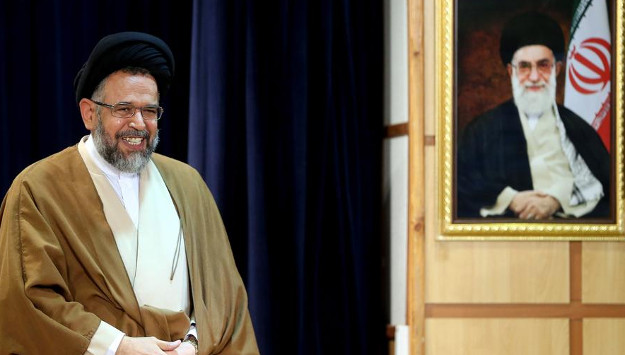
An Obstacle to Riyadh’s Outreach to Baghdad: Iraqi Interior Minister’s Ties with I.R.G.C.
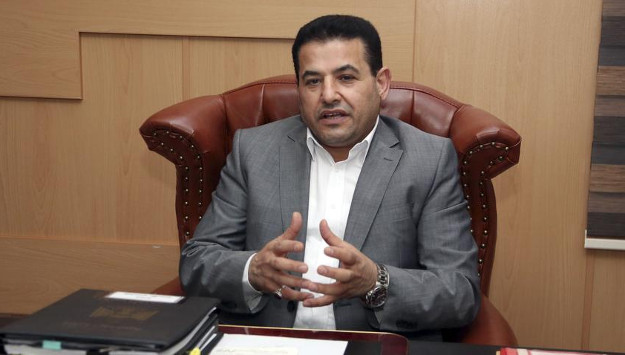
After a long period of disengagement, Saudi Arabia is improving its relations with the Iraqi government and Shiite leaders to challenge Iran’s long-established influence in the country. Riyadh has recently hosted several Iraqi leaders for talks, including Prime Minister Haider al-Abadi, Interior Minister Qasim Mohammad Jalal al-Araji, and Muqtada al-Sadr, a prominent Shiite cleric and politician.
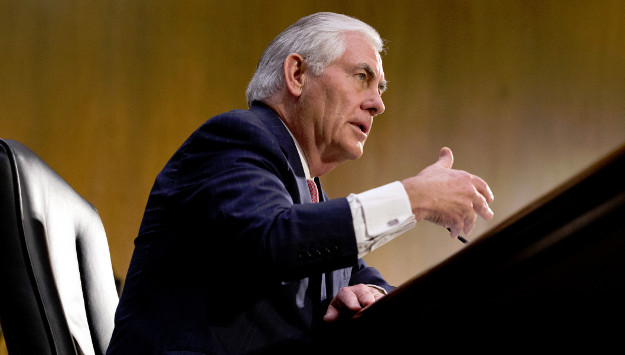
U.S. Secretary of State Rex Tillerson’s recent remarks about the role of Iranian-led militias in Iraq have sparked a lot of controversy. “Certainly, Iranian militias that are in Iraq, now that the fight against Daesh and ISIS is coming to a close, those militias need to go home,” Tillerson said at a press conference in Riyadh on October 22 just before departing for Baghdad.
The Growing Conflict between Iran’s Intelligence Agencies
Competition between parallel government institutions with overlapping fields of responsibility is hardly a novelty in Iran. It predates the Islamic Republic and has traditionally helped Iranian rulers to play different power centers against each other and maintain control. Under Supreme Leader Ali Khamenei, however, the conflict between the country’s intelligence agencies has reached an unprecedented level, which undermines public confidence not only in the government but also in Khamenei’s competence.
Tehran’s Iraqi Proxies and Looming Conflict with U.S.
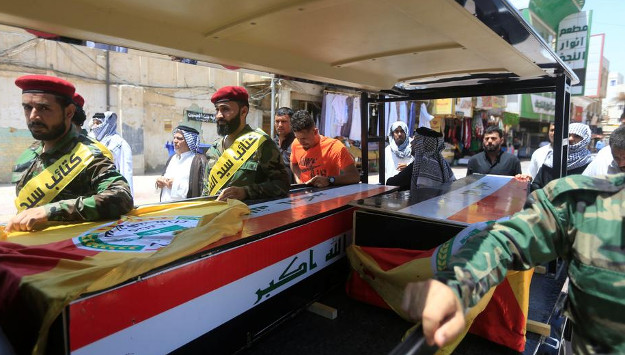
On Monday, the Islamic State claimed it had killed scores of Iraqi troops and captured one soldier in an ambush near the al-Tanf border-crossing along the Iraqi-Syrian border. Kata’ib Sayyid al-Shuhada (K.S.S.), an Iranian-backed unit of the Iraqi Popular Mobilization Forces (P.M.F.), however, blamed U.S. air strikes for its losses and vowed revenge.
Iran-Backed Popular Mobilization Forces Preparing for Post-Islamic State Iraq
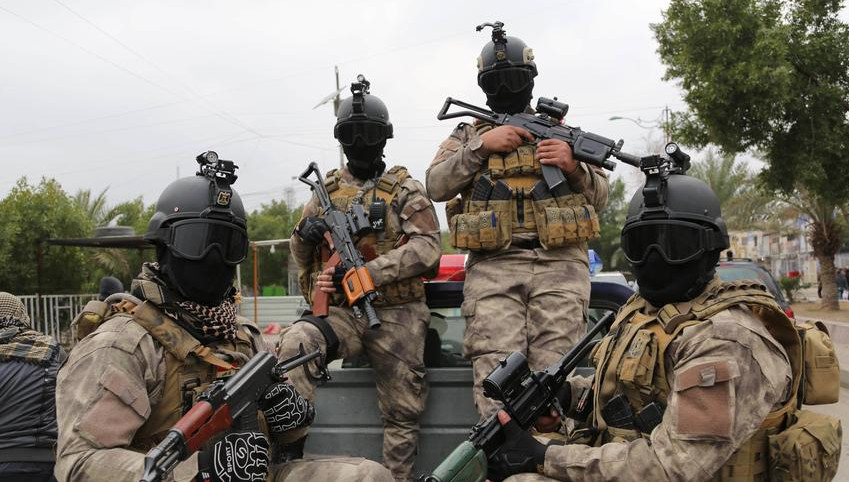
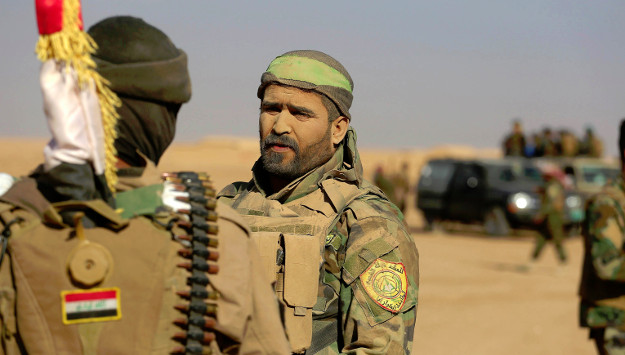
With the fall of Mosul, Iranian-supported Iraqi Popular Mobilization Forces (P.M.F.) is preparing for post-Islamic State Iraq. The paramilitary forces have recently launched a professional public relations campaign on the Internet and social media aimed at justifying and legitimizing P.M.F.’s existence beyond the collapse of the Islamic State. Should the P.M.F. prevail in this effort, it will mark a victory for the Islamic Revolution Guards Corps (I.R.G.C.), which has aided P.M.F. groups for years and sees them crucial for its influence in Iraq in the future.
Competing Iraqi Shiite Militias: Tehran’s Design or Strategic Blunder?
Since the 2003 U.S. invasion, Tehran has encouraged and contributed to the formation of countless Shiite militia groups in Iraq. While most of these armed groups are now formally organized under the umbrella of the Popular Mobilization Forces (P.M.F.), they have in reality remained independent entities and are not controlled by the civilian government in Baghdad.
But has Tehran committed a strategic blunder by fracturing the Iraqi Shiite armed groups or does the existence of competing Shiite Iraqi militias benefit the Islamic Republic?
More than three decades after the Revolution of 1979, the Islamic Republic of Iran Army [Artesh-e Jomhouri-ye Eslami-ye Iran] and the Islamic Revolutionary Guard Corps [Sepah-e Pasdaran-e Enqelab-e Eslami] (IRGC), remain entangled in a state of fierce rivalry.