This individual is a guest contributor. MEI is not able to assist with contact requests.
Jean-Pierre Cassarino holds a professorship at the Robert Schuman Center for Advanced Studies (RSCAS/European University Institute, Florence) where he directs the Return migration and Development Platform (http://rsc.eui.eu/RDP/). He is also research associate at the Tunis-based Institut de Recherche sur le Maghreb Contemporain (IRMC). Since the mid-1990s, he has published extensively on international migration, particularly on return migration and has carried out numerous field surveys investigating returnees’ manifold patterns of reintegration. Selected publications include: (ed.) Unbalanced Reciprocities: Cooperation on Readmission in the Euro-Mediterranean Area, The Middle East Institute Press, Washington, 2010; (ed.) “Conditions of Modern Return Migrants”, International Journal on Multicultural Societies, Vol. 10, Issue 2, UNESCO, Paris, 2008; (ed.) Return Migrants to the Maghreb Countries: Reintegration and development challenges, RSCAS, European University Institute, Florence, 2008; Tunisian New Entrepreneurs and their Past Experiences of Migration in Europe: Networks, Resource Mobilisation, and Hidden Disaffection. Ashgate Publishers, Aldershot, 2000. Email: [email protected]
From Brightest Hope to Open-Air Prison: How Tunisia Lost Its Democratic Promise
Thousands of Tunisians marched in the capital last week against what they called ‘injustice and repression,’ accusing President Kais Saied of cementing one-man rule through the police and judiciary. The protest is part of a wider wave of unrest—journalists, NGOs, fractured political parties, doctors, bankers, and transport workers all say Saied has turned the country into an open-air prison and demand relief from Tunisia’s deepening political and economic crisis.
From Strategy to Impact: Strengthening Cultural Diplomacy
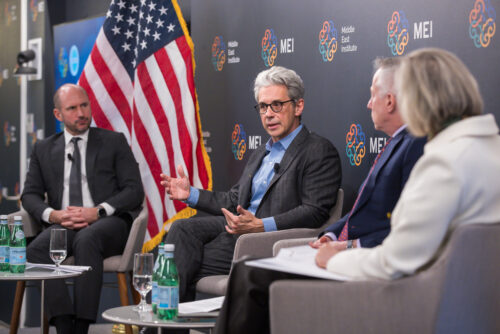
Three distinguished thought leaders—each working at the intersection of arts and global engagement—joined us for a discussion about the strategies, tools, and programs needed to build an effective and globally connected cultural diplomacy agenda.
Last week’s visit by Saudi Crown Prince Mohammed bin Salman to Washington, DC marked a pivotal moment in the 80-year relationship between the United States and Saudi Arabia. History could look back on this moment as a major turning point for both countries, depending on how key strategic issues are addressed in the months to come.
This backgrounder provides an overview of the Organization of Petroleum Exporting Countries (OPEC), including its history, structure, and function, and the US government’s approach to the organization.
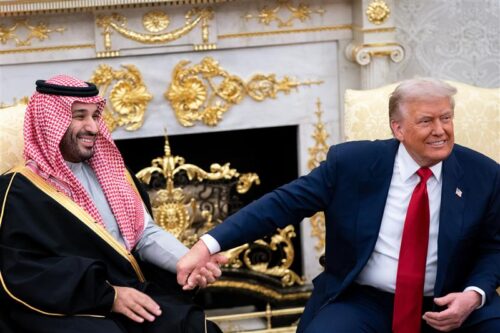
Trump-MBS summit: Good feelings, real commitments, and unresolved questions
Mohammed bin Salman, the crown prince, prime minister, and main decision-maker in Saudi Arabia, left Washington and his summit with President Donald Trump with a number of promises made and commitments received. But several questions, including on shared diplomatic agenda items, the extent of civilian nuclear cooperation, and the nature of the American defense commitment to Saudi Arabia, remain unanswered.
Special Feature: A Front-Row Seat to Saudi Arabia’s Transformation
In this episode, Brian sits down with Faisal Abbas, editor-in-chief of Arab News. Abbas, who reported on Saudi Crown Prince Mohammed bin Salman’s November 18 visit to the White House, unpacks his impressions from the visit and the opportunities it presents for US-Saudi relations. The conversation also explores the Kingdom’s transformation over the past decade, its relationships with key partners including the United States, and Abbas’s recommendations for deepening the US-Saudi partnership going forward.
In this episode of Middle East Focus, hosts Alistair Taylor and Matthew Czekaj sit down with MEI Visiting Scholar F. Gregory Gause, III, to analyze the policy implications of Saudi Arabian Crown Prince Mohammed bin Salman Al Saud’s (MBS) first visit to the US in seven years. What do US and Saudi officials hope to achieve from MBS’s historic trip? Gause breaks down how the kingdom has changed under MBS’s leadership and the prospects for a bilateral defense agreement between the US and Saudi Arabia.
MENA Energy Recap, Q3-2025: Gulf Giants Abroad, Fragile Deals at Home
The MENA Energy Recap is a quarterly review of key energy developments that took place in the region from July through September of 2025 and what they signal in the months ahead. The Recap views these developments through the lens of policy and strategy, energy security, and markets.
How Iraq’s vote will shape the next phase of US-Iran competition
For Iran, Iraq is strategic depth, political sanctuary, and economic lifeline all at once. The results of the November 11 Iraqi elections will decide who in Baghdad controls the budgetary levers, internal security appointments, and committees that could codify, or constrain, Iraq’s Iran-backed militias.
From Ballots to Bargains: The Struggle for Iraqi Democracy
Iraqis have just gone to the polls in a pivotal parliamentary election that could redefine the country’s political trajectory. What do the results tell us about the state of Iraqi democracy? What happens next? And is there still space for meaningful democratic reform?
This backgrounder provides an overview of the history of Hamas, its ideology and leadership, military capabilities and goals, the October 7 attack, relevant US government policies and legislation, and the group’s future in Gaza.
Saudi Crown Prince Mohammed bin Salman’s November 2025 visit to the United States is his first in more than seven years, and during the past few years Saudi Arabia has assumed an increasingly prominent role in regional and global affairs. In this episode, Brian Katulis sits down with Richard Fontaine, CEO of the Center for a New American Security, for a discussion focused on Saudi Arabia’s emergence as a key “swing state” in regional and global dynamics. The two discuss “Global Swing States and the New Great Power Competition,” a report that Fontaine published earlier this year with Gibbs McKinley. Richard also discusses his many travels around the world with the late Senator John McCain’s delegations, the recent changes in the politics of US national security, and shares personal stories from trips Brian and Richard took together across the Middle East.
US-Saudi ties are the cornerstone of Trump’s Mideast policy
When Saudi Crown Prince Mohammed bin Salman visits the White House to meet with US President Donald Trump on 18 November, there will be no shortage of issues for the two leaders to discuss. Follow-up on the robust bilateral cooperation frameworks in economics and technology, including artificial intelligence — outlined during Trump’s visit to the country in May — is sure to be on the agenda, as are still-unresolved thorny regional security issues, such as Iran, Israel-Palestine, and the continued threats presented by the Houthis in Yemen.
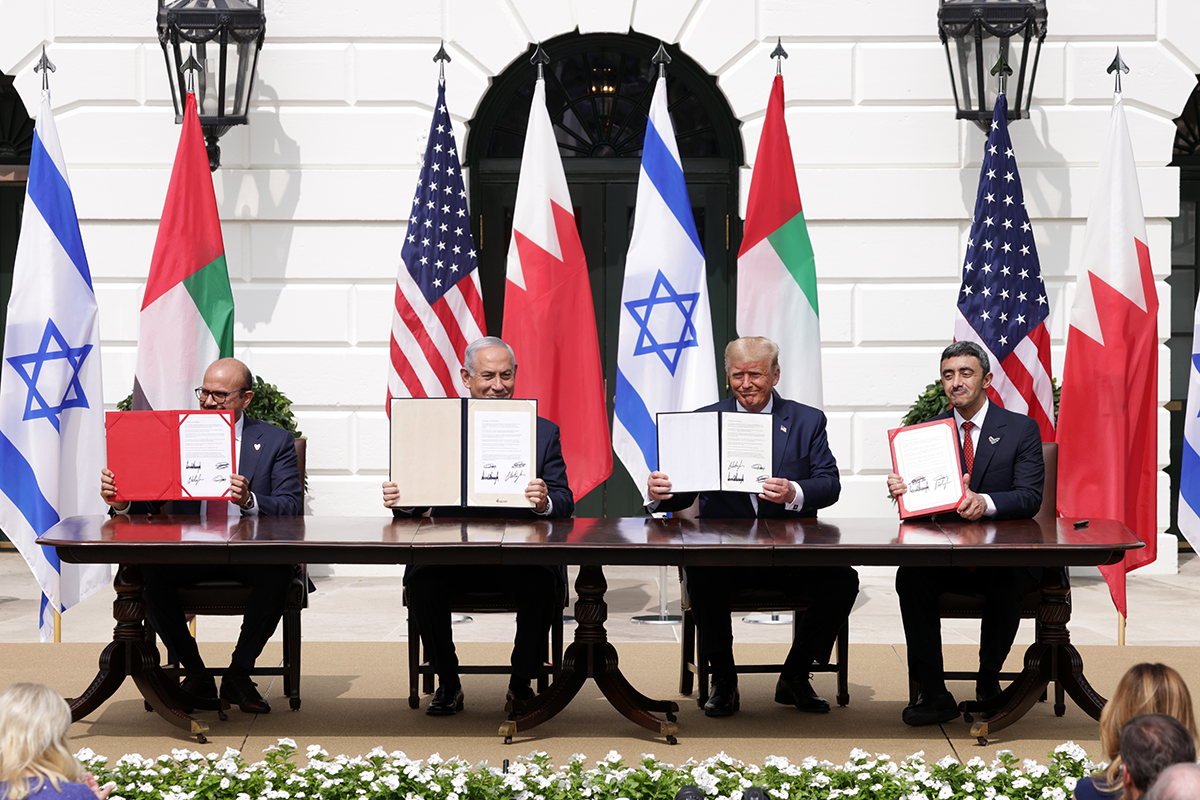
This backgrounder provides an overview of how the Abraham Accords came about, the US interests involved, their economic and strategic consequences, and the prospects for further enlargement going forward.