This individual is a guest contributor. MEI is not able to assist with contact requests.
Jean-Pierre Cassarino holds a professorship at the Robert Schuman Center for Advanced Studies (RSCAS/European University Institute, Florence) where he directs the Return migration and Development Platform (http://rsc.eui.eu/RDP/). He is also research associate at the Tunis-based Institut de Recherche sur le Maghreb Contemporain (IRMC). Since the mid-1990s, he has published extensively on international migration, particularly on return migration and has carried out numerous field surveys investigating returnees’ manifold patterns of reintegration. Selected publications include: (ed.) Unbalanced Reciprocities: Cooperation on Readmission in the Euro-Mediterranean Area, The Middle East Institute Press, Washington, 2010; (ed.) “Conditions of Modern Return Migrants”, International Journal on Multicultural Societies, Vol. 10, Issue 2, UNESCO, Paris, 2008; (ed.) Return Migrants to the Maghreb Countries: Reintegration and development challenges, RSCAS, European University Institute, Florence, 2008; Tunisian New Entrepreneurs and their Past Experiences of Migration in Europe: Networks, Resource Mobilisation, and Hidden Disaffection. Ashgate Publishers, Aldershot, 2000. Email: [email protected]
In this week’s Monday Briefing, MEI experts Charles Lister, Gerald Feierstein, W. Robert Pearson, and Marvin G. Weinbaum provide analysis on recent and upcoming events including the escalating deterrence between Israel and Iran, Pompeo’s pressure to resolve the Gulf crisis, Turkey’s increasing isolation, and the Pashtun protests in Pakistan.
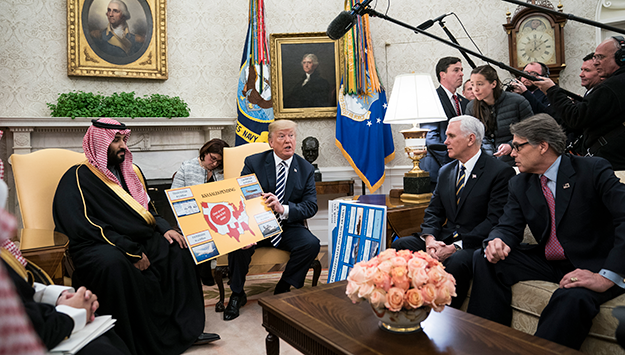
The White House last week released a new plan—called “Buy American”—to shore up U.S. arms sales to global friends and allies. It’s borne out of President Donald Trump’s desire, which he articulated during his presidential campaign, to sell more American weapons as a means to boost the U.S. economy and create more jobs.
Iran’s regional allies threaten Saudi Arabia and US after Houthi leader’s death
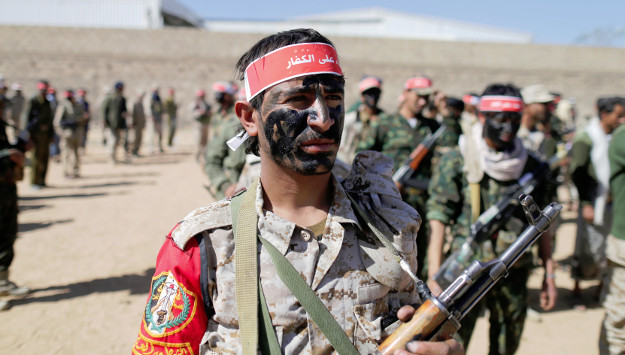
Iran’s regional militia allies have vowed retaliation for the death of Houthi leader Saleh al-Sammad in Yemen, the Iranian media reported. The Houthi rebels as well as Iran’s regional militia proxies said they would hold not only Saudi Arabia but also the United States accountable for the killing of al-Sammad. The Iraqi Hezbollah said the Houthi leader’s assassination will open a new chapter in the fight against Saudi Arabia, which it said is “mired in the Yemeni quagmire.” It also accused Washington of complicity.
European-US cooperation on nuclear deal unnerves Tehran
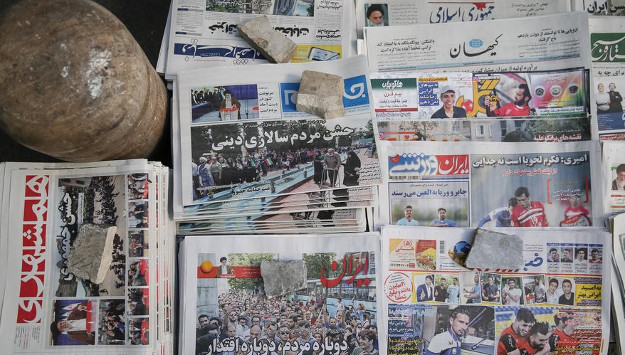
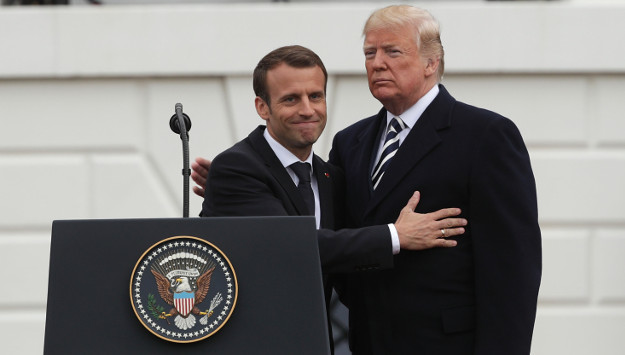
French President Emanuel Macron’s proposal to his US counterpart Donald Trump for a “new deal” with Iran has caused a great deal of anxiety in Tehran. Headlines in the Iranian media today, most in conservative outlets, accused France and Europe of betraying Tehran and siding with Washington. “Europe kneeled down,” read the headline of Vatan-e Emrooz. The paper wrote that the French president was the last ray of hope to save the nuclear accord and convince Trump to stick to the deal rather than scrap it.
Turkey’s snap elections and issues in U.S. relations
MEI’s Gonul Tol and Amb. Robert Pearson join Paul Salem to discuss the domestic political scene heading into Turkey’s snap presidential and parliamentary elections in early June and the state of its relations with the United States after the departure of Secretary of State Rex Tillerson and pending arrival of Mike Pompeo.
Iraqi oil law puts elections before state-building
Since the ratification of Iraq’s constitution in 2005, Iraq has struggled to interpret clauses 111 and 112, which stipulate that oil is the property of the Iraqi people and its revenues should be shared equitably. Several draft laws on hydrocarbon management, energy sector regulation, and oil revenue distribution have remained stalled because of differences between the federal government and the Kurdistan region over the interpretation of those clauses.
Iran revokes Telegram license as authorities step up Internet crackdown
In the latest measure to restrict Internet and disrupt foreign messaging apps, the Iranian government today announced that it has revoked Telegram’s license to host servers inside the country, the Iranian media reported. The Supreme Cyberspace Council, an agency tasked with monitoring and filtering Internet in Iran, said the license cancellation means Telegram, used by more than a half of Iran’s 80 million population, has to transfer all its servers outside Iran, and that all incoming traffic will now have to be channeled through Iran’s gove
Iran threatens to leave NPT and resume high-level enrichment as US and Europe mull "new deal"
On Tuesday, President Donald Trump and his French counterpart Emmanuel Macron signaled that they will work on a “new deal” to supplement the 2015 Iran nuclear agreement and address the Islamic Republic’s ballistic missile program and destabilizing role in the region. Tehran’s response was loud and clear: The Islamic Republic will defy Western pressure and will not renegotiate the nuclear deal or make any compromises over its defense programs and regional posture.
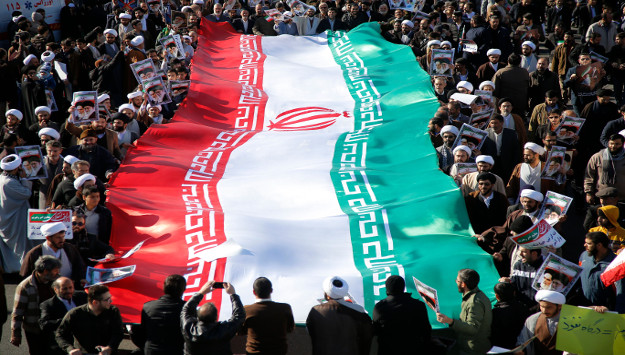
Over the last few months, Iran has experienced a series of street protests in rural areas and social arenas once seen as the key support base for the Islamic Republic. Politically active youth are voicing their frustrations with the country’s political, social, and economic prospects. Many of these protests as well as online activism have been met with pushback from conservatives and crackdown from the government.
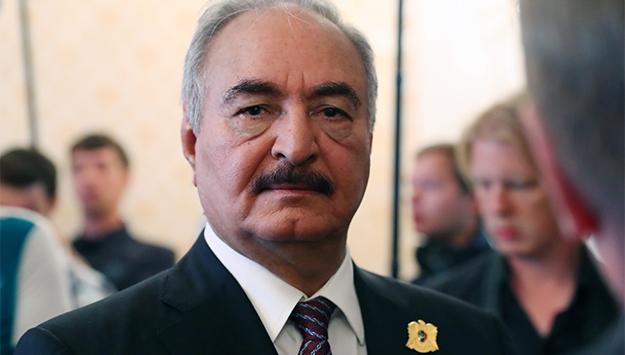
The issue for Libya is not whether 75-year-old Gen. Khalifa Hifter returns to normal health following the medical crisis that led to his hospitalization in Paris. No matter what happens to Hifter, the country must find ways to build an inclusive government in which integrated security forces at the national level are under the command of civilian, elected leaders.
Sectarianism without Borders: Copts and Genocide Recognition
In this essay, the author contends that the violence against Copts has been misleadingly characterized as alien to Egyptian culture, and discusses how some diaspora Copts and Church leaders have sought to portray the attacks that have taken place since the Arab Spring.
Iran defies Western demands over nuclear, missile and regional issues
Iranian leaders on Tuesday said they will defy Western pressure and will not renegotiate the Joint Comprehensive Plan of Action (JCPOA), the nuclear accord Tehran signed with world powers nearly three years ago. Several top Iranian officials also threatened to take drastic measures, including leaving the Treaty on the Non-Proliferation of Nuclear Weapons (NPT), if the Trump administration terminates the nuclear accord and re-imposes sanctions on Tehran. “We increased the cost for the enemy over the past five years. And if the JCPOA collapses, we have a plan.
Top Iranian official says retaliation against Israel is “inevitable”
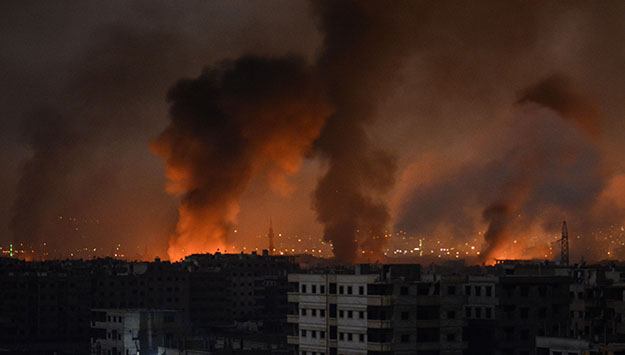
The Secretary of Iran’s Supreme National Security Council said today that the Islamic Republic is determined to punish Israel for the latest strikes on a Syrian air base in which several Iranian military personnel were killed.