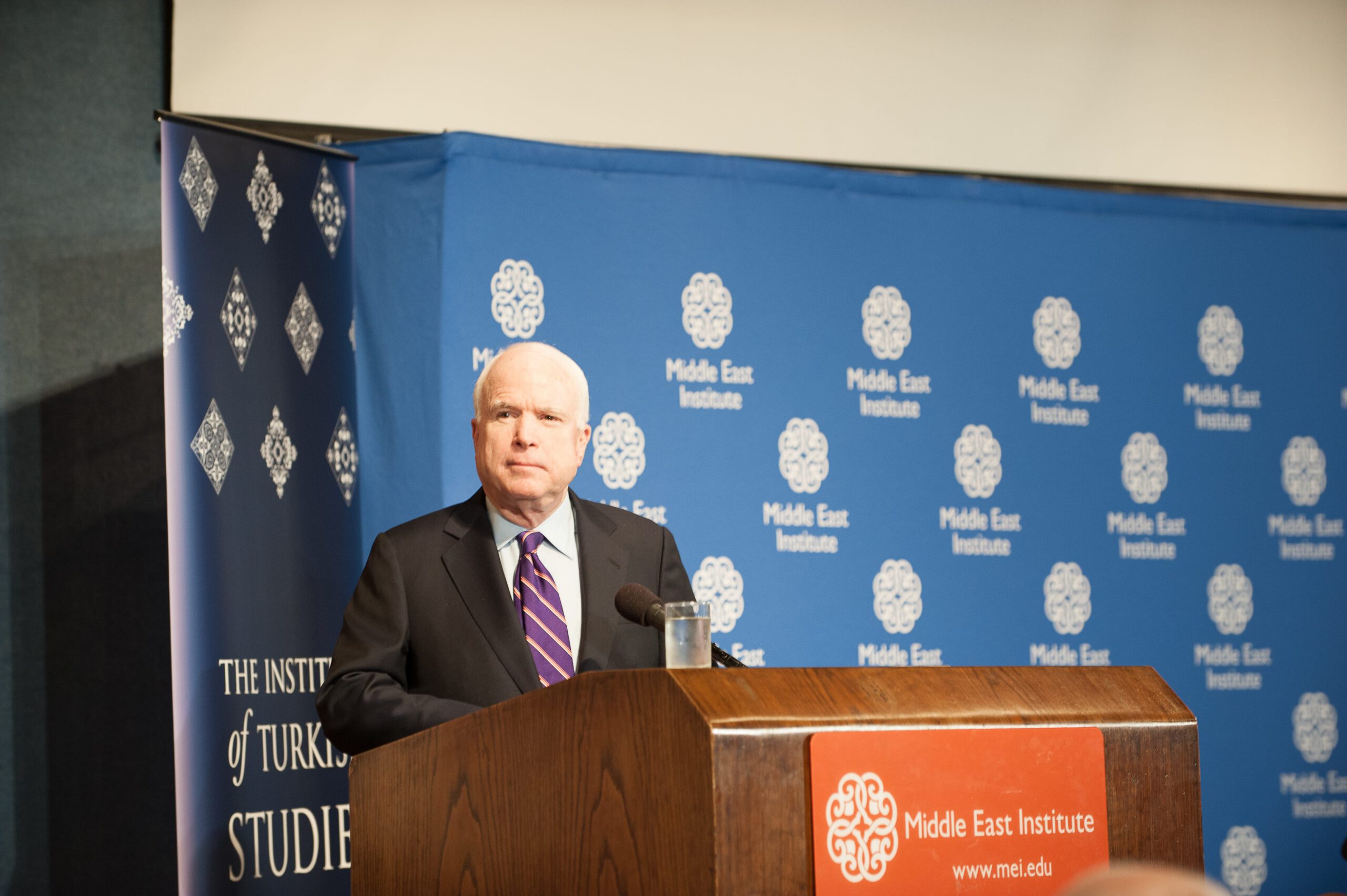
Egypt's Troubled Transition
MEI Podcast, 1 May, 2012, Egypt’s Troubled Transition, Dr. Mona Makram-Ebeid
This individual is a guest contributor. MEI is not able to assist with contact requests.
Jean-Pierre Cassarino holds a professorship at the Robert Schuman Center for Advanced Studies (RSCAS/European University Institute, Florence) where he directs the Return migration and Development Platform (http://rsc.eui.eu/RDP/). He is also research associate at the Tunis-based Institut de Recherche sur le Maghreb Contemporain (IRMC). Since the mid-1990s, he has published extensively on international migration, particularly on return migration and has carried out numerous field surveys investigating returnees’ manifold patterns of reintegration. Selected publications include: (ed.) Unbalanced Reciprocities: Cooperation on Readmission in the Euro-Mediterranean Area, The Middle East Institute Press, Washington, 2010; (ed.) “Conditions of Modern Return Migrants”, International Journal on Multicultural Societies, Vol. 10, Issue 2, UNESCO, Paris, 2008; (ed.) Return Migrants to the Maghreb Countries: Reintegration and development challenges, RSCAS, European University Institute, Florence, 2008; Tunisian New Entrepreneurs and their Past Experiences of Migration in Europe: Networks, Resource Mobilisation, and Hidden Disaffection. Ashgate Publishers, Aldershot, 2000. Email: [email protected]
MEI Podcast, 1 May, 2012, Egypt’s Troubled Transition, Dr. Mona Makram-Ebeid
This special edition of MEI Viewpoints offers snapshots of sports and the Middle East.
The Middle East Institute is pleased to host poet, writer and activist Nimah Nawwab for a conversation about Saudi women in an era of unprecedented change in the Middle East. Despite the many advances of the Arab Spring, the region continues to face mounting social, political, and economic challenges. In Nawwab's native Saudi Arabia, these challenges form the basis for her art and activism.
What are some of the fundamental socio-economic features they all share and what steps must they take if their economies are to enjoy sustained growth in the medium to long term? Dr. Toufic Gaspard, the economic adviser to Lebanon's minister of finance, will focus on Arab economies in Egypt and the Levant to examine how to solve the dominant regional problems of unemployment and poor productivity with the goal of establishing social and political stability.
Podcast for Saudi Women in a Time of Change, 26 April, 2012
The tumultuous political changes taking place across the region dominate the news — deservedly so. Yet, there are other changes taking place throughout the Middle East which, though less prominent, also merit attention. Indeed, the region has no shortage of creative and committed “change agents” who in ways great and small have taken meaningful steps to address the myriad challenges to the sustainability of the region’s physical environment. Volume II in this series offers snapshots of a small selection of the many efforts aimed at cultivating responsible environmental stewardship.
Originally posted April 2011
This article outlines the important role that can be played by non-governmental organizations (NGOs) in helping to tackle environmental issues in the Middle East. Using the work of the Emirates Wildlife Society in association with the World Wild Fund for Nature (EWS-WWF) as an example, the article explores the challenges facing NGOs in the United Arab Emirates (UAE) and recommends ways in which these obstacles can be overcome.
Originally posted December 2009
Civil Society (CS) consists of various kinds of community-based, non-governmental movements that, without waiting for or requesting government orders or assistance, come together mainly to solve problems and effect change. CS actors in Afghanistan exist at the local, district, and national levels. They are engaged in resolving problems and in calling upon people to contribute to, or participate in, community-based activities.