This individual is a guest contributor. MEI is not able to assist with contact requests.
Jean-Pierre Cassarino holds a professorship at the Robert Schuman Center for Advanced Studies (RSCAS/European University Institute, Florence) where he directs the Return migration and Development Platform (http://rsc.eui.eu/RDP/). He is also research associate at the Tunis-based Institut de Recherche sur le Maghreb Contemporain (IRMC). Since the mid-1990s, he has published extensively on international migration, particularly on return migration and has carried out numerous field surveys investigating returnees’ manifold patterns of reintegration. Selected publications include: (ed.) Unbalanced Reciprocities: Cooperation on Readmission in the Euro-Mediterranean Area, The Middle East Institute Press, Washington, 2010; (ed.) “Conditions of Modern Return Migrants”, International Journal on Multicultural Societies, Vol. 10, Issue 2, UNESCO, Paris, 2008; (ed.) Return Migrants to the Maghreb Countries: Reintegration and development challenges, RSCAS, European University Institute, Florence, 2008; Tunisian New Entrepreneurs and their Past Experiences of Migration in Europe: Networks, Resource Mobilisation, and Hidden Disaffection. Ashgate Publishers, Aldershot, 2000. Email: [email protected]
Post-Buffer Afghanistan: A Nation-State Here to Stay?
Originally posted December 2009
Nation-states, like their citizens, have life spans. Some are short. The bumptious Republic of Texas, for instance, lasted only nine years before being absorbed by a larger and even more energetic United States of America. Yugoslavia survived intact for two generations and then fragmented into six parts, seven including Kosovo.
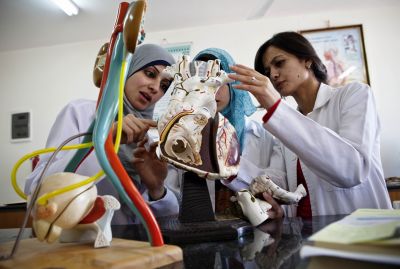
The thirteen students in the class at the American University of Cairo were mid-career professionals working on graduate degrees in education. We had spent two hours discussing my book of case studies in education assistance when one student raised her hand: “Look, we intend to reform Egypt’s education system. Can you please just give us the steps we need to follow?”
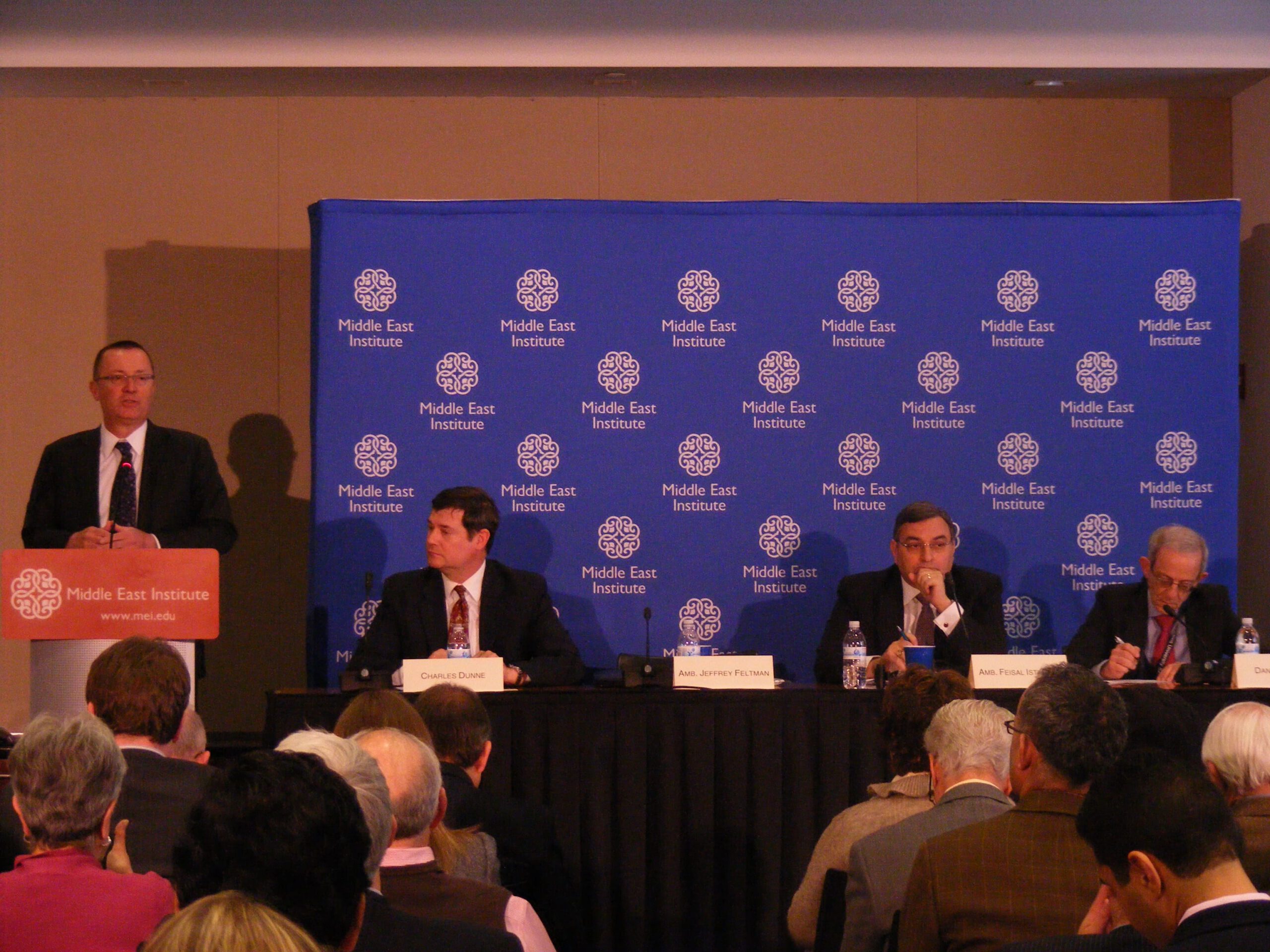
Panelists will explore both the challenges and opportunities presented by the transition of the U.S.-Iraqi partnership from a mainly military to a diplomatic one. What sort of working relationship is emerging between the U.S. and Iraqi governments? What kind of cooperation is taking place in the areas of domestic and regional security, diplomacy, trade, energy, and reform? How has the troop drawdown affected U.S. influence in Iraq and the region in general? Feltman, Istrabadi and Serwer will explore strategies and policies resulting from the new bilateral dynamics.
Women's Prospects in Afghanistan: Oppression or Opportunity?
Recent media reports indicate that fewer Afghan women turned out to vote for a President on August 20, 2009 than went to the polls five years ago, when in some districts female turnout had been even higher than that of males. Apprehension, convention, ennui, and disorganization led to families keeping their women home on election day, even as men dared to vote. The reversal of women’s rights, which they had only recently begun to exercise, is an ominous sign.
It is only fitting that “The Iranian Revolution at 30” begin with an introductory essay by R.K. Ramazani and that this project be dedicated to him. For 55 years, Professor Ramazani has been a teacher and mentor to many scholars and practitioners of the Middle East. His body of work on Iran is unrivalled in its scope and originality. Many of his articles and books on Iranian foreign policy are standard works.
This article originally appeared in Foreign Policy’s Middle East Channel on April 9, 2012
BERLIN – If at one time European governments believed the threat of a nuclear-armed Iran was far more frightening for the United States than for those across the Atlantic, those days are in the past. As talks near on Iran’s nuclear program, Tehran should know that European officials’ views are somewhere in the middle between America’s caution and Israel’s alarm.