This individual is a guest contributor. MEI is not able to assist with contact requests.
Ragui Assaad is Professor at the Humphrey Institute of Public Affairs at the University of Minnesota. He has written extensively on labor market and youth issues in the Middle East and North Africa. The author acknowledges the able research assistance of Stefan Johansson in the preparation of this essay.
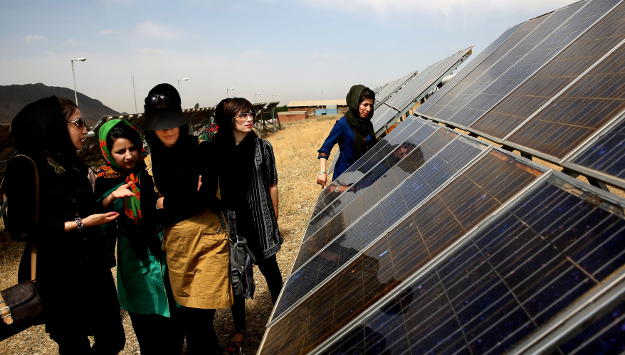
Boasting the fourth largest oil reserve and the second largest supply of natural gas in the world, Iran is a global hydrocarbons behemoth. Nevertheless, Iranian policymakers have shown great interest in renewable energy (R.E.) sources to improve energy security, reduce internal dependence on hydrocarbons, and meet its projected growth in electricity demand. The fulfillment of these objectives is not only realistic and desirable, but also probable for the Iranian government as it has an advantageous topography for renewables.
The Rise and Growth of Hezbollah and the Militarization of the Sunni-Shiite Divide in Lebanon
This essay tracks the origins of the Sunni-Shiite divide which, in the case of Lebanon, lay dormant until the creation of its modern day political structure. It argues that the country’s sectarian tensions mounted as a result of the installation of an Islamic republic in Iran, and the establishment of Hezbollah as an instrument in the pursuit of leading power status in the Middle East.
Libyan Unity Government Efforts Need International Support
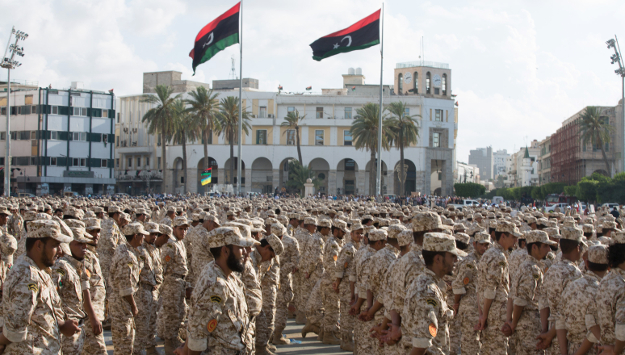
The international community is getting ready to put major assets behind Libyan efforts to restore their country’s official unity under a Government of National Accord (GNA). During recent weeks, statements from the United Nations, major European governments and the United States suggest that planning and coordination are underway to shore up the unity government. Key Arab governments are also showing awareness that their own national security is under threat due to the prolonged stalemate in Libyan politics.
While there are a surprisingly large number of regionally-based political initiatives of one sort or another, some with a specific mandate to address security issues, East Asia’s potential to act collectively is a function of the countries that compose it. The willingness of the members to act in concert is constrained by some very specific, historically contingent factors that continue to cast a long shadow over contemporary events. Trying to make sense of why it has proved so difficult to resolve or even talk about some of the region’s most enduring security problems involves looking at the general trajectory of historical development that has made East Asia a region like no other.
Sectarian Divide and Rule in Bahrain: A Self-Fulfilling Prophecy?
This essay reveals how decades of sectarian government policy, including divide and rule tactics and discrimination against Bahraini Shiʿa in the workforce and provision of government services, have strengthened sectarian affiliations at the expense of the more inclusive narrative of Bahraini nationalism.
Shoot Film, Not Bullets: Yemenis Turn to Art to Cope with Conflict
Yemen’s war is a forgotten catastrophe. Peter Maurer, the president of the International Committee of the Red Cross, stated in August: “Yemen after five months looks like Syria after five years.” All too commonly, civilians are bearing the brunt of the violence in Yemen. According to the United Nations, more than 2,700 people have been killed and more than 5,000 wounded. Schools, hospitals, and roads have been destroyed by the Saudi-led air campaign.
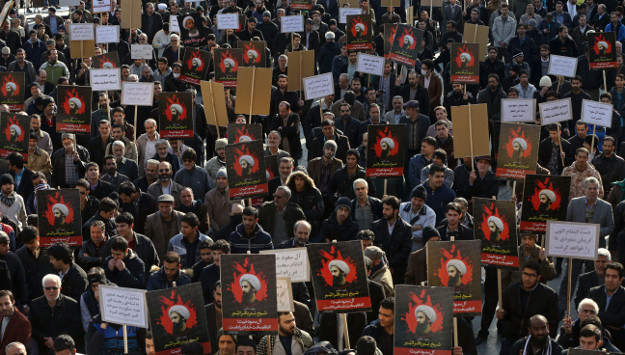
Saudi Arabia’s execution of prominent Shi’a cleric, Sheikh Nimr al-Nimr, is a gift in disguise to Iran’s hardliners seeking to undermine President Hassan Rouhani’s administration, and rally support ahead of key elections in February.
Although Saudi officials have insisted Iran is interfering in its internal affairs with its vociferous condemnation of the execution, Iranians, particularly the hardliners, saw the act as a direct provocation.
Decentralization and Ambiguities of Local Politics in Tehran
The prospect of establishing direct popular elections for mayors has precipitated a heated debate in Iran, resulting in divisions within the conservative and reformist factions and even a reversal of their roles. The debate surrounding the bill and the forces that render urban governance as political stem from the coupling of decentralization of governance with the arbitrary and despotic rule of mayors over urban matters. Decentralization in non-democratic settings has led to the reorientation of municipalities from merely managerial authorities to institutions that are both the field for, and the target of political struggles between elites and by citizens. Such localization of political life, especially in large cities such as Tehran, has the potential for making urban policy-making less opaque and bureaucratized as it has been under the Pahlavi Monarchy and the Islamic Republic.
Egypt’s Judiciary: Obstructing or Assisting Reform?
Introduction
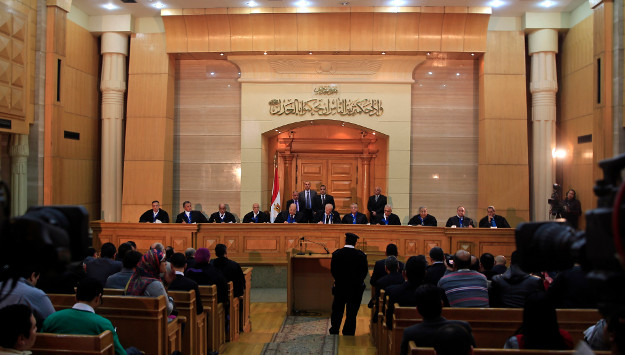
Prior to the 2011 revolution, Egypt’s surprisingly independent and assertive judiciary had gained recognition among scholars, political opposition figures, and many in the NGO community for strength and activism in defense of democratic values and political rights.[1] As Nathan Brown wrote in 2008: