This individual is a guest contributor. MEI is not able to assist with contact requests.
Shahmahmood Miakhel is the Country Director in Afghanistan for the US Institute of Peace (USIP). Prior to that he was a Governance Advisor for the United Nations Assistance Mission in Afghanistan (UNAMA), and, from 2003–2005, a Deputy Minister of the Interior in the Government of Afghanistan. In 1994–1995 he worked for the United Nations Development Programme (UNDP) and United Nations Office for Project Services (UNOPS) in South and Southeast Afghanistan helping to establish District Rehabilitation Shuras (DRS). He also worked as a reporter for the Pashto service of the Voice of America from 1985–1990.
India and the Middle East: Common Areas of Action on the Sendai Framework
Over the past 25 years, the world has seen a rise in the frequency of natural disasters in rich and poor countries alike. Today, there are more people at risk from natural hazards than ever, with those in developing countries particularly at risk. This essay series explores measures that have been taken, and could be taken, in order to improve responses to the threat or occurrence of natural disasters in the MENA and Indo-Pacific regions.
The Manbij deal and the state of US-Turkish cooperation in Syria
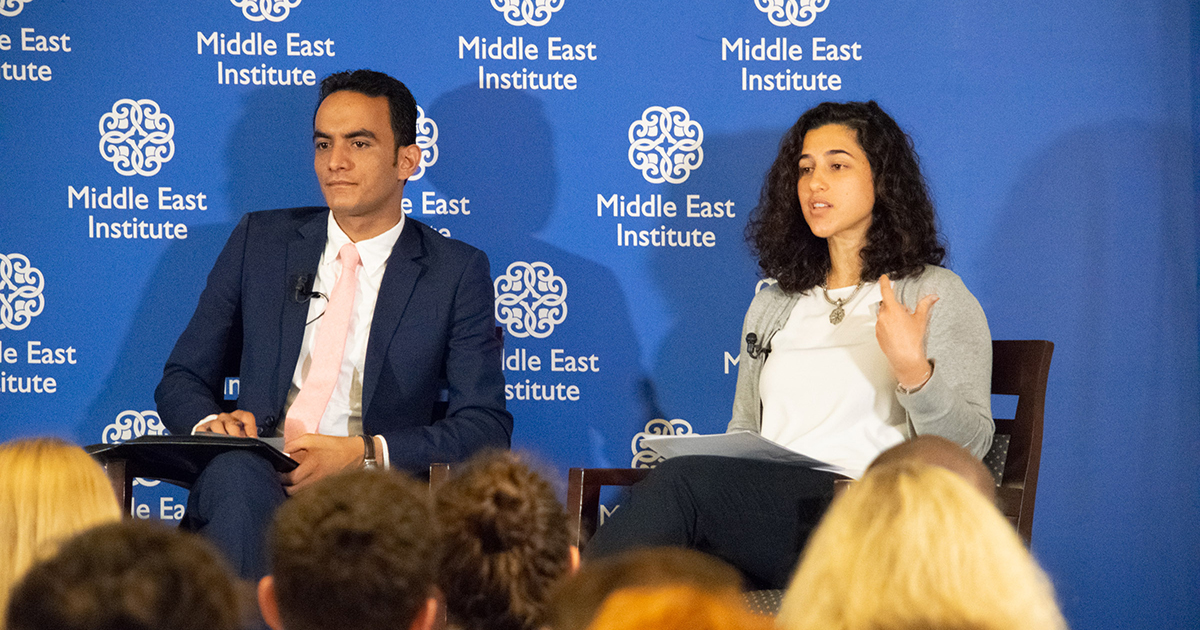
Can a deal to withdraw U.S.-backed Kurdish forces from the contested Syrian town of Manbij help to break the tension between opposing Turkish and American strategies in Syria? MEI’s Gonul Tol and Charles Lister join host Paul Salem to discuss.
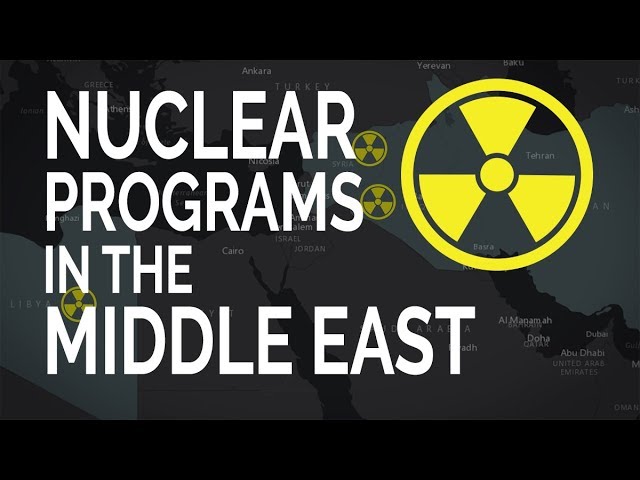
The Middle East is going nuclear, and not just Iran. As several countries across the region pursue nuclear programs to meet soaring domestic energy demands, the risk of nuclear proliferation also increases. MEI’s Bilal Saab explains the security risks.
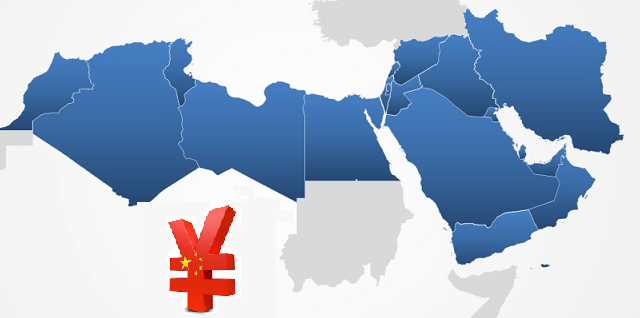
One Country, One Province: China’s External Industrial Policy in the Middle East
China is currently deploying a policy of industrial transfer in the Middle East. This is an external trade and industry policy, a transplanting of domestic economic institutions in external geographies. The financing of this China geo-industrial policy will reshape the Central Asia-Middle East-Africa trade and production nexus in the coming decade.
Several countries have engaged in a flurry of diplomatic moves in recent days to prevent combat between Israeli and Iranian forces in southern Syria from escalating into full-scale war. MEI senior fellows Robert Ford and Charles Lister join host Paul Salem to discuss these moves and the state of the Syrian conflict.
Pompeo’s sanction threats and Iran’s energy sector
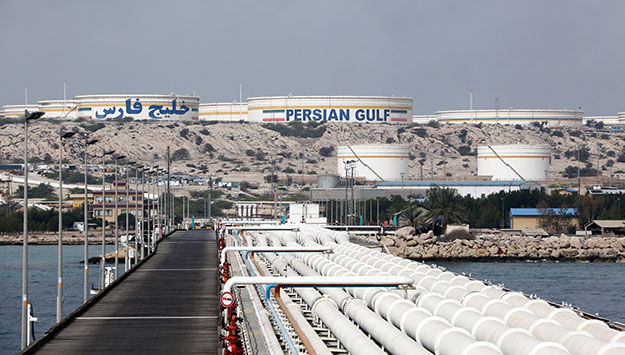
Secretary of State Mike Pompeo threatened Iran with the “strongest sanctions in history” following the U.S. exit from the nuclear deal and outlined twelve demands as conditions for striking a new treaty between the two countries. MEI’s Rauf Mammadov and Ahmad Majidyar join Paul Salem to discuss the implications of this policy and take a closer look at Iran’s oil and energy sector amid the sanction threats.
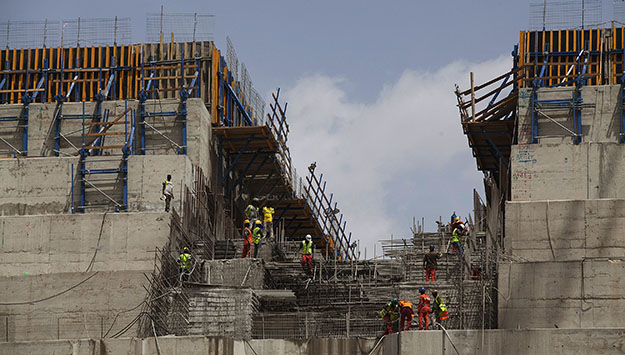
Egypt’s sustainable development threatened by Ethiopian dam
It is a travesty that in the 21st century the construction of a mega-hydropower-generation project, the Great Ethiopian Renaissance Dam (GERD) has been underway for over seven years without an independent, comprehensive transboundary Environmental and Social Impact Assessment (ESIA) conducted first.
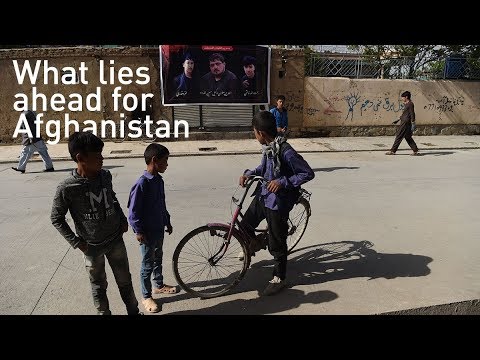
What lies ahead for Afghanistan: the various scenarios
The way forward in Afghanistan seems as unclear as it has ever been. An outright military victory against the Taliban and other insurgent groups appears to be unachievable. The prospect of insurgents overrunning the country soon appears similarly unlikely. At the same time, a negotiated peace seems presently improbable. At least on terms outlined by the Kabul government and international community, the Taliban shows little interest in reconciliation.
Islam, Migrants and Multiculturalism: A Glance at Germany, Korea and Beyond
Are the principles of tolerance and pluralism that underpin progressive visions of political community under threat? In this essay, the authors discuss the rising tide of Islamophobia and anti-immigrant sentiment in Germany, East Asia, and elsewhere.
Europe has little wiggle room to keep Iran deal alive | Monday Briefing
In this week’s Monday Briefing, MEI experts Ahmad Majidyar, Alex Vatanka, Jean-François Seznec, Gerald Feierstein, Marvin G. Weinbaum, Gonul Tol, and Randa Slim provide analysis on recent and upcoming events including Europe’s scramble to salvage the Iran nuclear deal following the U.S. withdrawal, Iran’s response to Russia’s call for all foreign forces to leave Syria, a meeting by Saudi Arabia, the UAE and Russia to discuss the impact of new U.S. sanctions on Iran, the arrest of women’s rights activists in Saudi Arabia, new political tensions in Pakistan, a push in the U.S.
How Trump’s pullout from the nuclear deal will affect Iran’s energy industry
Opinions about the consequences of the U.S. pulling out of the Iran nuclear deal began flying around as soon as President Donald Trump announced the exit.
Many of the key points that pundits have made about Washington turning its back on the Joint Comprehensive Plan of Action have dealt with oil. That’s because the U.S. is likely to sanction Iranian oil exports again, as it did during the Obama administration.
Here are several short-term and long-term consequences of the U.S. about-face on the Iran deal: