This individual is a guest contributor. MEI is not able to assist with contact requests.
Shahmahmood Miakhel is the Country Director in Afghanistan for the US Institute of Peace (USIP). Prior to that he was a Governance Advisor for the United Nations Assistance Mission in Afghanistan (UNAMA), and, from 2003–2005, a Deputy Minister of the Interior in the Government of Afghanistan. In 1994–1995 he worked for the United Nations Development Programme (UNDP) and United Nations Office for Project Services (UNOPS) in South and Southeast Afghanistan helping to establish District Rehabilitation Shuras (DRS). He also worked as a reporter for the Pashto service of the Voice of America from 1985–1990.
Khamenei’s Aide Holds Meeting with Leader of Notorious Militia Group in Iraq
Iran’s Fars News Agency reports that Supreme Leader Ali Khamenei’s representative to Iraq, Sayyed Mojtaba Hosseini, yesterday held a meeting with Akram al-Kaabi, the chief commander of Iran-backed militia group Harakat al-Nujaba.
Top Iranian Lawmaker Hails Quds Force’s Subversive Activities in Iraq and Syria
Chairman of the Iranian Parliament’s National Security and Foreign Policy Commission Alaeddin Boroujerdi has commended Iranian Quds Force Commander Qassem Soleimani’s “important” role in regional conflicts.
Concerns in Iran over Trump’s Possible I.R.G.C. Designation
The media and legal experts in Iran have already begun examining the implications a potential decision by the Trump administration to designate the Islamic Revolution Guards Corps (I.R.G.C.) as a terrorist entity. Tabnak, an outlet affiliated with former I.R.G.C.
After boycotting parliamentary elections in 2012 and 2013, the Kuwaiti Muslim Brotherhood’s political wing, Hadas, ran their candidates in last year’s snap election. Four out of five of the party’s candidates won, bringing Hadas back into Kuwait’s 50-member National Assembly.
Iran Tasks Basij to Expand the War on Information and Smother Social Media
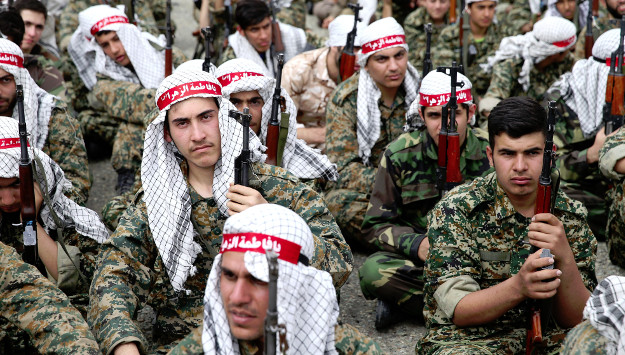
Iran’s Deputy Attorney General Abdolsamad Khoramabadi has announced that his office has tasked the Basij organization to take a leading role in cracking down on the country’s cyberspace.
I.R.G.C. Continues to Incite Houthi Attacks against Saudi Arabia
The Islamic Revolution Guards Corps (I.R.G.C.) media outlets continue to justify and encourage attacks by Yemeni Houthi rebels against Saudi Arabia. I.R.G.C.-affiliated Fars News Agency, for example, ran a number of news stories and commentaries today glorifying the Houthis’ latest attacks against Saudi military targets, including a recent attack targeting a Saudi warship and a scud missile that the Houthis claimed hit a military base near the Saudi capital.
Iran's Regime Intensifies Crackdown on Innocent Iranians Traveling Home from West
An Iranian scientist who worked for a Belgian university has been threatened with the death penalty in Iran, the Amnesty International reported on February 7. Dr. Ahmadreza Djalali, a resident of Sweden and a professor at a Belgian university, has been detained in Iran since last April.
Khamenei’s Insincere “Clemency” ahead of Revolution Day
Iran’s Supreme Leader Ali Khamenei has agreed to pardon or commute the sentences of 631 Iranian convicts, the Iranian media reports. The “clemency” was suggested by Iran’s Judiciary Chief Ayatollah Sadegh Amoli Larijani on the occasion of a Shiite religious event and ahead of the anniversary of Iran’s 1979 revolution. The convicts were mostly from Iran’s revolutionary courts, the Judiciary Organization of the Armed Forces and the State Discretionary Punishment Organization.