This individual is a guest contributor. MEI is not able to assist with contact requests.
Shahmahmood Miakhel is the Country Director in Afghanistan for the US Institute of Peace (USIP). Prior to that he was a Governance Advisor for the United Nations Assistance Mission in Afghanistan (UNAMA), and, from 2003–2005, a Deputy Minister of the Interior in the Government of Afghanistan. In 1994–1995 he worked for the United Nations Development Programme (UNDP) and United Nations Office for Project Services (UNOPS) in South and Southeast Afghanistan helping to establish District Rehabilitation Shuras (DRS). He also worked as a reporter for the Pashto service of the Voice of America from 1985–1990.
Monday Briefing: Responding to Orlando, ISIS in Libya, and Hamas-Fatah Meeting
In this week’s Monday Briefing, MEI chairman Richard A. Clarke responds to the mass shooting in Orlando, and Charles Lister and Antoun Issa provide analysis on events including the pushing back of ISIS in Libya and the upcoming meeting of Hamas and Fatah.
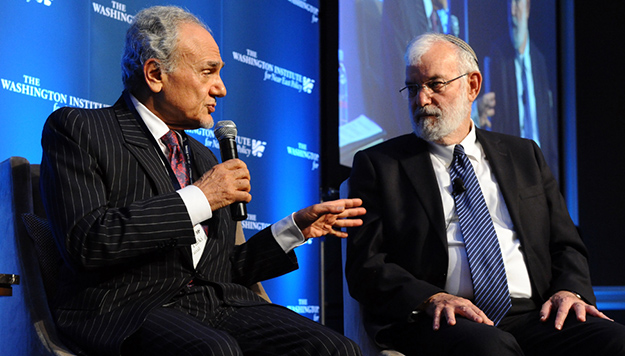
For several years, Israeli-Saudi collaboration over regional geostrategy to check Iranian influence has been the worst kept secret in the Middle East since the advent of Israel’s robust nuclear arsenal. Still, public coordination has been taboo, and while indirect, and even direct, coordination may be taking place behind closed doors, no official relationships can develop. This, of course, is due to the history between the state of Israel and the Arab world.
Learning from Deaths in Disasters: The Case of Odisha, India
In 1999, Odisha, India was struck by a super cyclone featuring an unprecedented storm surge and torrential rainfall that resulted in widespread devastation and a substantial loss of life. Fourteen years later, the same area was hit by Cyclone Phailin, which despite its severity, claimed relatively few lives. This essay examines the reasons for the starkly different death tolls and considers what lessons could be drawn from the responses to these two disasters.
These days even the hint of a renewal of diplomacy on Palestine is enough to set tongues wagging. In recent months, France has led what remains an inchoate effort to fill the diplomatic vacuum created by the Obama administration’s decision two years ago to close its book on Palestine.
Between the rise to power of the Justice and Development Party (A.K.P.) in the early 2000s and the eruption of the Syrian crisis in 2011, Turkey’s “zero problems with neighbors” approach to foreign policy seemed commendable. Today, however, Ankara’s foreign policy is perhaps best described as “zero neighbors without problems.” In response to the Arab uprisings of 2011, Ankara’s projection of primarily soft power has evolved into the embrace of hard power—most notably in Iraq and Syria.
Community Responses to Floods in Fiji: Lessons Learned
As Pacific countries urbanize, the possibilities for more deaths and destruction are obvious. Traditional means of flood prevention and protection are not necessarily forgotten, despite modern changes in living patterns and life styles. In this essay, taking Fiji as a case study, lessons learned from traditional lifestyles are analyzed in the light of new, urban settlement patterns.
This Policy Paper is part of The Middle East Institute’s Regional Cooperation Series. Throughout 2016, MEI will be releasing several policy papers by renowned scholars and experts exploring possibilities to foster regional cooperation across an array of sectors. The purpose is to highlight the myriad benefits and opportunities associated with regional cooperation, and the high costs of the continued business-as-usual model of competition and intense rivalry.
Netanyahu’s Risky Politics and the French Initiative
The so-called ‘French initiative’—a boost-plan for the moribund ‘Middle East Peace Process’ designed to bring Israel and the P.L.O. back to the negotiating table under an international umbrella through a series of multilateral summits—was born in classic French diplomatic opulence. Not nearly half-baked, the initiative was presented ceremoniously in a grandiose manner by a foreign minister who was replaced shortly after, prompting knee-jerk reactions from all parties.
Monday Briefing: Manbij Offensive, Yemen Talks, Turkey-Israel, Tunisia Unity Government
In this week’s Monday Briefing, MEI experts Robert S. Ford, Charles Schmitz, Gonul Tol, and Mabrouka M’Barek provide analysis on recent events including Manbij offensive, Yemen talks, Israel-Turkey rapprochement, and Tunisia national unity government.
Rohingya Refugees in Aceh, Indonesia: Hostile Hospitality
This essay investigates what became of the many hundreds of Rohingya who were rescued from their rickety boats in the Andaman Sea in May 2015 and brought to shore in Aceh, Indonesia. It discusses the spontaneous acts of hospitality that initially greeted their arrival, the subsequent escapes by some from the camps in which they were accommodated, and the struggle by local officials and NGOs to find mid-term solutions for their care.