This individual is a guest contributor. MEI is not able to assist with contact requests.
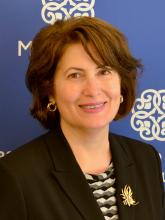
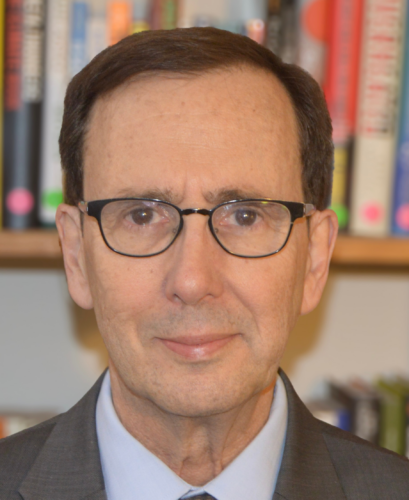
Shahmahmood Miakhel is the Country Director in Afghanistan for the US Institute of Peace (USIP). Prior to that he was a Governance Advisor for the United Nations Assistance Mission in Afghanistan (UNAMA), and, from 2003–2005, a Deputy Minister of the Interior in the Government of Afghanistan. In 1994–1995 he worked for the United Nations Development Programme (UNDP) and United Nations Office for Project Services (UNOPS) in South and Southeast Afghanistan helping to establish District Rehabilitation Shuras (DRS). He also worked as a reporter for the Pashto service of the Voice of America from 1985–1990.
Randa Slim Named Director of MEI Initiative for Track II Dialogues
(Washington, D.C.) – The Middle East Institute (MEI) is pleased to announce that Randa Slim has been named director of the Institute’s new Initiative for Track II Dialogues.
Transitional Justice and the Politics of Lustration in Tunisia
No transitional justice dilemma is more contested in Tunisia than that of lustration and vetting. While trials of former ruling elites, either in absentia or in the courtroom, grab international headlines, the question of how to deal with the tens of thousands of former Ben Ali regime functionaries who were complicit in past abuses yet are not likely to be brought to trial has proven even more politically charged. To be sure, the question over the fate of these potential targets of lustration and vetting continues to contribute to Tunisia’s prolonged post-revolutionary political crisis, as draft laws on lustration and ad hoc leaks from state archives solidify cleavages among Tunisia’s diverse array of transitional political actors.
South Korea has launched various transitional justice measures since democratic transition in 1987, with truth commissions being employed most frequently. With at least ten truth commissions established to date, South Korea has been a leader in such initiatives in the Asia Pacific region. This paper analyzes two of South Korea’s most prominent truth commissions―the Jeju Commission and the Truth and Reconciliation Commission (TRC)―in an effort to answer why some truth commissions succeed while others do not.
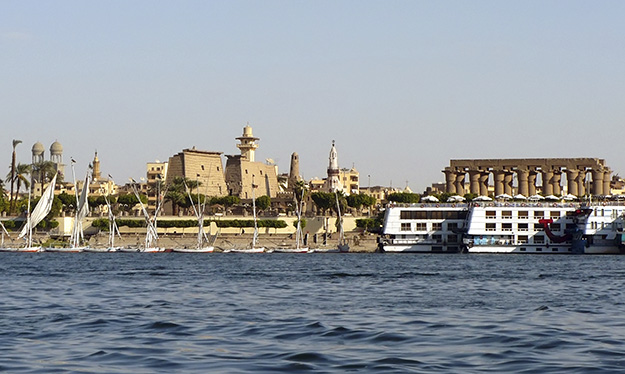
In the eyes of the world, Egypt is Cairo, where political unrest leads the news. With around a quarter of the nation’s 90 million inhabitants concentrated around the capital, in addition to the bulk of wealth and industry, it’s easy to forget the rest of the country, which is what state officialdom has done for decades. For administrative purposes, Egypt is divided into 29 governorates, each with a capital city.
Unrequited Desire: Egyptians' Passion for Justice and Accountability
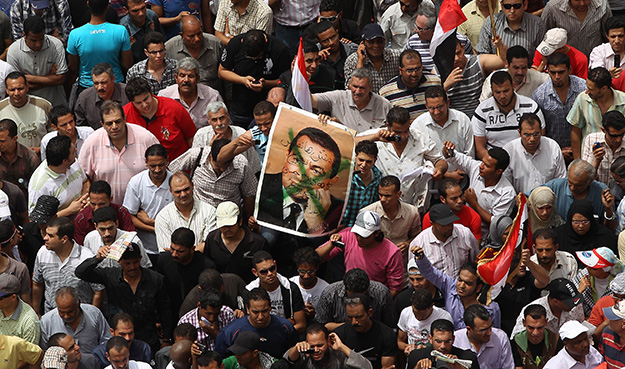
Egyptians who believed that the removal of President Hosni Mubarak in February 2011 would lead to the establishment of a democratic government have faced many setbacks. Youthful revolutionary activists unsuccessfully challenged the power of the Supreme Council of the Armed Forces (SCAF) transitional government and the autonomy of the military. The electoral triumph of Islamist parties and candidates in parliamentary and presidential elections in 2011 and 2012 eclipsed weak and inexperienced secular parties and brought to power leaders who failed to ensure adequate representation of political opponents, women, and Copts in key aspects of governing, or to protect Copts from rising attacks. Continuing divisions among opposition forces, along with the roundup of Islamists and other opponents by the military, which engineered the July 2013 removal of President Mohamed Morsi, suggest that the struggle to achieve justice and create an accountable government will be prolonged.
Libya, the ICC, and Securing Post-Conflict Justice
Since questions of post-atrocity accountability began to surface in regard to the “Arab Spring,” there has been interest in the pursuit of international-led justice in countries that have experienced uprisings, such as Bahrain, Libya, Syria, and Yemen. There were calls for the involvement of the International Criminal Court (ICC) in both Libya and Syria. The ICC has become involved only in Libya. However, this involvement has become mired in struggles that expose the challenges of a system that some regard as simply another expression of a profoundly undemocratic international order.
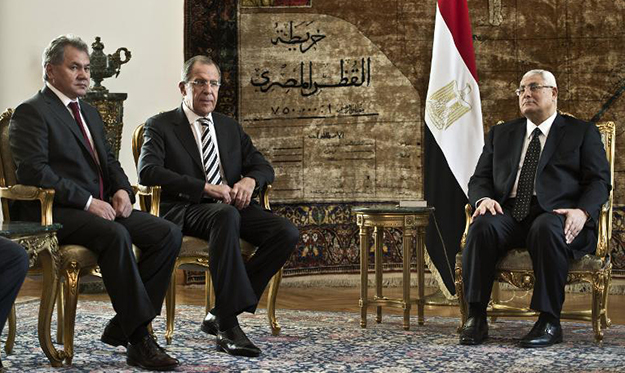
Egyptian-Russian relations have recently been marked by a substantial increase in diplomatic activity amid a media frenzy over a potential arms deal. These developments have given rise to suggestions that Egypt’s foreign policy is shifting away from the United States and toward Russia—a major realignment given Egypt’s extensive political and military ties with the United States since the 1970s.
Ori Nir of Americans for Peace now will hold a conversation with Akiva Eldar on the current situation in Israel and Palestine.Akiva Eldar is a senior political columnist for Al-Monitor news service’s Israel Pulse. He was formerly a senior columnist and editorial writer for Haaretz and served as Haaretz’s US bureau chief and diplomatic correspondent in the 1980’s. His most recent book (with Idith Zertal), Lords of the Land, on the Jewish settlements, was a best-seller in Israel and has been translated into English, French, German and Arabic.
On Wednesday, December 4, Hassan Laqees, a Lebanese Hezbollah leader who was reportedly involved in the group’s weapons procurement and development, was assassinated south of Beirut. On Sunday, another Hezbollah military commander was killed in Syria, bringing the number of Hezbollah dead in the Syrian conflict into the hundreds.
Salafyo Costa were once the darlings of the media. Featured both in Egyptian outlets[1] and foreign publications such as CNN, the Los Angeles Times, and the Huffington Post,[2] the groundbreaking youth movement founded in April 2011 brought together ultraconservative Salafis, Muslim Brotherhood supporters, political liberals and leftists, and Coptic Christians.
Decoding Al-Qaeda's Strategy: The Deep Battle Against America
The Middle East Institute is proud to host author and MEI adjunct scholar Michael W. S. Ryan for a discussion of his book, Decoding Al-Qaeda’s Strategy: The Deep Battle Against America (Columbia University Press, 2013). In his latest book, Dr. Ryan draws on extensive research of al-Qaeda’s Salafist roots and of the work of lesser-known al-Qaeda theoreticians, ultimately determining that jihadist terrorism strategy more closely resembles Maoist guerrilla warfare than mainstream Islam.