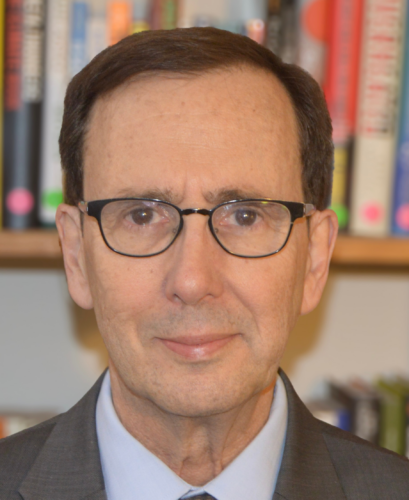
This individual is a guest contributor. MEI is not able to assist with contact requests.
Shahmahmood Miakhel is the Country Director in Afghanistan for the US Institute of Peace (USIP). Prior to that he was a Governance Advisor for the United Nations Assistance Mission in Afghanistan (UNAMA), and, from 2003–2005, a Deputy Minister of the Interior in the Government of Afghanistan. In 1994–1995 he worked for the United Nations Development Programme (UNDP) and United Nations Office for Project Services (UNOPS) in South and Southeast Afghanistan helping to establish District Rehabilitation Shuras (DRS). He also worked as a reporter for the Pashto service of the Voice of America from 1985–1990.
There can be no doubt that revolutionary activities gripped Egypt after the January 2011 uprising began. Yet, just as revolutionary waves pushed for greater freedoms and social justice, counterrevolutionary forces responded to maintain some semblance of a Mubarakist-regime without Mubarak. The prospects for increased political freedom look dim at the moment.
After the Financial Crisis: Dubai-China Economic Relations
Dubai is strategically located at a junction between Europe, Africa, and the Far East. For China, an emerging global leader in trade and international business, Dubai is a promising place in which to conduct business. Exploring Dubai-Sino economic relations beckons a more comprehensive understanding of both the level of Dubai’s economic diversification and the impact of the global financial crisis. Dubai’s private sector is extensively engaged in foreign trade, with an emphasis on the service industry. The service industry has three subsectors—tourism, finance, and real estate. Assessing the trajectory of China’s involvement in these three sectors of Dubai’s economy sheds light on how Dubai-Sino economic relations have been affected by the global financial crisis.
Panel IV: Engaging the International CommunityModerated by Michael Hanna, The Century Foundation Jason Brownlee, University of Texas at AustinAmy Hawthorne, Atlantic CouncilMohamed Elmenshawy, Middle East InstituteAbdel Monem Said, al Masry al YoumClosing remarks by Kate Seelye, The Middle East Institute.
Panel IV: Engaging the International CommunityModerated by Michael Hanna, The Century Foundation Jason Brownlee, University of Texas at AustinAmy Hawthorne, Atlantic CouncilMohamed Elmenshawy, Middle East InstituteAbdel Monem Said, al Masry al YoumClosing remarks by Kate Seelye, The Middle East Institute.
Panel IV: Engaging the International CommunityModerated by Michael Hanna, The Century Foundation Jason Brownlee, University of Texas at AustinAmy Hawthorne, Atlantic CouncilMohamed Elmenshawy, Middle East InstituteAbdel Monem Said, al Masry al YoumClosing remarks by Kate Seelye, The Middle East Institute.
Panel IV: Engaging the International CommunityModerated by Michael Hanna, The Century Foundation Jason Brownlee, University of Texas at AustinAmy Hawthorne, Atlantic CouncilMohamed Elmenshawy, Middle East InstituteAbdel Monem Said, al Masry al YoumClosing remarks by Kate Seelye, The Middle East Institute.
Moderator: Robin Wright, USIP-Wilson Center Distinguished ScholarHossam Bahgat, Egyptian Initiative for Personal RightsMirette Mabrouk, Atlantic Council Jawad Nabulsi, al Nebny Foundation Diane Singerman, American University
Moderator: Robin Wright, USIP-Wilson Center Distinguished ScholarHossam Bahgat, Egyptian Initiative for Personal RightsMirette Mabrouk, Atlantic Council Jawad Nabulsi, al Nebny Foundation Diane Singerman, American University
Moderator: Robin Wright, USIP-Wilson Center Distinguished ScholarHossam Bahgat, Egyptian Initiative for Personal RightsMirette Mabrouk, Atlantic Council Jawad Nabulsi, al Nebny Foundation Diane Singerman, American University
Moderator: Robin Wright, USIP-Wilson Center Distinguished ScholarHossam Bahgat, Egyptian Initiative for Personal RightsMirette Mabrouk, Atlantic Council Jawad Nabulsi, al Nebny Foundation Diane Singerman, American University
Moderator: Robin Wright, USIP-Wilson Center Distinguished ScholarHossam Bahgat, Egyptian Initiative for Personal RightsMirette Mabrouk, Atlantic Council Jawad Nabulsi, al Nebny Foundation Diane Singerman, American University
Panel II: Working Toward a National Reconciliation
Panel II: Working Toward a National Reconciliation 11:00am-12:30pmModerator: Thomas Friedman, New York TimesNader Bakkar—co-founder, al Nour PartyDina Guirguis—Tahrir Institute for Middle East PolicyWael Haddara—former senior advisor to Mohamed MorsiHani Sarie Eldin—al Dostour Party
Panel II: Working Toward a National Reconciliation
Panel II: Working Toward a National Reconciliation 11:00am-12:30pmModerator: Thomas Friedman, New York TimesNader Bakkar—co-founder, al Nour PartyDina Guirguis—Tahrir Institute for Middle East PolicyWael Haddara—former senior advisor to Mohamed MorsiHani Sarie Eldin—al Dostour Party
Panel II: Working Toward a National Reconciliation
Panel II: Working Toward a National Reconciliation 11:00am-12:30pmModerator: Thomas Friedman, New York TimesNader Bakkar—co-founder, al Nour PartyDina Guirguis—Tahrir Institute for Middle East PolicyWael Haddara—former senior advisor to Mohamed MorsiHani Sarie Eldin—al Dostour Party