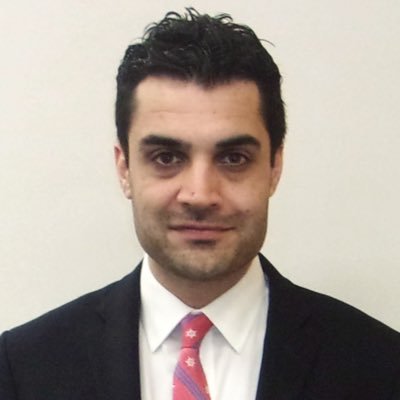
This individual is a guest contributor. MEI is not able to assist with contact requests.
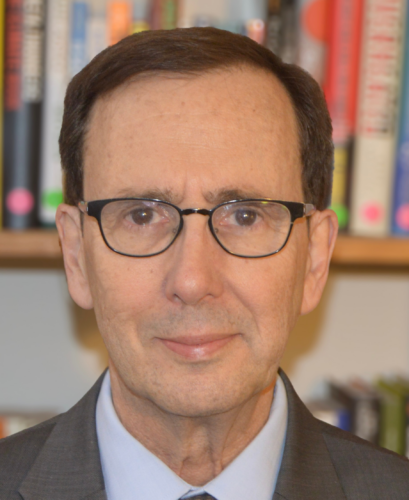
Shahmahmood Miakhel is the Country Director in Afghanistan for the US Institute of Peace (USIP). Prior to that he was a Governance Advisor for the United Nations Assistance Mission in Afghanistan (UNAMA), and, from 2003–2005, a Deputy Minister of the Interior in the Government of Afghanistan. In 1994–1995 he worked for the United Nations Development Programme (UNDP) and United Nations Office for Project Services (UNOPS) in South and Southeast Afghanistan helping to establish District Rehabilitation Shuras (DRS). He also worked as a reporter for the Pashto service of the Voice of America from 1985–1990.
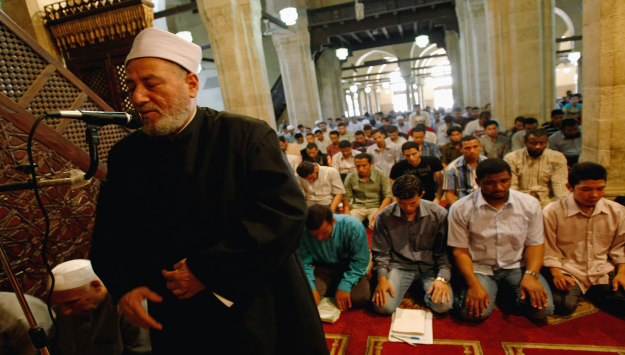
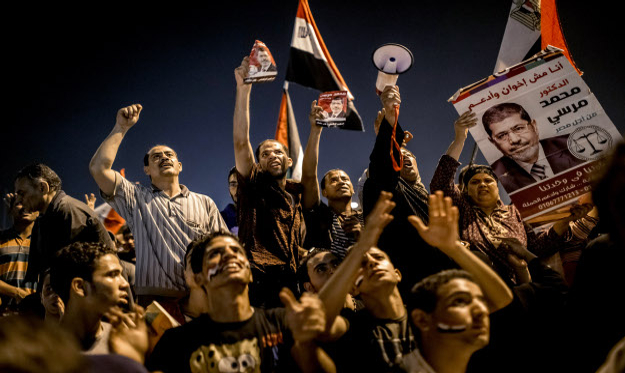
From Muhammad Ali to Mohamed Morsi, modern Egyptian leaders have understood that any attempt to control the state without the endorsement, if not blatant co-option, of key institutions such as al-Azhar is an ill-fated pursuit. The headache for President Morsi is that these institutions are trying to assert their independence and are presenting a range of direct and indirect challenges to his authority and, more broadly, to the Muslim Brotherhood and its political arm, the Freedom and Justice Party (FJP).
Amr Darrag is a senior member of the Muslim Brotherhood and a professor of engineering at Cairo University. He served as the head of the foreign relations committee of the Freedom and Justice Party and as secretary general of the constituent assembly that drafted Egypt’s new constitution in 2012. He was recently appointed Minister of Planning and International Cooperation.
Interview with Professor Selçuk Esenbel, Director of the Asian Studies Center, Boğaziçi University, Istanbul, Turkey
Although Turkey has a long history of continuing interaction with European intelligentsia, politicians and opinion makers, and also with the United States, there is very little experience and background with which to communicate with Asian countries. The Asian Studies Center is now recognized as the institution that can form viable academic connections and develop projects accordingly which will “bring the world to Turkey.”
Members of the Egyptian press and media who make it their business to critique high officials know they’ve done a good job when they’re arrested and hauled in for questioning. In January 2013 an Islamist lawyer filed charges against Bassem Youssef, host of the satirical talk show al-Bernameg (The Program), for defaming President Mohamed Morsi, prompting the general prosecutor’s office to launch an investigation.
The Asia Cooperation Dialogue (ACD): Progress and Potential
The Asia Cooperation Dialogue’s (ACD) future looks promising. The 11-year-old ACD has taken important steps in becoming a relevant, constructive pan-Asian body with a forward-looking agenda, concrete plans and projects underway, and some noteworthy accomplishments.
Learning from Iraq: A New Model for Stability and Reconstruction Operations
Tue, 5/21/2013 12:00 pm to 1:00 pm The Middle East Institute is pleased to welcome Stuart Bowen, the Special Inspector General for Iraq Reconstruction, to discuss his proposals for how best to conduct Stability and Reconstruction Operations. Stability and Reconstruction Operations, or (SROs), entail governmental efforts to rebuild crucial infrastructure, implement rule of law, and ensure security in developing countries before, during, and after armed conflict. As Mr.
Learning from Iraq: A New Model for Stability and Reconstruction Operations
Tue, 5/21/2013 12:00 pm to 1:00 pm The Middle East Institute is pleased to welcome Stuart Bowen, the Special Inspector General for Iraq Reconstruction, to discuss his proposals for how best to conduct Stability and Reconstruction Operations. Stability and Reconstruction Operations, or (SROs), entail governmental efforts to rebuild crucial infrastructure, implement rule of law, and ensure security in developing countries before, during, and after armed conflict. As Mr.
Learning from Iraq: A New Model for Stability and Reconstruction Operations
Tue, 5/21/2013 12:00 pm to 1:00 pm The Middle East Institute is pleased to welcome Stuart Bowen, the Special Inspector General for Iraq Reconstruction, to discuss his proposals for how best to conduct Stability and Reconstruction Operations. Stability and Reconstruction Operations, or (SROs), entail governmental efforts to rebuild crucial infrastructure, implement rule of law, and ensure security in developing countries before, during, and after armed conflict. As Mr.
Learning from Iraq: A New Model for Stability and Reconstruction Operations
Tue, 5/21/2013 12:00 pm to 1:00 pm The Middle East Institute is pleased to welcome Stuart Bowen, the Special Inspector General for Iraq Reconstruction, to discuss his proposals for how best to conduct Stability and Reconstruction Operations. Stability and Reconstruction Operations, or (SROs), entail governmental efforts to rebuild crucial infrastructure, implement rule of law, and ensure security in developing countries before, during, and after armed conflict. As Mr.
Learning from Iraq: A New Model for Stability and Reconstruction Operations
Tue, 5/21/2013 12:00 pm to 1:00 pm The Middle East Institute is pleased to welcome Stuart Bowen, the Special Inspector General for Iraq Reconstruction, to discuss his proposals for how best to conduct Stability and Reconstruction Operations. Stability and Reconstruction Operations, or (SROs), entail governmental efforts to rebuild crucial infrastructure, implement rule of law, and ensure security in developing countries before, during, and after armed conflict. As Mr.