This individual is a guest contributor. MEI is not able to assist with contact requests.
Shahmahmood Miakhel is the Country Director in Afghanistan for the US Institute of Peace (USIP). Prior to that he was a Governance Advisor for the United Nations Assistance Mission in Afghanistan (UNAMA), and, from 2003–2005, a Deputy Minister of the Interior in the Government of Afghanistan. In 1994–1995 he worked for the United Nations Development Programme (UNDP) and United Nations Office for Project Services (UNOPS) in South and Southeast Afghanistan helping to establish District Rehabilitation Shuras (DRS). He also worked as a reporter for the Pashto service of the Voice of America from 1985–1990.
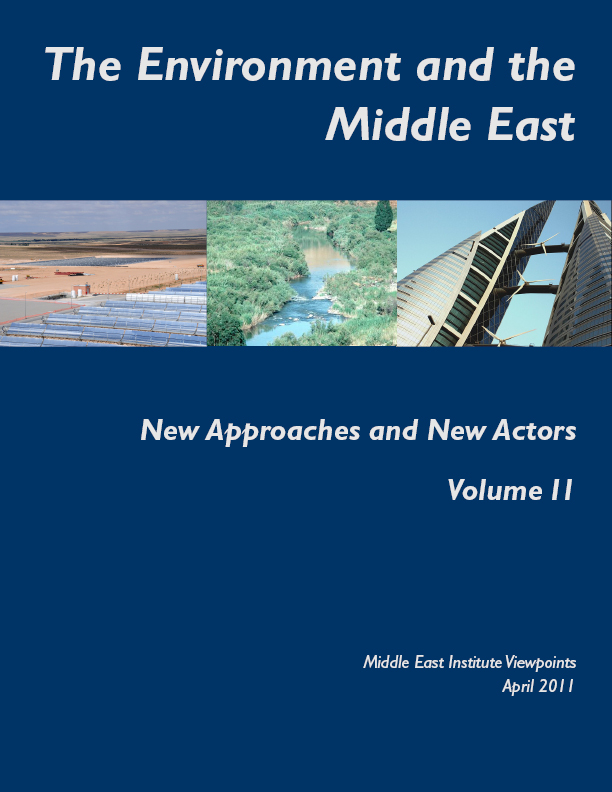
Introduction to The Environment and the Middle East: New Approaches and New Actors , Volume II
The tumultuous political changes taking place across the region dominate the news — deservedly so. Yet, there are other changes taking place throughout the Middle East which, though less prominent, also merit attention. Indeed, the region has no shortage of creative and committed “change agents” who in ways great and small have taken meaningful steps to address the myriad challenges to the sustainability of the region’s physical environment. Volume II in this series offers snapshots of a small selection of the many efforts aimed at cultivating responsible environmental stewardship.
This article outlines the important role that can be played by non-governmental organizations (NGOs) in helping to tackle environmental issues in the Middle East. Using the work of the Emirates Wildlife Society in association with the World Wild Fund for Nature (EWS-WWF) as an example, the article explores the challenges facing NGOs in the United Arab Emirates (UAE) and recommends ways in which these obstacles can be overcome.
Civil Society and Community Mobilization in Afghanistan
Originally posted December 2009
Civil Society (CS) consists of various kinds of community-based, non-governmental movements that, without waiting for or requesting government orders or assistance, come together mainly to solve problems and effect change. CS actors in Afghanistan exist at the local, district, and national levels. They are engaged in resolving problems and in calling upon people to contribute to, or participate in, community-based activities.
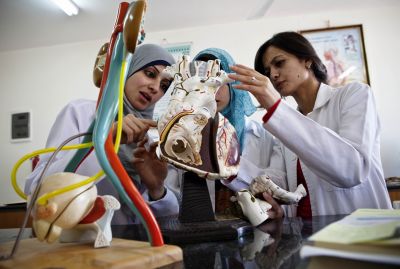
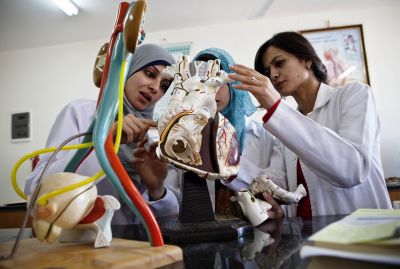
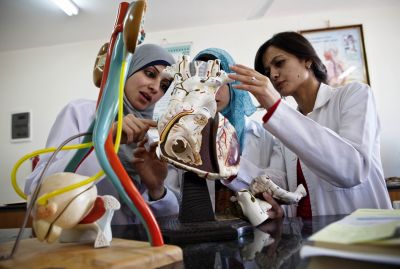
Experts throughout the massive aid community in Afghanistan agree that education is vital for development. Education shapes the quality of productivity, products, and services. Education informs citizens of the roles that they must play so that good governance may thrive. Education molds the quality of leadership. Yet, despite the rhetoric, the education sector is perennially underfunded; typically, it receives scarcely 10% of what is provided to other sectors.
The Emerging Afghan Media: Beyond the Stereotyping of Women?
Originally posted December 2009
For the past 30 or more years, media content in Afghanistan mostly has been controlled by the central government and its supporters. During this period, as throughout the 20th century, the most important and widely available forms of media have been national radio and television. However, rural perspectives and the realities of rural life have been conspicuously absent from most media content. Moreover, because of traditionally rigid gender roles, Afghan women have had very limited or almost no access to media and information sources.
Women's Agency in Afghanistan: From Survivors to Agents of Change
Originally posted December 2009
Often, policy debates on the empowerment of women in Afghanistan are impaired by the historic backlashes against radical top-down reforms and women’s emancipation (e.g., unseating kings) or by the assumption that the male-dominated culture makes it nearly impossible to create space for the advancement of women’s rights. As a result, the effort to develop a cohesive strategy for enhancing women’s participation in the reconstruction agenda is hampered.