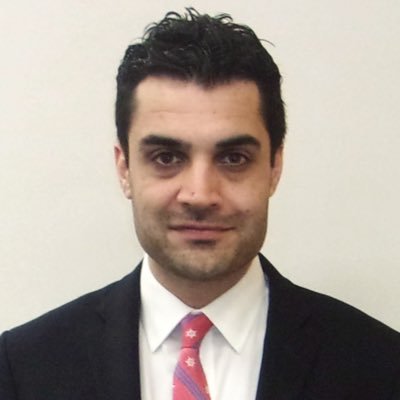
This individual is a guest contributor. MEI is not able to assist with contact requests.
Shahmahmood Miakhel is the Country Director in Afghanistan for the US Institute of Peace (USIP). Prior to that he was a Governance Advisor for the United Nations Assistance Mission in Afghanistan (UNAMA), and, from 2003–2005, a Deputy Minister of the Interior in the Government of Afghanistan. In 1994–1995 he worked for the United Nations Development Programme (UNDP) and United Nations Office for Project Services (UNOPS) in South and Southeast Afghanistan helping to establish District Rehabilitation Shuras (DRS). He also worked as a reporter for the Pashto service of the Voice of America from 1985–1990.
Middle East Revolutions: An Environmental Perspective
Most of the numerous articles written about the ongoing revolutions in the Middle East have focused on their political and/or economic causes and likely consequences. However, environmental and natural resource-related issues, which are also at the center of these revolutions, have received little or no attention.
Cultural Body Maps, Schemata, and the Art & Essay Contest
Originally posted June 2011
If there is a Horizontal Line that runs from the MAP off your body straight through the Land shooting up right through my heart Will this Horizontal Line when asked know how to find Where you end where I begin
In the wake of the recent Nuclear Security Summit in Washington DC, Turkish-Iranian relations once again came under scrutiny. As the US and the EU have intensified their efforts to impose sanctions on Iran through the UN Security Council, Turkey’s role in this issue has come into question. Notwithstanding Turkish temporary membership in the Security Council, the Turkish position will be critical for any effective implementation of sanctions.
Uprising in Syria: Implications for US and Regional Policy
The Middle East Institute is proud to host Syria experts Ammar Abdulhamid, Helena Cobban, and Steven Heydemann for a discussion about the ongoing protests in Syria and the international and regional reactions to the shifting Syrian landscape. As the uprising continues into its third month, how sustainable is the protest movement? Are the Syrian government's tactics in crushing dissent succeeding? What impact has the violence had on the Assad regime's relationship with its neighbors like Turkey and close allies like Iran, Hezbollah and Hamas?
*This article originally appeared in the Project Syndicate online on May 23, 2011.
As the Arab Spring enters its fourth month, it faces challenges but also presents opportunities. Despite setbacks in Libya, Yemen, and Syria, the democratic wave has already begun to change the Middle East’s political landscape.
Uprising in Syria: Implications for US and Regional Policy
The Middle East Institute is proud to host Syria experts Ammar Abdulhamid, Helena Cobban, and Steven Heydemann for a discussion about the ongoing protests in Syria and the international and regional reactions to the shifting Syrian landscape. As the uprising continues into its third month, how sustainable is the protest movement? Are the Syrian government's tactics in crushing dissent succeeding? What impact has the violence had on the Assad regime's relationship with its neighbors like Turkey and close allies like Iran, Hezbollah and Hamas?
The Middle East Institute is proud to host Ambassador Ali Suleiman Aujali, Paul Pillar, and Jeffrey White for a discussion about the current situation in Libya and ways to address the stalemate between Libya's rebels and the forces of Colonel Qaddhafi. As the conflict drags into its third month, Aujali, Pillar and White will examine the humanitarian situation on the ground, NATO's recent operational innovations, and the role of the US and Europe in aiding Libya's rebels.
Speakers: Amb. Ali Suleiman Aujali, Paul Pillar, Jeffrey White