Read the PDF
Iran entered this war after years of sustained economic pressure. Sanctions, isolation, and structural weaknesses have already produced a fragile economy marked by inflation, currency instability, and constrained growth. The war has intensified these pressures, but it has not represented a fundamentally new shock. Rather, it is an escalation of existing pressure on an already weakened system, one that has learned to function under constraint.
But Iran is now in unchartered economic territory. Tehran says the war has caused roughly $270 billion in damage, equivalent to around 57% of GDP, suggesting its recovery will take many years. Each additional month that the war continues could set the Iranian economy back by more than five years, reflecting the compounding impact on capital stock and productivity.
This matters for assessing the impact of new US measures, particularly the imposition of a naval blockade of Iranian ports. Iran’s economy is under strain, but it is not easily broken. Over decades, Tehran has developed workarounds: informal trade networks, indirect routing, and opaque shipping practices that allow continued — but reduced — economic activity. The key question is not whether pressure exists, but whether it can be made decisive.
Why It Matters for the US
- Blockade effectiveness is uncertain: This is the first attempt to impose a naval blockade at this scale on Iran; its impact will depend heavily on enforcement and international compliance.
- China is a critical variable: Beijing’s willingness to continue purchasing Iranian oil, even in the face of US pressure, could significantly weaken the blockade’s impact.
- Iran is structurally conditioned for endurance: Years of sanctions compelled the regime to develop workarounds that have reduced its vulnerability to sudden shocks, making economic collapse less likely in the short term.
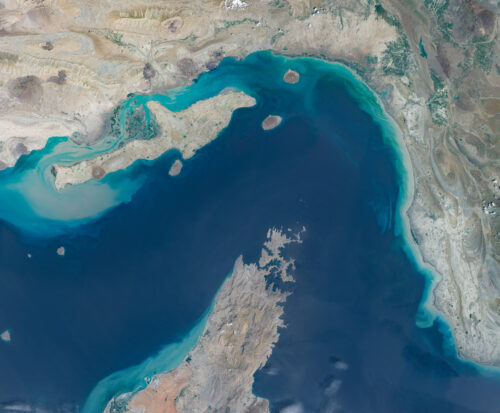
- Costs may spill outward: Further disruptions to energy and trade flows — via the Strait of Hormuz and the Red Sea — risk raising global prices and imposing economic costs on US partners and consumers.
- Time favors adaptation: Even under pressure, Iran can sustain reduced economic activity through evasion networks and alternative trade routes, including across its land borders or via the Caspian Sea, which are not covered by the blockade.
Policy Considerations
- Avoid overestimating the impact of economic pressure: Iran’s economy is already degraded; additional pressure will deepen the strain, but it is unlikely to result in a rapid collapse.
- Focus on enforcement, not announcements: The success of the blockade will depend less on its declaration and more on how tightly it is implemented and monitored. This will be hard.
- Plan for uneven international alignment: US strategy must account for partial non-compliance — especially from China — which could reduce pressure over time.
- Recognize Iran’s strategy of endurance: Tehran is likely to absorb the economic pain while seeking to raise external costs and erode political will among US partners.
- Integrate economic and geopolitical strategy: Economic measures cannot be treated in isolation; their effectiveness will depend on broader coordination with partners and management of global market impacts.
Alex Vatanka is a Senior Fellow at the Middle East Institute.
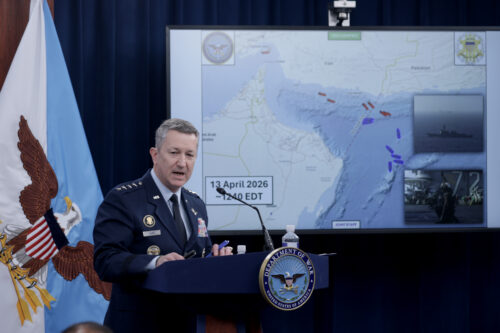
Photo by Alex Wong/Getty Images