Introduction to The State of the Arts in the Middle East
May 1, 2009
Share
Originally posted May 2009
Art unlocks the imagination, compels us to think, and reveals and emphasizes non-negotiable as well as inconvenient truths. Works of art are acts of individual creative self-exploration and self-expression. They offer escape. They furnish entertainment. They speak to our passions and deepest yearnings. In addition, they convey a society’s shared experiences. They also reaffirm, often question, and sometimes repudiate its core values, beliefs, and practices. They at once record and seek to produce social change. The importance of the arts thus goes far beyond aesthetics.
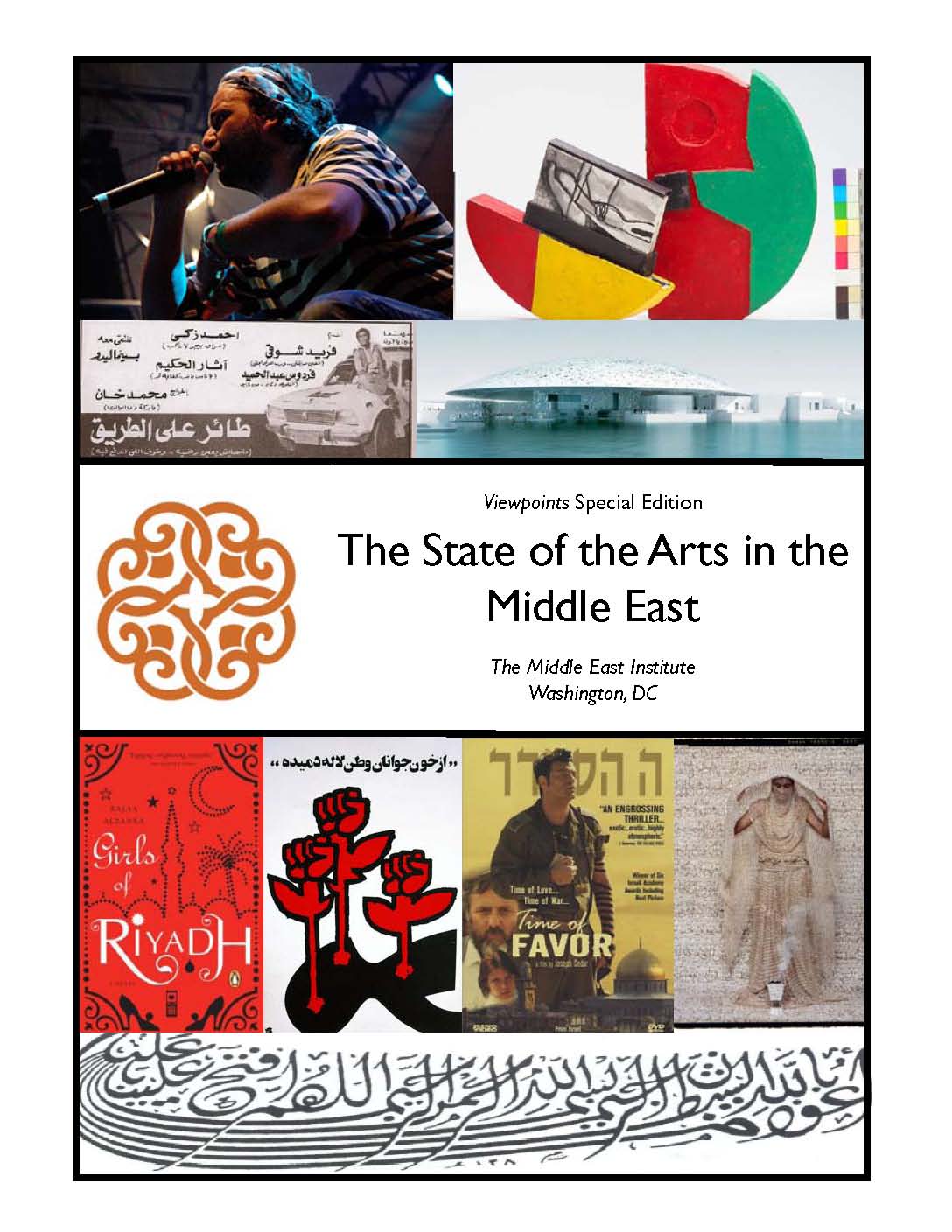
The Middle East and North Africa are bursting with artistic production in literature and the visual and performing arts. At a time when so much of the news about the region is focused on instability and violence, this special edition of the Middle East Institute’s (MEI) Viewpoints series on “The State of the Arts in the Middle East” surveys the landscape of creative artistic endeavors. The 17 short essays comprising this volume are intended as a sampling of the rich and diverse menu of artists and artistic products in the contemporary Middle East.
The Middle East Institute (MEI) is an independent, non-partisan, not-for-profit, educational organization. It does not engage in advocacy and its scholars’ opinions are their own. MEI welcomes financial donations, but retains sole editorial control over its work and its publications reflect only the authors’ views. For a listing of MEI donors, please click here.