Test of Wills: Iran’s Ability to Outlast the US Blockade
External Publication
April 27, 2026
Share
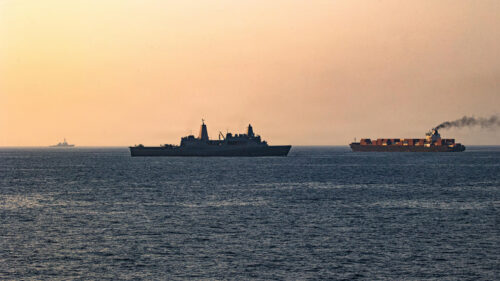
Economic blockades have long been used as a tool of coercion, deliberately positioned between diplomacy and war. From the British naval blockade of Germany in World War I, which helped weaken the German economic system over time, to the Soviet Berlin Blockade, which sought to force Western withdrawal by cutting off all land access to the city, blockades aim to compel political concessions by restricting access to critical supplies. Even in the nuclear age, the US “quarantine” of Cuba during the Cuban Missile Crisis demonstrated how blockades can pressure adversaries without immediate escalation to full war. In each case, the objective was not outright victory, but to reshape the opponent’s calculations under mounting economic strain.
The logic is straightforward: when military victory is out of reach, the fight shifts to controlling movement—who can trade, who can import, who can travel, and who can access the outside world.
The Middle East Institute (MEI) is an independent, non-partisan, not-for-profit, educational organization. It does not engage in advocacy and its scholars’ opinions are their own. MEI welcomes financial donations, but retains sole editorial control over its work and its publications reflect only the authors’ views. For a listing of MEI donors, please click here.