I was a teenage Afghan refugee in Pakistan’s tribal areas when the Twin Towers fell. Almost nobody around us understood the politics of what had happened, but we knew that something had changed for good. Afghanistan, which until then had been our private tragedy and our first exile from Taliban rule, had suddenly become the world’s concern, with the United States leading the response.
Russia’s Taliban Embrace Signals a New Power Shift in Afghanistan
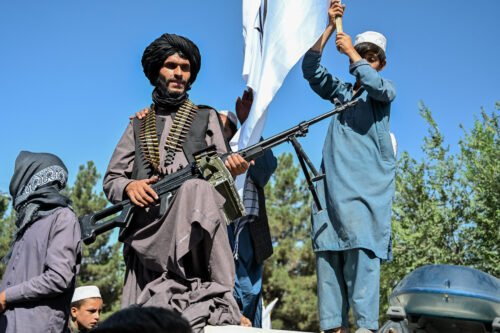
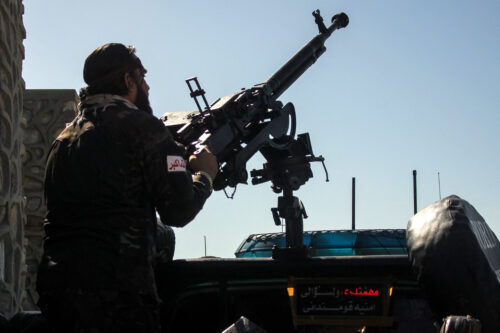
Sometimes the only thing more frightening than Afghanistan’s problems is the Taliban’s solutions and the recently signed Russia-Taliban military-technical agreement may be the most alarming one yet. The partnership signals that Afghanistan’s security architecture is being rebuilt without the United States, and increasingly by America’s rivals. Washington should pay close attention because the deal hands one of the world’s most repressive regimes a pathway to becoming more capable and deeply entrenched in a regional order where Russian influence is expanding at America’s expense.
The Pakistan-Afghanistan conflict: A strategic concern for the US
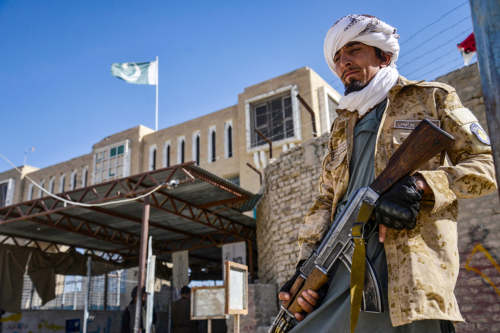
Pakistan’s relationship with the Afghan Taliban has shifted from open sponsorship in the 1990s to a silent partnership following 2001 to alienation and belligerence since 2021. Their current conflict, which comes at great cost to both countries and seems to have no easy military or political resolution, also poses a threat to the stability and prosperity of neighboring states. Although American strategic interests in the region greatly diminished following the United States’ military withdrawal from Afghanistan in August 2021, the region’s altered political dynamics have prompted a growing American engagement with Pakistan and tentatively with Afghanistan. At the same time, the US has become a factor in how both Islamabad and Kabul have come to form their national security strategies.
Land Grab in Sherpur: Monuments to Powerlessness, Impunity, and Inaction
Originally posted December 2009
In September 2003, armed police and bulldozers violently ejected around 250 people from land in central Kabul and demolished their homes to make way for the lavish mansions of the freshly empowered elite.[1] Sherpur, as the area is known, lies in the shadow of the diplomatic enclave and as such is some of the most valuable land in the capital.
Intimidating, Assassinating, and Leading: Two Early Mujahidin Commanders Reflect on Building Resistance Fronts
Originally posted December 2009
Saleh Mohammad and Ezzatullah Atif[1] were among the angry young Afghans who, in the first three years after the 1978 coup, drove their government out of the countryside. Mobilizing the youth of their areas into clandestine networks and then refashioning these into jabhas (resistance fronts) was their first experience of leadership. Their successful mobilization laid the foundations of the war of attrition, which eventually defeated the Soviet Union and toppled its client government.
Mullah Omar Wants You! Taliban Mobilization Strategies or Motivations for Joining the Insurgency
Originally posted December 2009
The Taliban insurgency in Afghanistan seemingly benefits from an unlimited reservoir of “foot soldiers” ready to take up the fight against the Afghan government and its international military supporters. The foot soldiers’ motivation is often attributed to ideology, poverty, and/or a lack of education. However, the ability of the Taliban insurgency to mobilize recruits is complex and driven by a mix of political, economic, and social factors.
Repeating History: Parallels between Mujahidin Tactics and Afghanistan’s Current Insurgency
Originally posted December 2009
Since 1747, all of the invaders or occupiers of Afghanistan have made almost the same mistakes. All were obliged to leave Afghanistan, resulting in the downfall or demise of their empires. In general, Afghans are independent thinkers and believe their own way of life to be the best. Interfering in their day-to-day affairs brings animosity and hatred against their would-be rulers, occupiers, and invaders. Nor do Afghans accept the imposition of rulers or types of government which would clash with their basic values.
Charting a Course for a Better Future: Responding to the Crimes of the Past
Originally posted December 2009
Thirty years of war have taken an enormous toll on all aspects of Afghan society whose traditional social fabric has broken down, giving rise to a new generation of political and military elites. The cycles of violence over the past three decades have included massive human rights abuses by all parties, leaving a legacy of pent-up grievances and profound feelings of injustice.
Respect for Afghanistan’s sovereignty is a sine qua non condition to restoring the country to normalcy. The fact that a country expects and demands that its sovereignty be respected should not be misconstrued as a refusal to engage the outside world — as a sign that the country is drifting towards some type of chauvinistic nationalism.
MEI’s Taliban Leadership Tracker is a detailed database mapping 1,200 leaders and appointees wielding influence throughout the Taliban government. Produced and maintained by MEI Non-Resident Scholar Javid Ahmad, the database can be used to help identify individuals who wield various forms of influence, ones who may be receptive to dialogue and collaboration, as well as those involved in rights violations, abuses, or criminal and terrorist activities.