I was a teenage Afghan refugee in Pakistan’s tribal areas when the Twin Towers fell. Almost nobody around us understood the politics of what had happened, but we knew that something had changed for good. Afghanistan, which until then had been our private tragedy and our first exile from Taliban rule, had suddenly become the world’s concern, with the United States leading the response.
Russia’s Taliban Embrace Signals a New Power Shift in Afghanistan
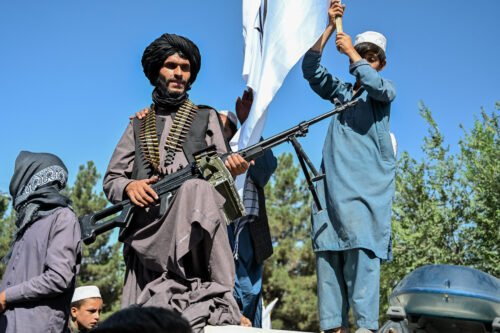
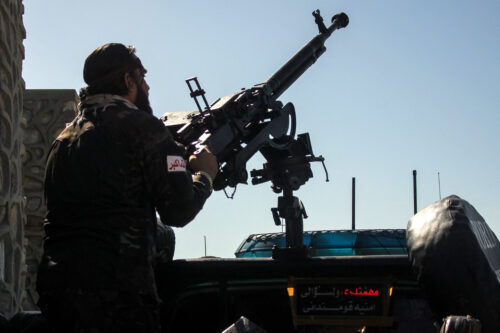
Sometimes the only thing more frightening than Afghanistan’s problems is the Taliban’s solutions and the recently signed Russia-Taliban military-technical agreement may be the most alarming one yet. The partnership signals that Afghanistan’s security architecture is being rebuilt without the United States, and increasingly by America’s rivals. Washington should pay close attention because the deal hands one of the world’s most repressive regimes a pathway to becoming more capable and deeply entrenched in a regional order where Russian influence is expanding at America’s expense.
The Pakistan-Afghanistan conflict: A strategic concern for the US
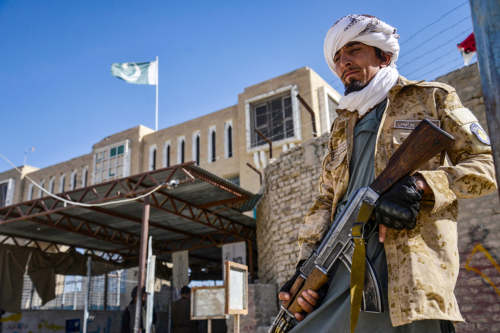
Pakistan’s relationship with the Afghan Taliban has shifted from open sponsorship in the 1990s to a silent partnership following 2001 to alienation and belligerence since 2021. Their current conflict, which comes at great cost to both countries and seems to have no easy military or political resolution, also poses a threat to the stability and prosperity of neighboring states. Although American strategic interests in the region greatly diminished following the United States’ military withdrawal from Afghanistan in August 2021, the region’s altered political dynamics have prompted a growing American engagement with Pakistan and tentatively with Afghanistan. At the same time, the US has become a factor in how both Islamabad and Kabul have come to form their national security strategies.
The Middle East Institute is proud to host Salman Taseer, the Governor of Pakistan's Punjab province. He will examine Pakistan's accomplishments over the past year and its looming challenges.
Children can learn many lessons from playing sports: leadership, self-confidence, and the concept of working toward a common goal are a few such lessons. These are all skills that, when applied in life off the field, can augment the potential for success there as well.
The Middle East Institute is proud to host Kandahar-based writers and researchers Alex Strick van Linschoten and Felix Kuehn for a discussion about the state of the Taliban in Afghanistan and the current situation in Kandahar. Strick van Linschoten and Kuehn translated and edited My Life with the Taliban, an account of the inner workings of the organization from the perspective of former Taliban minister and ambassador to Pakistan, Mullah Abdul Salam Zaeef, who was arrested following the overthrow of the Taliban and spent four years in Guantanamo Bay.
Writing on Culture: The Missing Factor in Discussions on the Middle East
The Middle East Institute is proud to host MEI scholar Andrea Rugh for a discussion about Middle Eastern culture and her most recent book, Simple Gestures: A Cultural Journey Into the Middle East. Since US involvement in Iraq and Afghanistan, the importance of culture has become all too clear. Yet, although most scholars agree on its importance, few address culture in ways that provide better understanding to audiences who might benefit, such as policy makers, the media and the American public.
In his book From My Memories, Khaled Sediq recounts the following incident from the mid-1960s regarding a visit by him and some other members of his family to Mohammad Zahir, King of Afghanistan from 1933 to 1973:
Finally, after uttering some conventional statements, such as, Afghanistan belongs to you and you belong to Afghanistan, he also added: ‘Even though unpleasant events have happened, yet, I have forgotten about them, you, too, try to forget.’[1]
From Identity Crisis to Identity in Crisis in Afghanistan
When social order is politically disturbed in a society like Afghanistan, inter- and intra-group dynamics set forces in motion that cannot be harnessed once unleashed. While group dynamics dictate, for instance, that majorities behave as an integrative and cohesive force as their sense of loyalty lies in the wellbeing of the collective whole, a minority’s interests may on occasion diverge in the pursuit of greener pastures across the fence, allowing themselves to be used as vulnerable pawns by others.
MEI’s Taliban Leadership Tracker is a detailed database mapping 1,200 leaders and appointees wielding influence throughout the Taliban government. Produced and maintained by MEI Non-Resident Scholar Javid Ahmad, the database can be used to help identify individuals who wield various forms of influence, ones who may be receptive to dialogue and collaboration, as well as those involved in rights violations, abuses, or criminal and terrorist activities.