The Pakistani General Running Washington’s Backchannel to Tehran
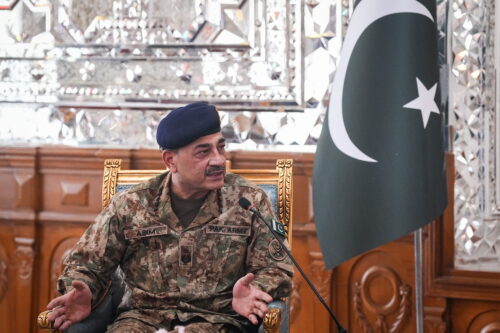
As Washington and Tehran edge closer to escalation, the most critical line of communication keeping the crisis from spiraling is being run not by polished diplomats, but by an unlikely figure: a Pakistani general. Field Marshal Asim Munir, Pakistan’s powerful army chief, has quietly become the key intermediary in the U.S.-Iran standoff, managing what may be the most important backchannel between the two sides. The mediation has thrust Pakistan to the center of the crisis while exposing it to enormous risk.
Bonus Episode: Stalled Talks and Next Steps for the US and Iran
This bonus episode of Middle East Focus features a recent MEI Virtual Briefing. Director of Communications Zeina Al-Shaib is joined by MEI Distinguished Diplomatic Fellows Alan Eyre and Daniel Benaim to discuss the historic talks held in Pakistan last weekend between the United States and Iran. Tehran insists the US failed to gain its trust, while the US made its red lines clear and declared it would blockade Iranian ports in the Persian Gulf. What happens next? Eyre and Benaim offer insights into what goes on behind the scenes at such negotiations; identify the core issues at play; explore potential incentives to end the war; analyze the weaponization of energy; as well as assess the role of other regional players in this conflict.
The Pakistan-Afghanistan conflict: A strategic concern for the US
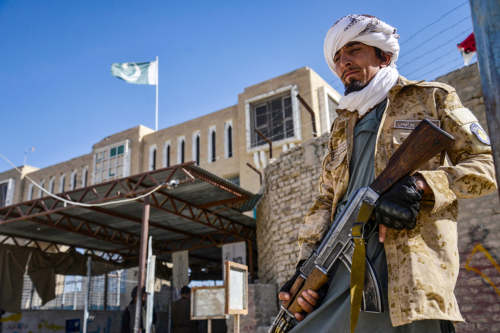
Pakistan’s relationship with the Afghan Taliban has shifted from open sponsorship in the 1990s to a silent partnership following 2001 to alienation and belligerence since 2021. Their current conflict, which comes at great cost to both countries and seems to have no easy military or political resolution, also poses a threat to the stability and prosperity of neighboring states. Although American strategic interests in the region greatly diminished following the United States’ military withdrawal from Afghanistan in August 2021, the region’s altered political dynamics have prompted a growing American engagement with Pakistan and tentatively with Afghanistan. At the same time, the US has become a factor in how both Islamabad and Kabul have come to form their national security strategies.
Informal Governance and Role of State in Cities in Developing Countries: Comparing Karachi and Cairo
The 21st century has been called the “Century of the City,” as half of the world’s population lives in urban areas.[1] Virtually all of the projected global population growth will be in cities of the developing world, and most of it will be concentrated in informal settlements.
This Opinion was first published in The National Interest on July 12, 2012
After an eighteen-month free fall, there is tangible improvement in the tumultuous U.S.-Pakistan relationship and an opportunity to leverage these gains for a durable peace in Afghanistan. Backtracking from a messy divorce, both Washington and Islamabad have forsaken their previous approaches of unrelenting maximalism, each making necessary compromises to make the partnership work.
Pakistan's Military Holds the Keys to a Thaw with the U.S.
This Opinion first appeared in the the National on June 15, 2012
Just when U.S.-Pakistan relations appear to have reached a new low, yet another event drives them lower still, further complicating chances of stabilising bilateral ties.
Over the last 18 months, the deterioration of relations has been punctuated by a series of incidents, most dramatically the May 2011 raid that killed Osama bin Laden and the U.S. air strike last November at Salala, in which 24 Pakistani solders died.
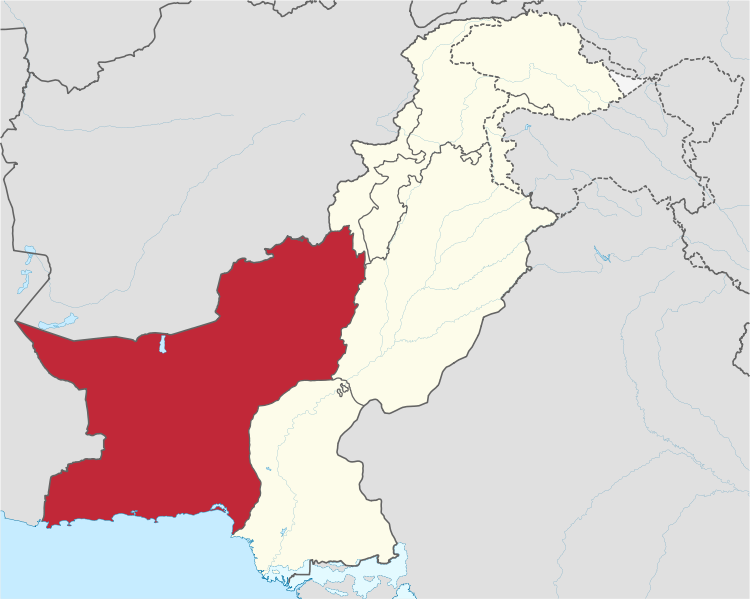
The state of Pakistan seems incapable of learning from its experiences in former East Pakistan (now Bangladesh), and seems therefore doomed to repeat history when it comes to addressing the grievances of Balochistan. Home to nearly ten million of the 180 million-strong population of the country (an estimate at best, since the last census was in 1998), the province has the smallest population in the country but the largest land area.
The oldest peer-reviewed publication dedicated to the study of the modern Middle East, MEI’s flagship journal covers politics, society, and culture in the region.