This article is part of a collection of short essays written by the Fellows of the Middle East Institute to explore aspects of the ongoing war with Iran. The intent of the collection is to help readers see new and unexpected elements of the dynamics and impact of the ongoing hostilities and to think harder, deeper, and broader about the implications of the conflict.
Egypt: How the Iran War Has Affected Egypt’s Calculations
Egypt, which is not party to the war on Iran, has become a target as well as an intermediary in the conflict. As a result, the war has affected Egypt’s future calculations, particularly in three major areas: its economy, its security, and its regional alliances.
Algeria and Morocco have long been at odds, but recent diplomatic moves may signal a widening geopolitical split in North Africa. Hosts Alistair Taylor and Matthew Czekaj are joined by MEI Senior Fellow Intissar Fakir to unpack Algeria’s decision to sever diplomatic ties with the United Arab Emirates and Morocco’s warming relations with both the UAE and Israel. They also explore linkages between these diplomatic shifts and the Western Sahara conflict, Moroccan domestic concerns, particularly in light of this week’s elections, as well as broader regional stability.
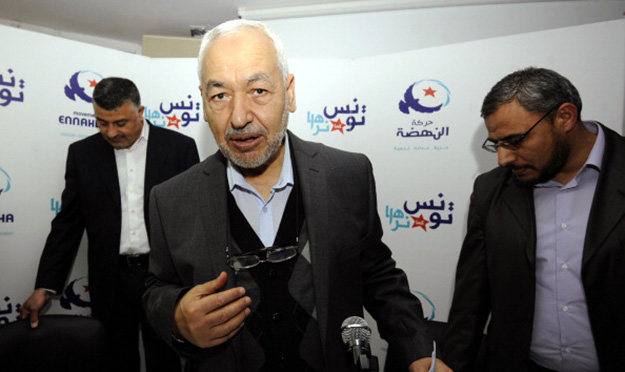
The rise of the Nidaa Tounes (Call for Tunisia) Party has lifted the hopes of many Tunisians who hold Ennahda, the ruling Islamist party, responsible for the increase in religiously-motivated violence and suspect it of trying to establish a theocracy. Yet a closer look at the platform and rhetoric defining Nidaa Tounes suggests that the self-described “modernist” alternative to the Islamists might not be as inclusive and democratic as its leaders claim, as some of the party’s senior figures advocate the exclusion of Ennahda from politics.
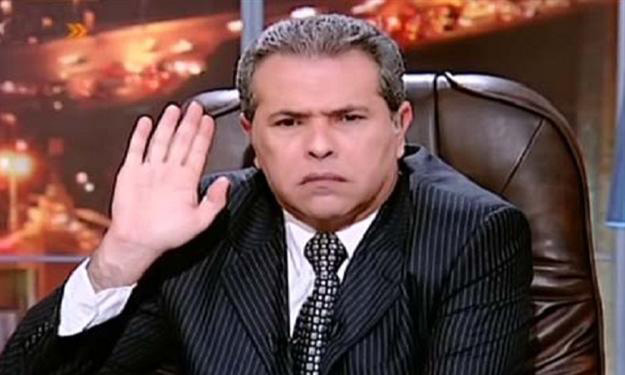
The Egyptian media landscape both before and after Hosni Mubarak’s ouster has been one in which the polemical television personality Tawfik Okasha has thrived. But Okasha, known for his conspiracy theories and strident rhetoric, particularly against the Muslim Brotherhood, has perhaps risen to greater fame and influence recently. With a convergence between anti-Brotherhood positions and Egyptian government policy and public opinion occurring since the mass protests that culminated in Mohamed Morsi’s removal by the military on July 3, Okasha’s views have become more mainstream.
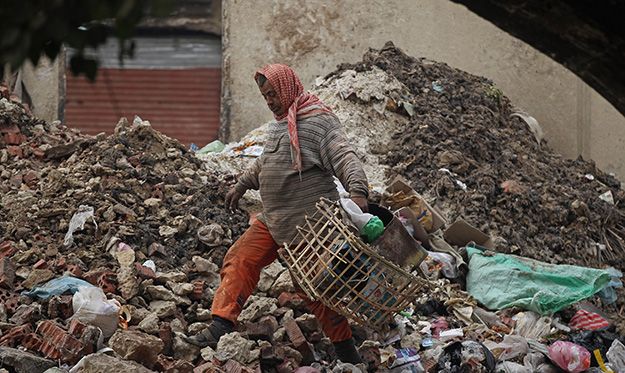
Reporting on Egypt since the July 3 ouster of former president Mohamed Morsi has focused on political dimensions and unrest. However, it is the new government’s success—or lack thereof—in meeting the country’s economic challenges that will largely determine whether Egypt returns to stability, just as surely as it was Egypt’s economic woes that underpinned the country’s repudiation of Morsi.
The struggle for bodily integrity—a right broadly defined as the inviolability of the human body and the self-determination of humans over their bodies—has been at the center of revolutionary aspirations in Egypt. Sexual assaults, arbitrary arrests, and torture by security forces; corrupt and defunct state healthcare systems; the abuse of agricultural subsidies resulting in innutritious food products—all of these are realities that took a painful physical toll on Egyptians and helped drive them to demand an end to Mubarak’s regime.
Dr. Abdel Moneim Aboul Fotouh, once a prominent member of the Muslim Brotherhood, former presidential candidate, and head of the Strong Egypt Party, spoke with Cornelis Hulsman, editor of Arab-West Report, in an interview for MEI regarding his break from the Brotherhood, Morsi’s ouster, and what he sees as necessary for Egypt’s future.
You were once a member of the Muslim Brotherhood. Why did you leave the organization?
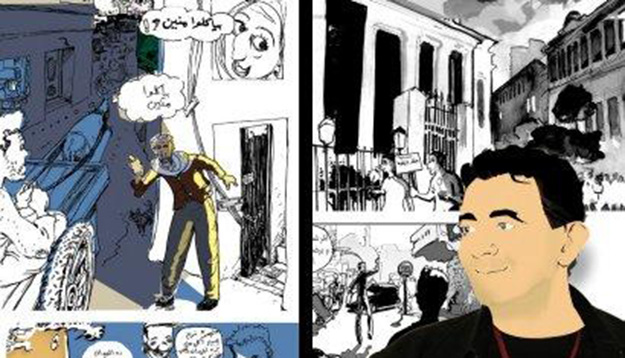
In April, Egyptian graphic novelist Magdy el-Shafee went to Abdel Moneim Riad Square in downtown Cairo to protest a draft law put forth by the Muslim Brotherhood’s political arm, the Freedom and Justice Party (FJP). It would only be two months until the Brotherhood president, Mohamed Morsi, would be ousted by the Egyptian military.
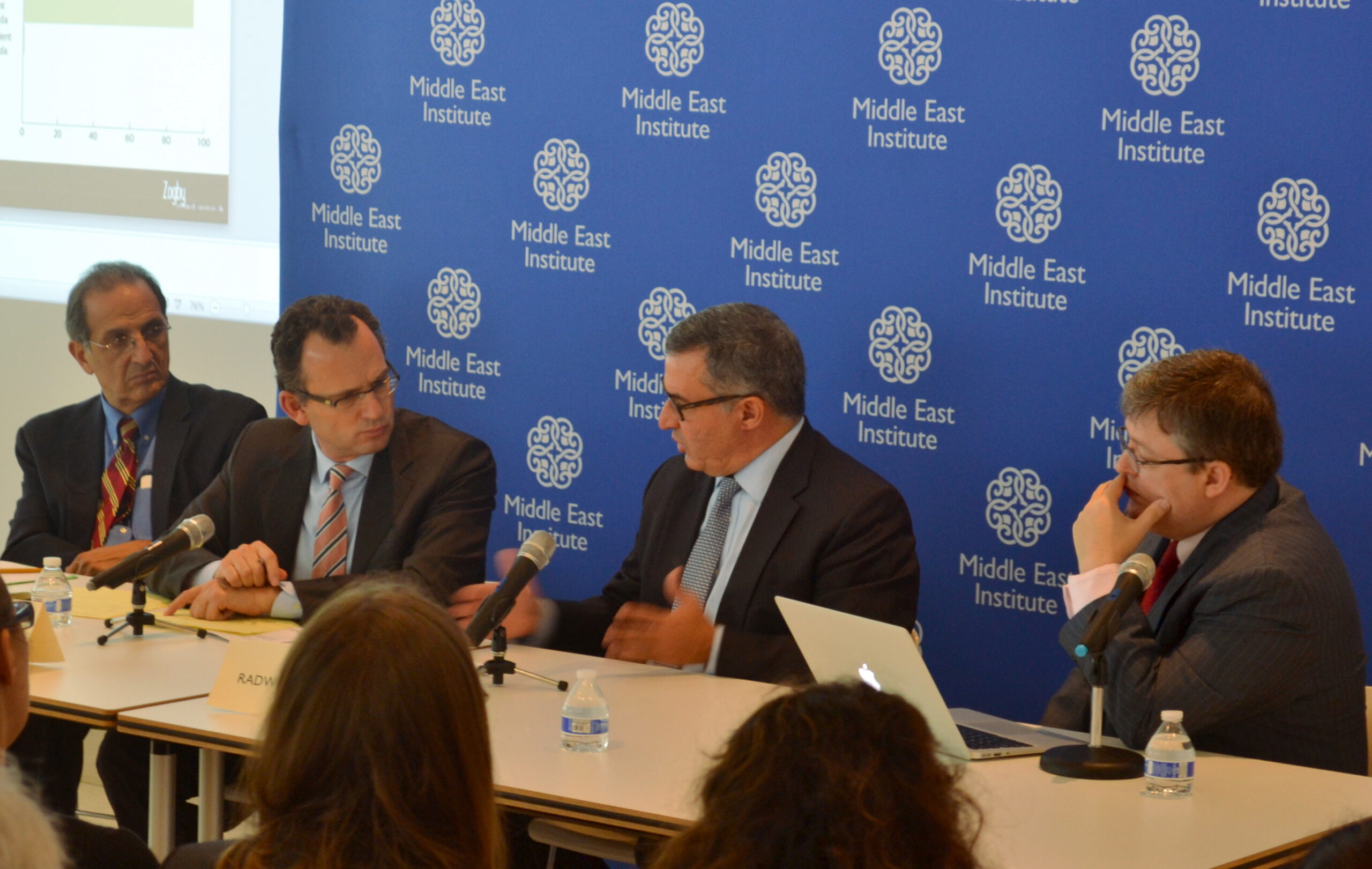
The Middle East Institute (MEI) is pleased to welcome James Zogby, president of the Arab American Institute and founder of Zogby Research Services (ZRS), William Lawrence, Professorial Lecturer in Political Science and International Affairs at George Washington University’s Elliot School of International Affairs, and Radwan Masmoudi, Center for the Study of Islam and Democracy, for a discussion about the findings of a recent poll on Tunisian attitudes toward their country’s political actors and institutions, moderated by MEI Vice President Paul Salem.Zogby Research Services recently surveye
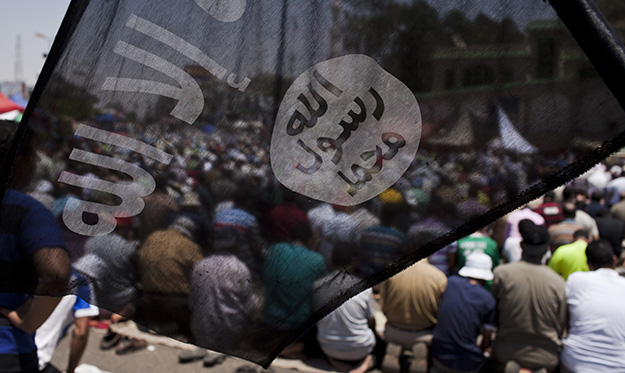
Think of American mainstream media in the aftermath of 9/11 and you might get a general idea of the state of the Egyptian equivalent since the June 30 uprising against Muslim Brotherhood rule—allowing, that is, for less sophistication and a considerably greater measure of crudity. The fluttering flags at the top of television screens, along with variations on the “war on terror” banner, were copied almost identically, if less tastefully, by both state-owned and private Egyptian television stations from CNN, FOX, and the rest.
Three months after the ousting of President Mohamed Morsi, Egypt’s Muslim Brotherhood remains in shock. In two and a half years, the group went full circle, from an outlawed organization to one that won a plurality in parliamentary elections and saw its candidate win the presidential election, to that president’s ouster a year later and the subsequent court verdict ordering the group’s shutdown. During this short journey, the Brotherhood shifted alliances.
In early 2012, Hagg Hassan had a complaint. A resident of the village of Ab’adeyet Wally Mizar in Fayoum, 65 miles southwest of Cairo, Hagg Hassan had been receiving a monthly pension of 300 Egyptian pounds. But one day, he was given only 250. Hagg Hassan was livid. The budget cut would also apply to his wife and widowed daughter—a loss of 150 pounds for the household. Hagg Hassan lit a cigarette and asked his daughter to write a petition.
The oldest peer-reviewed publication dedicated to the study of the modern Middle East, MEI’s flagship journal covers politics, society, and culture in the region.