This summer, brutally hot temperatures, deepening water scarcity, and spiking fertilizer costs have put North Africa’s agricultural sector under intense pressure. Host Alistair Taylor is joined by Mohammed Mahmoud, CEO and founder of the Climate and Water Initiative and lead for Middle East Climate and Water Policy at the United Nations University Institute for Water, Environment, and Health, to unpack the region’s food and water security challenges. Drawing on Mahmoud’s new report card on agricultural sustainability in North Africa, they explore the diverging picture across the region, why some countries have weathered the strain better than others, and what it will take to build a more resilient and secure food system.
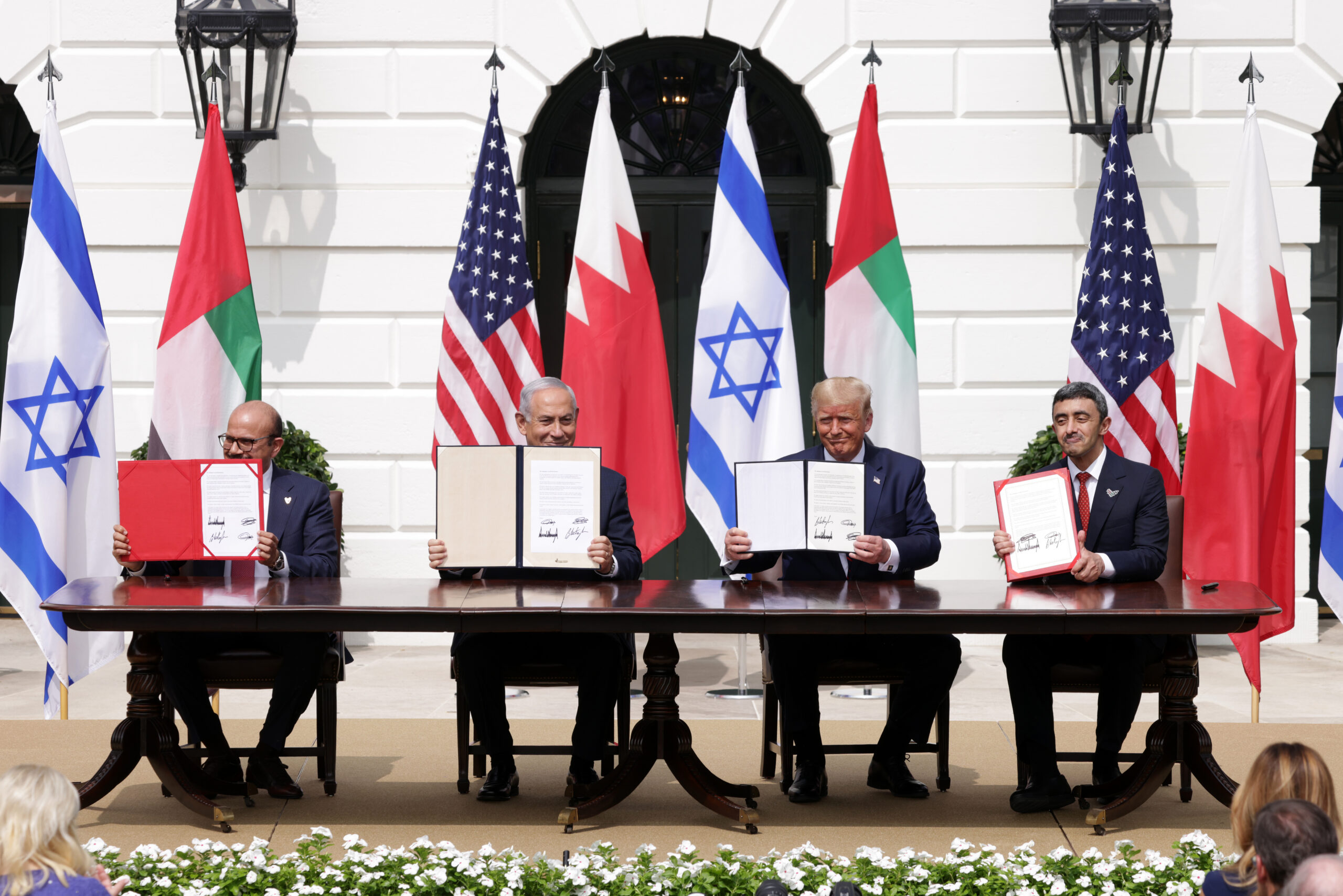
The Abraham Accords have represented a remarkable shift in U.S. Middle East policy. They reframed Arab-Israeli normalization as a result of shared interests – within the Middle East and directly with the US, rather than as a byproduct of Israeli-Palestinian peace. Signed in September 2020, on the last leg of the first Trump administration, the Accords brokered by Washington normalized relations between Israel and the United Arab Emirates (UAE) and Bahrain, followed by framework agreements with Morocco and Sudan. From the American perspective, the Accords were intended to break decades of diplomatic stagnation in the Middle East in order to establish a regional framework aligned with American strategic objectives.
After the Rapid Support Forces’ seizure of al-Fashir, the capital of the North Darfur State and the last remaining stronghold of the Sudanese army, the conflict in Sudan has once again drawn international attention. This development is the latest in a devastating civil war that has lasted over two years. MEI’s Jehanne Henry unpacks the origins of the conflict, the humanitarian situation on the ground, and what needs to happen in the future.
Sudanese President Accuses Iran of “Spreading Shiism” in Africa
On January 26, Sudan’s President Omar Hassan al-Bashir accused Iran of spreading its ideological and military influence throughout the Middle East and North Africa.
“[Food insecurity has] the potential to amplify destabilization, engender violence, and even accelerate state failure processes in an already geopolitically charged region”
– Andy Spiess in Food Security in the GCC Economies (2012)
Cooperation over Nile Waters: Needed More under Climate Change, More Attainable after the "Arab Spring"?
2011 marks the beginning of a new era for both Egypt and Sudan, opening new possibilities to overcome the decade-old Nile water conflict. After the revolution in Egypt, many hope for a reorientation of the country’s foreign policy towards Africa and a potential new approach to negotiations on allocation of the Nile waters.
The Middle East Institute, in partnership with the Fondation pour la Recherche Stratégique, is proud to host two panel discussions on the refugee situation in Sudan. Funded by the European Commission, this event is part of a two year research project which aims to generate policy recommendations that will strengthen transatlantic cooperation to respond to the refugee and internally displaced persons crises in Sudan.
The oldest peer-reviewed publication dedicated to the study of the modern Middle East, MEI’s flagship journal covers politics, society, and culture in the region.