Iran, Russia Discuss Ways to Boost Military Cooperation
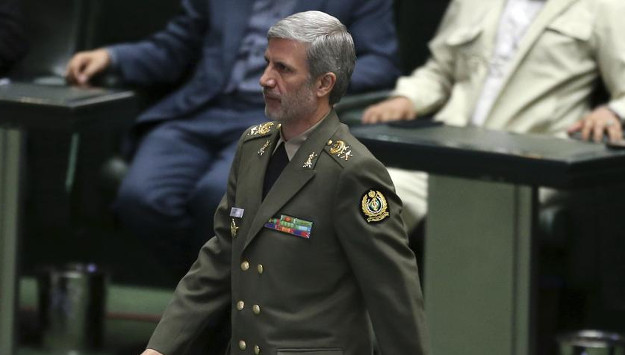
Iranian and Russian defense ministers discussed ways to further enhance military cooperation between the two countries in a telephone conversation on Thursday, the Iranian media reported.
Millions of Rural Working Women in Egypt at Risk from Climate Change
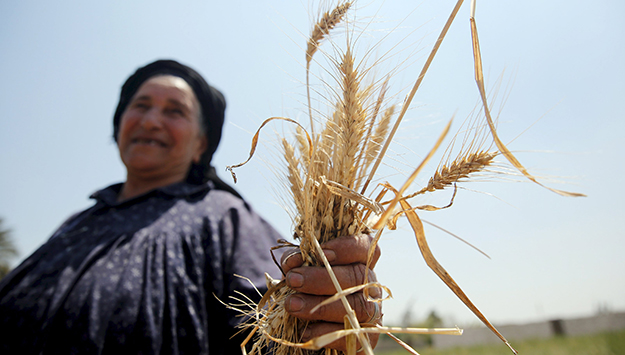
The impacts of climate change on Egypt’s agriculture are likely to be substantial, and will affect the millions of Egyptian women reliant on this economic activity for their livelihoods. The agricultural sector employs a large percentage of Egypt’s working women, a sector known for its low and unstable earnings. Millions of rural Egyptian women working in agriculture already suffer from poverty, and climate change will make matters worse.
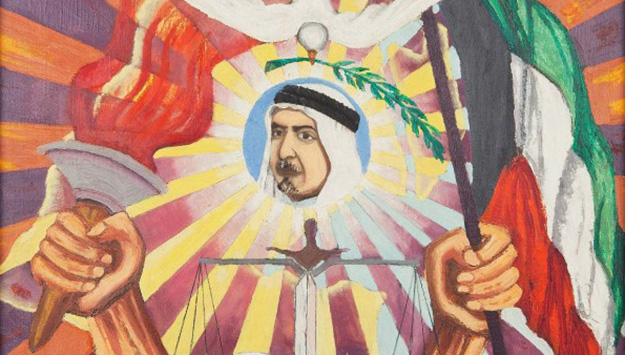
Remembering the Father of Democracy in the Gulf—Sheikh Abdullah al-Salem
It was the age of nationalism and strong men. Egypt’s Gamal Abdel Nasser had just enacted a new charter that guaranteed his hold on power, unelected and unopposed. Iraq’s revolutionary government was overthrown by Baathists, who had also assumed power in neighboring Syria, while Iran’s Mohammad Reza Pahlavi was entrenching his family’s legitimacy through the so-called White Revolution. The lower Gulf emirates were under British “protectorism,” while Saudi Arabia’s King Faisal was wrestling power from his half-brother Saud.
Iran Says Will Accelerate Missile Activity in Defiance of Trump
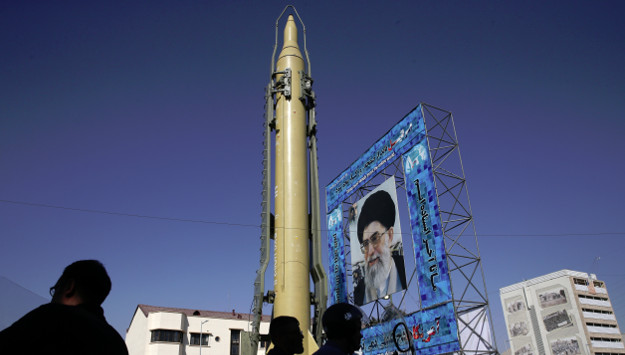
Iran’s Islamic Revolution Guards Corps (I.R.G.C.) announced today that Iran will defy U.S. pressure and further enhance the country’s controversial missile program.
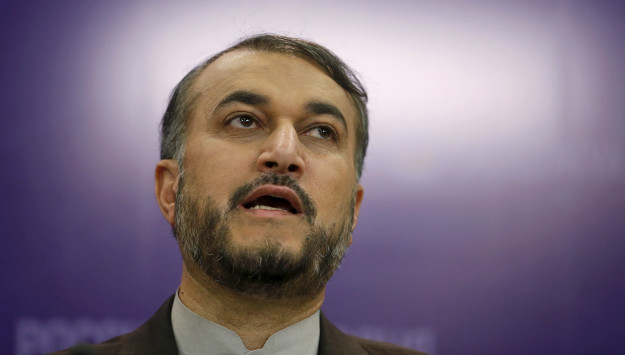
Hossein Amir-Abdollahian, a foreign policy advisor to Iran’s Parliamentary Speaker Ali Larijani, has cautioned against counting on European powers in Iran’s nuclear standoff with the United States. In an interview with Fars News Agency, an outlet affiliated with the Islamic Revolution Guards Corps (I.R.G.C.), he said there is some convergence of interests between European countries and the United States and they would be willing to counter Iran’s regional ambitions, particularly to protect Israel.
Top Iranian General Meets Assad in Damascus to Expand Ties
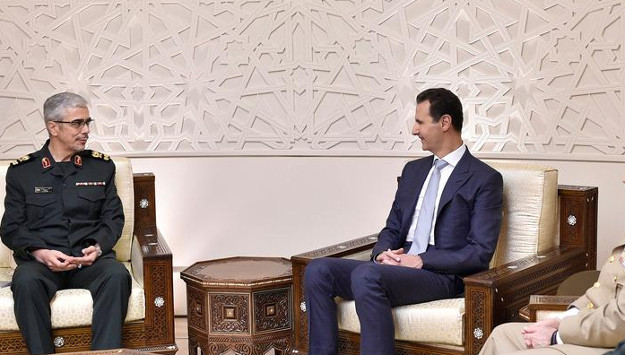
Major General Mohammad Bagheri, the chief of staff of the Iranian Armed Forces, today met with Syrian President Bashar al-Assad in Damascus to further enhance military cooperation and defense ties between the two countries, the Iranian media reported. Bagheri also presented Supreme Leader Ali Khamenei’s written message to Assad and pointed out that Iran’s leader always pray for the Syrian president’s safety and victory.
I.R.G.C. Leaders to Trump: We’ll Continue to Confront U.S. and Its Allies in Mideast
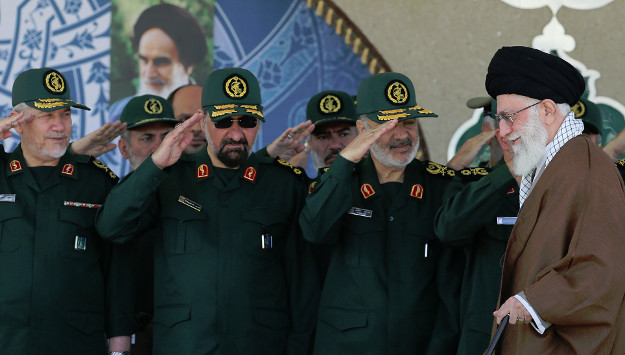
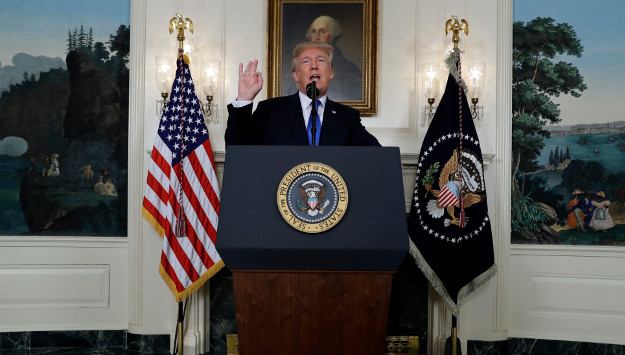
The Islamic Revolution Guards Corps (I.R.G.C.) will defy U.S. pressure, expand its regional influence, enhance its defense power, and confront the United States and Israel, several top Iranian military officials warned in reaction to President Donald Trump’s anti-Iran speech.
Khamenei: Iran Will "Shred" Nuclear Deal If “Other Side” Leaves It
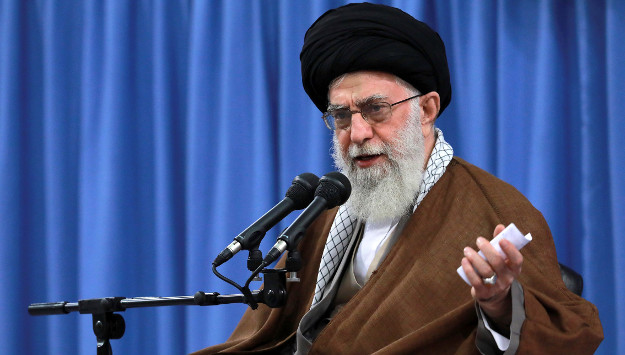
Supreme Leader Ali Khamenei today ruled out any negotiations with Western powers over Iran’s missile program and regional activities, and warned that Iran would rip the 2015 nuclear agreement to pieces if the “other side” walks away from it.
The most surprising thing about the Kurdistan Region of Iraq’s (K.R.I.’s) independence referendum was that it took place at all. Leading up to the vote the international community stepped up its opposition. Baghdad also increased pressure on Erbil with a decision by the Iraqi Supreme Court declaring the referendum illegal, and issuing a series of delegitimizing statements from top Iraqi officials. But K.R.I.
The Middle East Institute is pleased to announce the results of a nationwide public opinion survey conducted in collaboration with Ipsos. Among the main findings of the poll are the following:
The G.C.C. Countries and China’s Belt and Road Initiative (BRI): Curbing Their Enthusiasm?
Chinese leaders emphasize that the Belt and Road Initiative (BRI) is focused on developing connectivity through inclusive cooperation. Yet, certain BRI projects have potential strategic outcomes that can affect regional power dynamics. Thus, States that might otherwise be inclined to cooperate with China on the BRI could perceive elements of the initiative to run counter to their interests. This essay shows that, in considering the BRI, the leaders of the Gulf Arab countries have to balance their increasingly important relationship with China against the ways this initiative empowers rivals or threatens their relations with important external powers.
President Recep Tayyip Erdogan blamed U.S. ambassador to Turkey, John Bass, for a diplomatic crisis between the two countries. The spat erupted when Turkey arrested a Turkish employee of the U.S. consulate on suspicion of links to the group blamed for last year’s failed coup. In response, the United States stopped issuing visitor visas from its missions in Turkey, prompting Turkish missions to hit back with tit-for-tat steps of their own.
Iran-Backed Group Calls for Seizure of Erbil and other Kurdish Cities
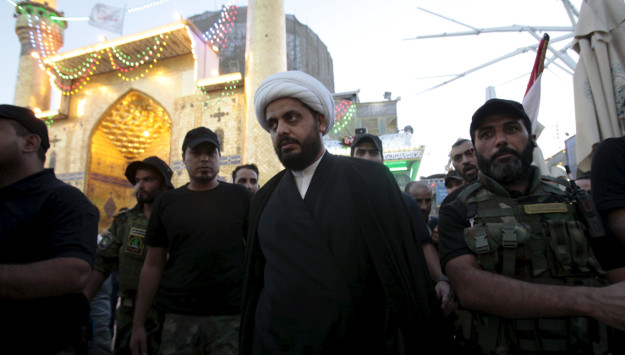
The political wing of Asai’b Ahl al-Haq (A.A.H.), an Iranian-sponsored Iraqi militia group, has called for military operations to seize the Kurdish cities of Dohuk, Erbil and Sulaymaniyah.