Islamic Calligraphy in China: Images and Histories
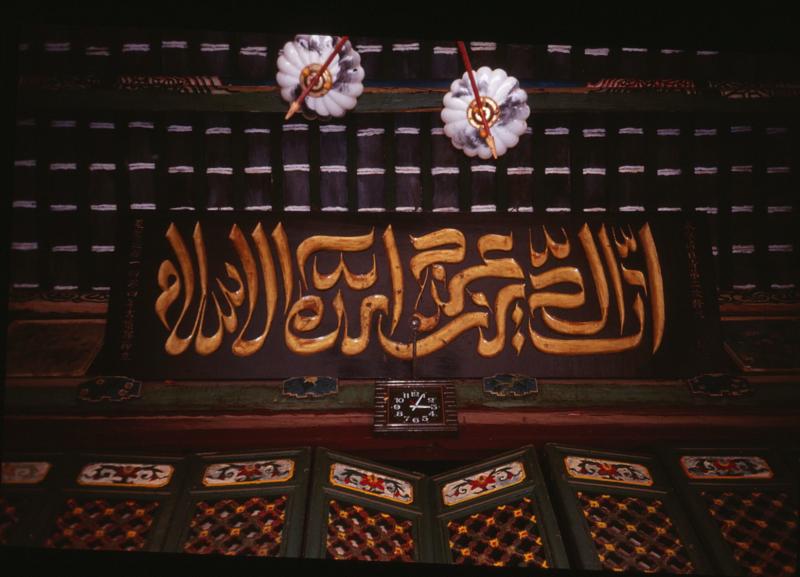
Given the prominence of calligraphy in the traditional arts of both the Islamic world and China, it is only natural that Islamic calligraphy plays an important cultural role in Chinese Muslim communities. The art form’s survival over the centuries in China, even during prolonged periods of isolation from the rest of the Islamic world, reflects the strength of Chinese Muslims’ religious traditions, as well as the critical function of the written word within these traditions.
Iran’s Failed Foreign Policy: Dealing from a Position of Weakness
In this MEI Policy Paper, Thomas Juneau examines Iran’s role in Yemen, Syria, Iraq, and the Arab-Israeli conflict to explain why Iran is not a “rising regional hegemon” but rather a “mid-sized regional power frustrated at not reaching its ambitions.”
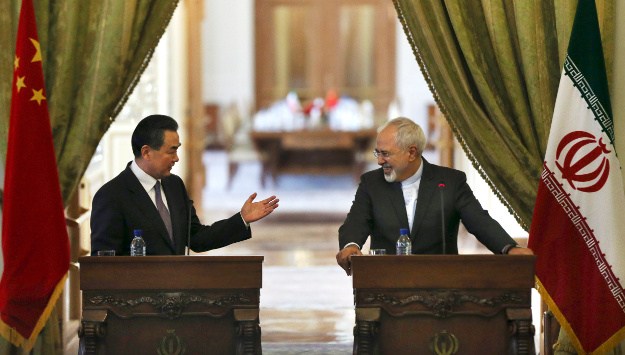
In a significant New York Timesop-ed on April 20, Iranian Foreign Minister Mohammad Javad Zarif made a pitch for regional dialogue between Iran and its neighbors.
Bringing China and Islam Closer: The First Chinese Azharites
In the 1930s, several groups of Muslim students from China arrived to study at Al-Azhar University in Cairo. They were destined to play an important role in the history of modern Chinese Islam. These 35 Chinese Azharites, all but two from the Sinophone Hui community, helped China to establish lasting links with Egypt and other Muslim countries in the Middle East. They also left a considerable cultural legacy, including translations of crucial texts from both the Islamic and Chinese traditions.
Cairo’s Townhouse Gallery: Social Transformation through Art
As the urban historian Lewis Mumford pointed out, “When a city has reached the megapolitan stage, it is plainly on the downward path: it needs a terrific exertion of social force to overcome the inertia, to alter the direction of the movement, to resist the immanent processes of disintegration.”[1]
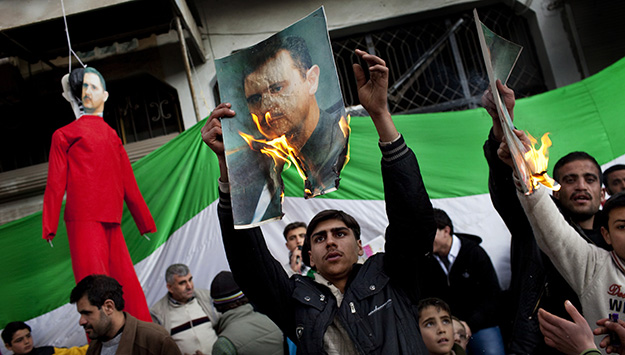
Bashar al-Assad’s regime in Syria did not have a good winter. His forces lost a provincial capital, Idlib, and despite repeated efforts could not even seize northern and eastern suburbs adjoining Damascus. There were also failures in Aleppo and Dara‘a. He had to relieve heads of two of the regime’s four secret police services. The economic situation worsened.
Pakistan’s Balancing Act Between Saudi Arabia and Iran
April 23, 2015 – Marvin Weinbaum, director of the Center for Pakistan Studies at The Middle East Institute, explains Pakistan’s decision not to provide military aid for Saudi Arabia’s operation in Yemen, and how Prime Minister Sharif is working to repair relations with Riyadh.
When it Comes to Israeli Occupation, Better is Not Good Enough
Palestinians, beset by calamities at every turn, have all but ceased to think about their indeterminate prospects for independence and freedom. This dismal state of affairs suits Israel’s newly reelected Prime Minister Benjamin Netanyahu fine. His opposition to a sovereign Palestinian state, broadcast in word and deed, leaves little room for doubt.
The bar has been set so low that all concerned are searching for any shred of evidence that merely hints at better times for Palestinians, who have now lived under Israeli rule for almost a half century.
Read the full article on the Washington Post’s Monkey Cage blog.
An intense public debate is unfolding in Iran over the details of the ongoing nuclear negotiations. For a country that has been largely deprived of informed, open and critical discussions on the merits of this costly program, this is highly unusual. Even more striking, it is the hard-liners who are spearheading this dialogue in the run-up to the June 30 deadline for the final agreement.
Relations between Iran and Saudi Arabia have always been thorny, but rarely has the state of affairs been as venomous as it is today.
Tehran and Riyadh each point to the other as the main reason for much of the turmoil in the Middle East. In its most recent incarnation, the Iranian-Saudi conflict by proxy has reached Yemen in a spiral that both sides portray as climatic.
Na Zhong: The Complex Perspective of a Patriotic Muslim Scholar
When Na Zhong, Professor of Arabic at Beijing Foreign Studies University, passed away in 2008, his funeral at the headquarters of China’s Islamic Association was attended by many notable Muslims and scholars of Islam. Biographies and reminiscences characterize him as both an accomplished Muslim scholar and a Chinese patriot. Indeed, Na Zhong’s accomplishments are impressive. He was among the founders of Arabic programs at National Central University (later Nanjing University), Yunnan University, and Foreign Affairs University (which later merged with Beijing Foreign Studies University). During his lifetime, he published dozens of volumes of original and translated works on Islamic civilization, the history of the Arab world, and the Arabic language. He was also patriotic, participating in many activities seen as advancing Chinese national interests in the Islamic world.
Turkey and Armenia: Make History Instead of Repeating It
On April 24, Turks, Armenians, and millions of others around the globe will clash again over the events that began 100 years ago in the Ottoman domains. The mass deportations and massacres of Armenians in 1915 and later years have led many to call this great tragedy a genocide. The old arguments and contested evidence are now going to be heard once more. It might also be the perfect moment for Ankara and Yerevan to take practical steps that benefit all and harm none.
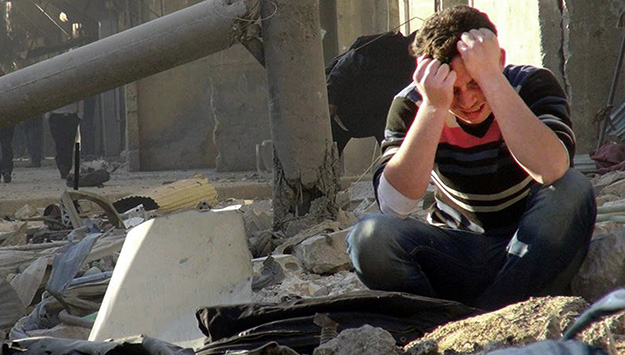
For the majority of Arabs, Syria symbolizes all that is wrong with Iranian influence in the Middle East. Since 2011, Tehran and its regional proxies have poured men, money, and weapons into Syria to prevent President Bashar al-Assad’s military defeat. In June 2013, Hezbollah’s intervention in the western city of Qusayr single-handedly turned the tide of the war in Assad’s favor.