Security Challenges in a Two-State Solution: Is an International Role the Key?
…in any peace agreement, the Palestinian area must be demilitarized. No army, no control of air space. Real effective measures to prevent arms coming in, not what’s going on now in Gaza. Israel must govern its own fate and security. (Prime Minister Benjamin Netanyahu, June 14, 2009)[1]
Interview with Indian Ambassador (ret.) Ranjit Gupta: Jeddah, Saudi Arabia ― The Second Posting (1976-1978)
Soon after arriving, I was surprised to find out from long-serving local staff at the Embassy and a few Indians who had resided in Saudi Arabia for more than three decades that I was the first non-Muslim Foreign Service Officer to serve in the Indian Embassy in Saudi Arabia.
This article was originally published on CNN’s Global Public Square blog on May 30, 2013.
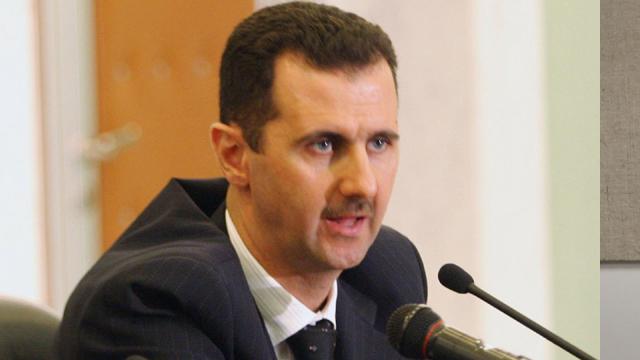
Let’s imagine a world in which Bashar al-Assad wins a military victory, remains in power, and defies the world to deal with him. Because, unfortunately, it appears to be an all too plausible scenario.
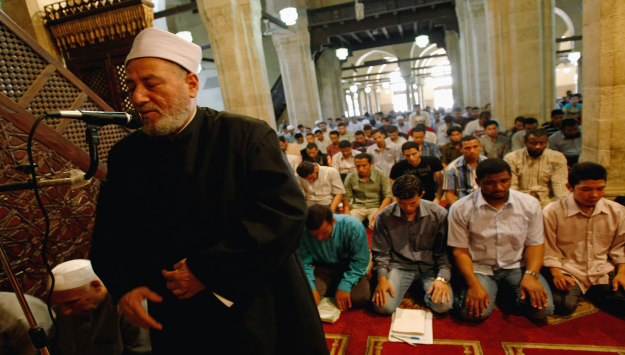
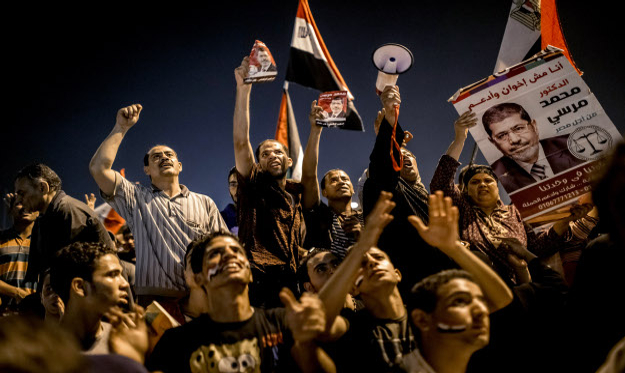
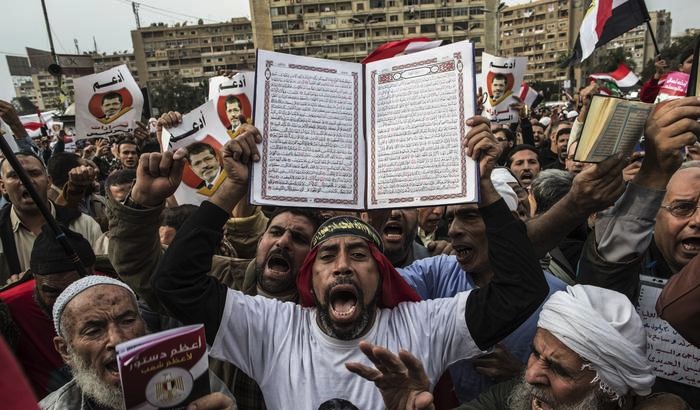
From Muhammad Ali to Mohamed Morsi, modern Egyptian leaders have understood that any attempt to control the state without the endorsement, if not blatant co-option, of key institutions such as al-Azhar is an ill-fated pursuit. The headache for President Morsi is that these institutions are trying to assert their independence and are presenting a range of direct and indirect challenges to his authority and, more broadly, to the Muslim Brotherhood and its political arm, the Freedom and Justice Party (FJP).
Amr Darrag is a senior member of the Muslim Brotherhood and a professor of engineering at Cairo University. He served as the head of the foreign relations committee of the Freedom and Justice Party and as secretary general of the constituent assembly that drafted Egypt’s new constitution in 2012. He was recently appointed Minister of Planning and International Cooperation.
Interview with Professor Selçuk Esenbel, Director of the Asian Studies Center, Boğaziçi University, Istanbul, Turkey
Although Turkey has a long history of continuing interaction with European intelligentsia, politicians and opinion makers, and also with the United States, there is very little experience and background with which to communicate with Asian countries. The Asian Studies Center is now recognized as the institution that can form viable academic connections and develop projects accordingly which will “bring the world to Turkey.”
Members of the Egyptian press and media who make it their business to critique high officials know they’ve done a good job when they’re arrested and hauled in for questioning. In January 2013 an Islamist lawyer filed charges against Bassem Youssef, host of the satirical talk show al-Bernameg (The Program), for defaming President Mohamed Morsi, prompting the general prosecutor’s office to launch an investigation.
The Asia Cooperation Dialogue (ACD): Progress and Potential
The Asia Cooperation Dialogue’s (ACD) future looks promising. The 11-year-old ACD has taken important steps in becoming a relevant, constructive pan-Asian body with a forward-looking agenda, concrete plans and projects underway, and some noteworthy accomplishments.
The Philippines' Elusive Quest for Organization of the Islamic Conference (OIC) Observer Status
The Philippine government has been pursuing Organization of the Islamic Conference (OIC) observer since since 2003. Such a strategy, pursued so doggedly for ten unsuccessful years, suggests that decision-makers in the Department of Foreign Affairs in Manila believe that something very important is to be gained for the country by attaining observer member status.
The main streets of Manshiyat Abdel Moneim Riad, a choked grid of hastily constructed apartment blocks spreading out from a power station at Cairo’s northern edge, are organized according to a simple principle: shops and cafes on the edge, mounds of waste, animals, and rough teenagers from the narrow tributary streets in the middle. Rickshaws and trucks battle for position and skirt potholes in between. Men in search of a bit of air brush away flies at sidewalk cafes and survey the scene with contempt.
Mahathir and his country’s reputation in the Middle East point to the wider global importance of Malaysia’s 13th general election and the potential for the diverse country to serve as a model for nations like Egypt, which have struggled after Arab Spring revolutions with key existential questions: determining the proper place of religion and women in public life, the role of the state in the economy, and national identity. Indeed, it remains unclear what the place of non-Muslims and secular-oriented populations will be in nations governed by parties that are committed to building states and societies defined principally in Islamic terms.
Beijing Hosts Simultaneous Visits of Mahmoud Abbas and Benjamin Netanyahu: What, if Any, Significance?
DR. ROBERT BIANCHI INTERVIEWED
In The Guardian, May 8, 2013
“China welcomes Binyamin Netanyahu—Visits from Israeli prime minister and president prompt speculation about China’s possible role as a Middle East mediator.”