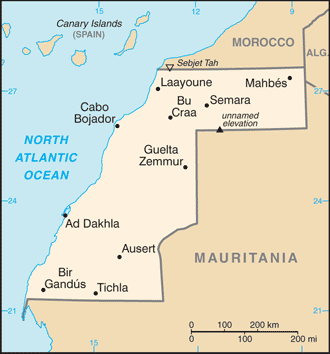
What more can be done to resolve the problem in Western Sahara?
Mr. (Carne) Ross, Undersecretary General Miyet, and I have be trading opinions for six months and it is clear that Mr. Ross has no intention to propose or agree on any kind of political settlement or compromise, regardless of arguments to the contrary. It is time to quit deluding ourselves and allowing the refugees to be used as hostages in an effort to advance the cause of a few thousand Polisario rebels. Rather, we should reach out together for a common middle-ground solution.
Malala Yousufzai – Reclaiming Ideological Space in Pakistan
The attempted assassination of Malala Yousufzai by Tehreek-e-Taliban Pakistan on October 9, 2012, marks a milestone in the trajectory of Pakistan’s future. It has manifested the balkanization of Pakistani society along the lines of those who have been labeled in the popular vernacular in Pakistan as “liberals,” and those who claim ideological proximity with the reactionary religious ideology and demonstrate mistrust and disapproval of American policies instituted in the “War on Terror.” How this debate pans out between the two groups will mark the path to Pakistan’s future.
The existence of a small Turkish community in Metro-Atlanta can be traced back to the 1950s. Medical doctors, engineers and other professionals and their families were the majority of this small group. Up until the 1990s, this community would remain relatively small in number. For a long time, the interaction between members of the community would be limited to a few celebrations and picnics once a year, and of course home visits among friends.
Iran’s Abuse of its Own People a Humanitarian Catastrophe
This article was first published by iPolitics.ca on October 15, 2012
Assertions and opinions in this publication are solely those of the above-mentioned author(s) and do not necessarily reflect the views of the Middle East Institute, which expressly does not take positions on Middle East policy.
This Opinion was first published on Reuters.com on October 11, 2012
Assertions and opinions in this policy paper are solely those of the above-mentioned author(s) and do not necessarily reflect the views of the Middle East Institute, which expressly does not take positions on Middle East policy.
Introduction to Iraq's Refugees and IDP Crisis: Human Toll and Implications
Originally posted July 2008
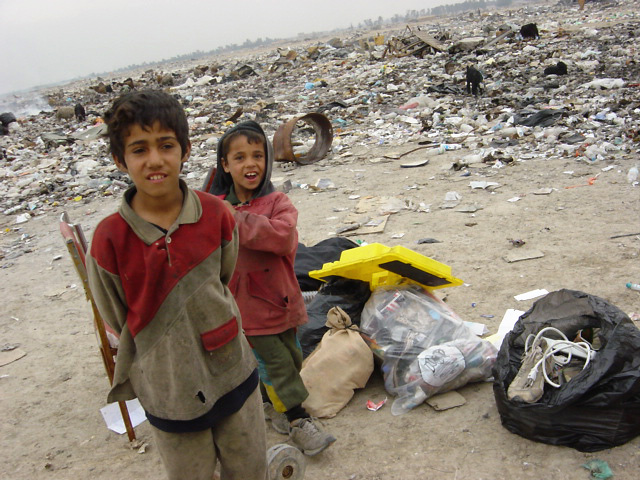
In the comparatively short time since the establishment of the Iraqi state in 1920, the country has experienced successive waves of forced migration. Yet the magnitude of the forced displacement of Iraqis from their homes since 2003 is unprecedented. In addition to the still dire humanitarian situation are the potentially far-reaching negative implications of the refugee/IDP crisis for the future of Iraq and the Middle East as a whole.
Iraq’s Internally Displaced Persons (IDPs) Scale, Plight, and Prospects
Originally posted July 2008
Over the past several decades, and especially in the past two years, Iraq has suffered from one of the worst displacement crises in the world.
While new displacement has slowed to a trickle in 2008, the conditions of those already displaced continue to deteriorate, and prospects for those returning to their homes are grim. The plight of internally displaced Iraqis and those who have crossed international borders in search of refuge remains largely unknown and unaddressed.
After Benghazi: Diplomacy With a State; War Within
This article was first published by The Huffington Post on October 2, 2012
Assertions and opinions in this publication are solely those of the above-mentioned author(s) and do not necessarily reflect the views of the Middle East Institute, which expressly does not take positions on Middle East policy.
This article was first published by The National Interest. on September 26, 2012
Assertions and opinions in this publication are solely those of the above-mentioned author(s) and do not necessarily reflect the views of the Middle East Institute, which expressly does not take positions on Middle East policy.
This article was first published by Jane’s Islamic Affairs Analyst.
Assertions and opinions in this publication are solely those of the above-mentioned author(s) and do not necessarily reflect the views of the Middle East Institute, which expressly does not take positions on Middle East policy.
Discussions of transboundary water issues in regions of the developing world other than the Middle East have tended to focus on development potential and poverty reduction. However, with respect to the Middle East, much of the media coverage and a sizable portion of scholarly writing have been devoted to “water conflicts.” Given the current amount of water available per capita, the high rate of population growth, and the high levels of interstate tension and conflict in the region, images of “water wars” do not seem far-fetched.