Climate Change Threats, Opportunities, and the GCC Countries
Originally posted April 2008
Oil and gas revenues for GCC countries have enabled exceptional and accelerated development in all aspects of life. These countries have become a hub of intense activity in many spheres—geopolitical, military, economic, industrial, construction, and tourism, to name a few. However, the scale of oil and gas production and use has also led to severe environmental problems.
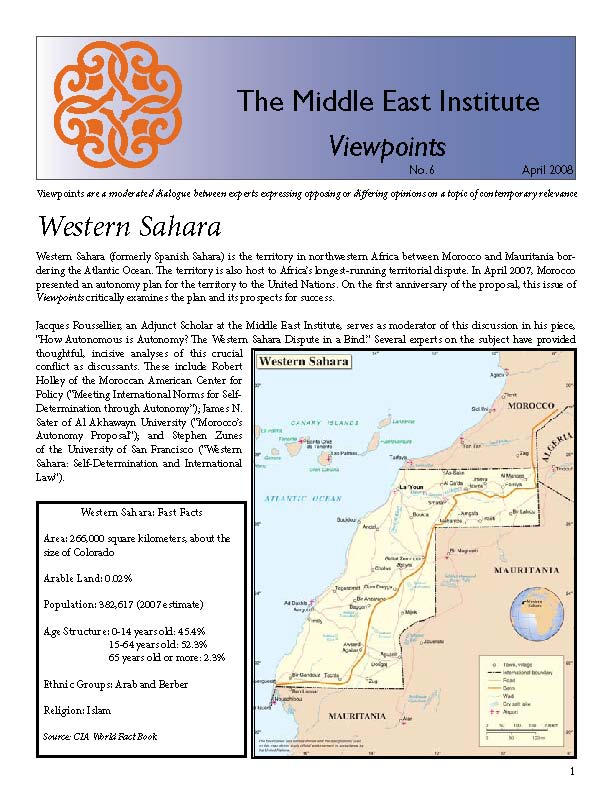
Western Sahara (formerly Spanish Sahara) is the territory in northwestern Africa between Morocco and Mauritania bordering the Atlantic Ocean. The territory is also host to Africa’s longest-running territorial dispute. In April 2007, Morocco presented an autonomy plan for the territory to the United Nations. On the first anniversary of the proposal, this issue of Viewpoints critically examines the plan and its prospects for success.
One of the strangest features of contemporary Iranian politics must surely be the reality that despite the concerted and successful effort to narrow the range of candidates allowed to run for various political offices, competition among individuals and groups has not only remained unabated, it has intensified. The elite jockeying that has taken place in the past few months, leading to the upcoming March 14 Majlis elections, is a good example of the competitive intensity that had come to characterize Iranian politics.
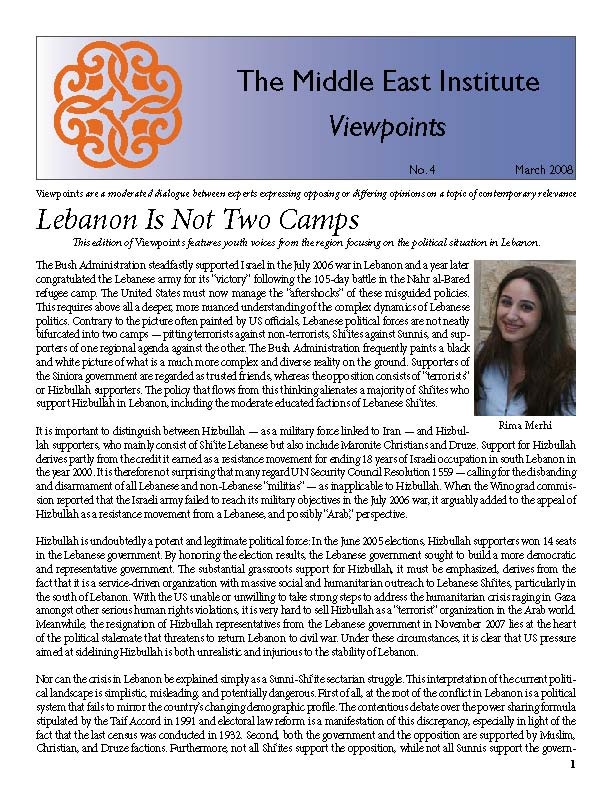
Ever since the assassination of Prime Minister Rafiq Hariri in February 2005, senior officials in the US have closely followed events in Lebanon. Given the number of official public statements made on Lebanon and the number of officials coming from all ranks (including high level security officials) who swarm in and out of Beirut on a regular basis, it would come as no surprise to learn that Lebanon is a priority on the agenda of this administration.
On January 3, 2008, Iran’s supreme leader, Ayatollah ‘Ali Khamene’i once again sought to remind domestic and foreign audiences about his stature in Tehran. Stating that “cutting off relations with the US” was one of the “principal policies” of the Iranian government, but that he would be the “first person to endorse these relations” if it benefited the Iranian people, Khamene’i secured news headlines.[1]
Introducation to Iran's March 14, 2008 Majlis Elections
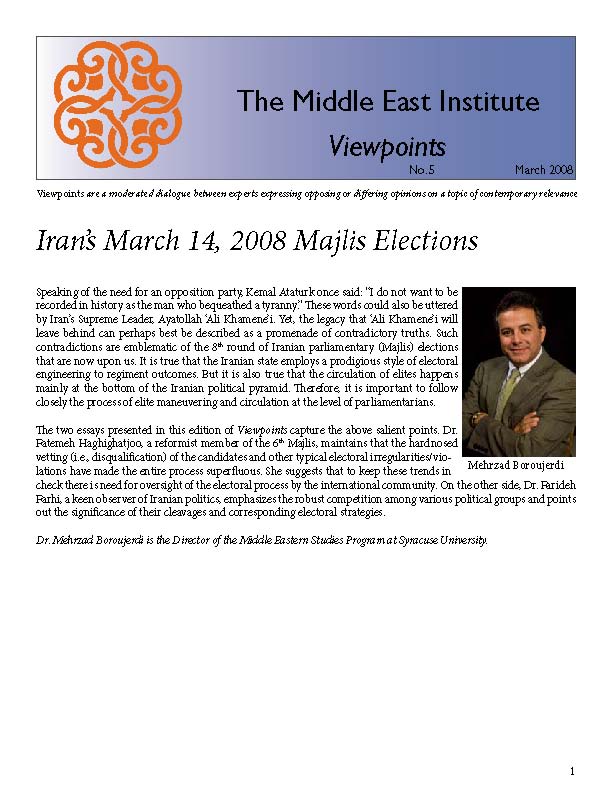
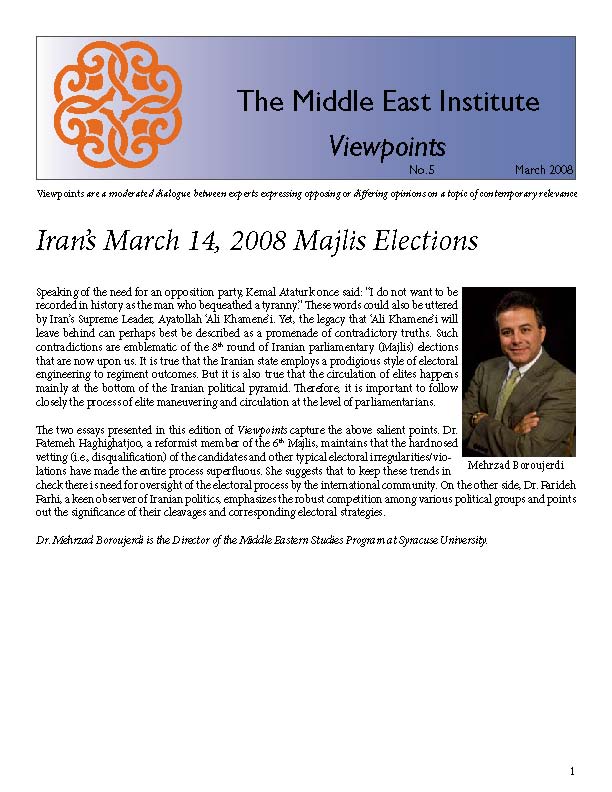
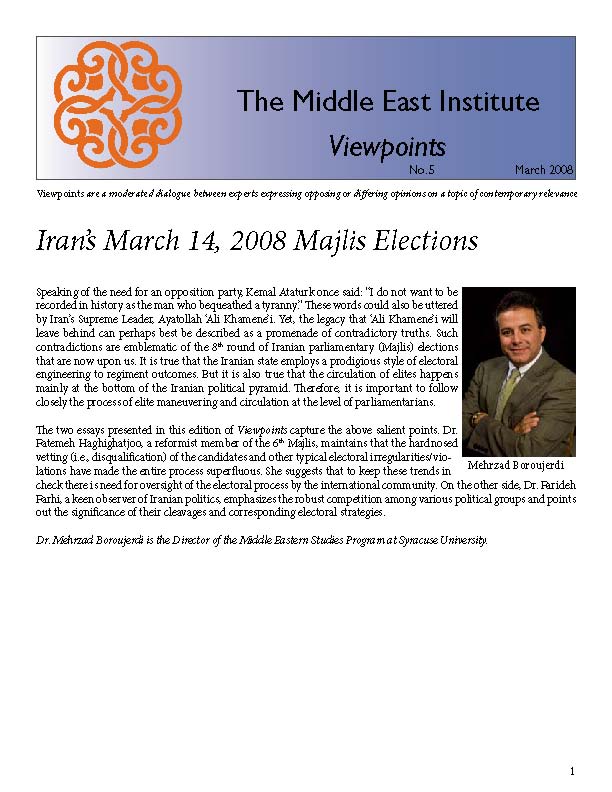
Speaking of the need for an opposition party, Kemal Ataturk once said: “I do not want to be recorded in history as the man who bequeathed a tyranny.” These words could also be uttered by Iran’s Supreme Leader, Ayatollah ‘Ali Khamene’i. Yet, the legacy that ‘Ali Khamene’i will leave behind can perhaps best be described as a promenade of contradictory truths. Such contradictions are emblematic of the 8th round of Iranian parliamentary (Majlis) elections that are now upon us. It is true that the Iranian state employs a prodigious style of electoral engineering to regiment outcomes.
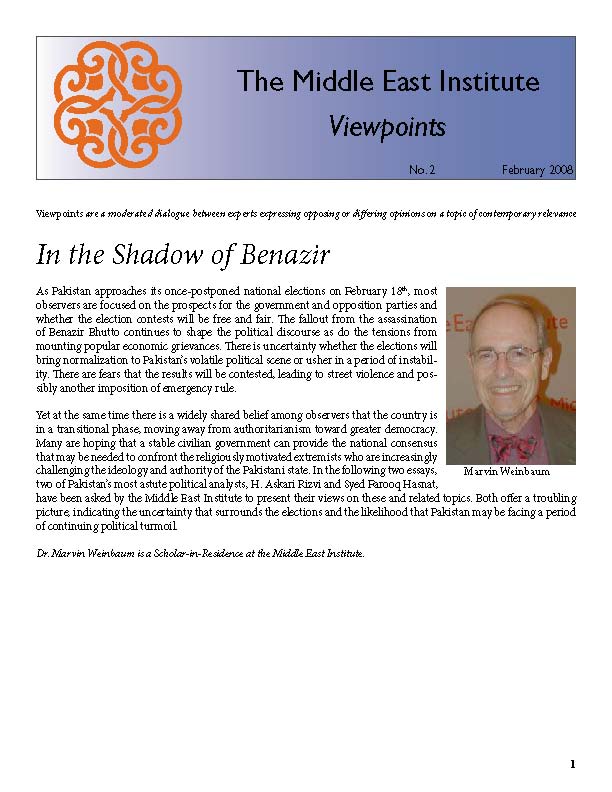
Pakistan has had so few national elections in its 60-year history that every exercise to elect the national Parliament is exceptional. These relatively rare events are not only a mechanism for effecting a change of government but are also a means for putting the political process back on the rails and redefining the provisions of the 1973 constitution, which has been shredded by four periods of martial law. General (retired) Pervez Musharraf has declared martial law twice, ironically once against his own government.
Pakistan faces a paradox. Most political observers believe that Pakistan urgently needs free, fair, and transparent elections, but none is convinced that the elections would usher in an era of participatory governance, internal harmony, and stability in the country.