Skip to Content

Research & Commentary Results

Filter by
2043 Results
Obama Raises the Bar in Iraq
  • Analysis
  • Obama Raises the Bar in Iraq

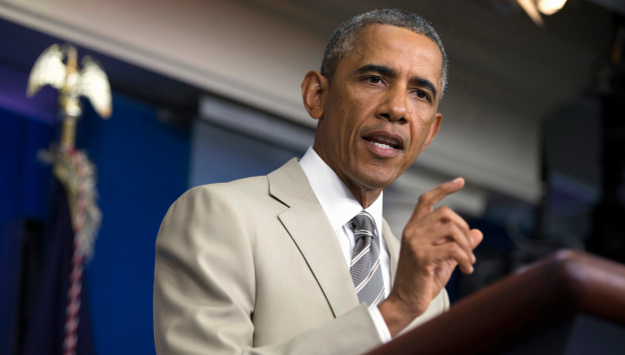
    Paul Salem, MEI’s vice president for policy and research, examines President Obama’s decision to step up US intervention against the Islamic State (also known as ISIS) in Iraq, and what it implies for broader US policy in the region, in this Expert Q&A.

    How do you read the import and impact of President Obama’s recent announcements of airstrikes and humanitarian intervention in Iraq?

    August 11, 2014

    Collection Spotlight: Pens and Swords: How the American Mainstream Media Report the Israeli-Palestinian Conflict By Marda Dunsky
    Middle East Institute
  • Analysis
  • Collection Spotlight: Pens and Swords: How the American Mainstream Media Report the Israeli-Palestinian Conflict By Marda Dunsky

    Free media in a democratic society allows people to evaluate and challenge, to scrutinize honestly and debate accurately. But what happens when mainstream media unknowingly fails the public? Marda Dunsky argues that, when it comes to the Israeli-Palestinian conflict, a decade-old conflict at the center of U.S. interests in the Middle East, the American mainstream media has failed the public and even perpetuated violence.

    August 7, 2014

    Not Our Kind of Caliph: Syrian Islamists and the Islamic State
  • Analysis
  • Not Our Kind of Caliph: Syrian Islamists and the Islamic State

    On June 29, the al-Qaeda splinter faction known as the Islamic State (formerly the Islamic State of Iraq and Syria, ISIS)[1] declared its leader Abu Bakr al-Baghdadi to be the caliph, or successor to the Prophet Mohammed, a post that no one has claimed since 1924.[2]

    August 7, 2014

    The Cruel War in Gaza Calls for a New Approach to Peace
  • Analysis
  • The Cruel War in Gaza Calls for a New Approach to Peace

    The terrible war in Gaza, the third and worst of its kind in the last decade, is a product of Palestinian political disarray, Arab disunity, and division in Israel. Washington’s policy of “no direct talks” with Hamas and bitter partisanship between the White House and Congress have also limited effective U.S. intervention.  As such, this latest tragedy is yet another symptom of decades of failure to resolve the larger Israel-Palestine conflict, which, without major policy changes, will surely drag on regardless of the latest cease-fire.

    August 5, 2014

    Egypt’s Least Bad Option for Addressing Energy Troubles
    Middle East Institute
  • Analysis
  • Egypt’s Least Bad Option for Addressing Energy Troubles

    A proposed deal to export Israeli natural gas through Egypt has the potential to enable Israel’s entry into its first major export markets, help Egypt escape a deepening energy crisis, and welcome the first European players into Israel’s natural gas industry. However, the deal is complicated by political realities and a history of deeply rooted grievances between the two countries, made worse by the recent violence between Israel and Hamas in Gaza.

    July 24, 2014

    Israel's Unwinnable War
  • Analysis
  • Israel's Unwinnable War

    Amb. Philip Wilcox, MEI scholar and president of the Foundation for Middle East Peace, discusses the motivations that led to the current escalation of hostilities between Israel and Hamas, and why Israel decided to pursue a ground assault in Gaza.

    Israel’s ground assault continues an historical pattern of dealing with threats from adversaries. How well has this strategy worked before?

    July 18, 2014

    Why Securing a Cease-Fire Will Be Harder This Time
  • Analysis
  • Why Securing a Cease-Fire Will Be Harder This Time

    In thinking about how the crisis between Israel and the Hamas leadership in Gaza might play out, it’s useful to reflect upon the preceding Israeli incursion into Gaza in November 2012.

    July 15, 2014

    The New Wave of Violence between Israelis and Palestinians: The View from Israel
  • Analysis
  • The New Wave of Violence between Israelis and Palestinians: The View from Israel

    The recent wave of violence between Israel and Hamas, which to date has resulted in the death of more than 100 Palestinians and the injury of several Israelis, continues to escalate with no clear sign of when it might end.

    July 11, 2014

    Foreign Fighters in Syria and the Threat of Domestic Terrorism in Europe
  • Analysis
  • Foreign Fighters in Syria and the Threat of Domestic Terrorism in Europe

    Westerners who have joined the ranks of radical groups fighting in Syria have been likened to time bombs—and in May one of them exploded in Brussels. Belgian police released chilling images from surveillance cameras of the lone gunman’s attack on Brussels’ Jewish Museum in Sablon, a neighborhood of genteel antique stores and chocolatiers.

    July 1, 2014

    Turkey and the ISIS Challenge
  • Analysis
  • Turkey and the ISIS Challenge

    With the Syrian civil war raging and the ISIS offensive in northern Iraq creating a fresh crisis, Turkey now effectively has two failed states on its southern border and is dealing with new security, political, and economic challenges. Gonul Tol, director of MEI’s Turkish Center, explains how Turkey is responding to this predicament.

    Palestine at the Center of Israel-Turkey Trade
  • Analysis
  • Palestine at the Center of Israel-Turkey Trade

    On the north side of Istanbul’s Golden Horn, the Mavi Marmara sits in quiet isolation. In May 2010, the Turkish vessel was carrying aid for the besieged Gaza Strip when Israel forcibly intercepted it in international waters. Nine activists were killed in the raid, and a tenth succumbed to his injuries last month.

    The maritime crisis set off several years of polarized relations between Israel and Turkey that both countries believe are now on the mend. These improving ties may produce humanitarian and economic benefits for the West Bank and Gaza Strip.

    June 24, 2014

    Reconceptualizing Sectarianism in the Middle East and Asia
  • Analysis
  • Reconceptualizing Sectarianism in the Middle East and Asia

    Sectarianism as a concept has gained renewed prominence following an offensive by the Islamic State in Iraq and Syria (ISIS) in early June 2014, which resulted in the fall of Mosul and a string of Iraqi towns. These land grabs have resulted in a flurry of commentaries blaming the conflict on sectarian differences between Iraq’s Shi‘a and Sunnis and predicting the fragmentation of Iraq along sectarian lines. This piece seeks to provide an analysis as to whether sectarianism, in and of itself, is the driving factor behind the renewed conflict in Iraq or the three-year civil war raging in Syria.

    June 18, 2014