Bilateral relations between Turkey and Iran have been marked by relative peace and stability for the past four centuries. Since the founding of the modern Republic of Turkey in 1923 and the creation of an absolutist monarchy in Iran in 1925, the ruling regimes of both countries have sought to consolidate their domestic power and to pursue an independent foreign policy. Neither Turkey nor Iran has viewed one another as an immediate threat to the attainment of these vital objectives.
How the New Arab Media Challenges the Arab Militaries: The Case of the War between Israel and Hizbullah in 2006
One, Two / the Arab army where are you?/ The Arab army where are you?/The Egyptian Arab Army/ resides in an-Nasr [victory] compound/ Wakes up in the afternoon/ to drink its tea/ The Gulf Arab army/ can do absolutely nothing/ “Strategic silence” indeed/ “cut us some slack, man!”/ The Tunisian Arab army/ is green like parsley/ But ‘Aziza loves Yunis/ the wars can wait/ The Sudanese Arab army/ I can hear its clamor in my ears/ “Damn it!
From Conflict Transformation to Conflict Resolution?
Originally posted June 2008
Intra-basin dynamics amongst the Euphrates and Tigris co-riparians — Iraq, Syria, and Turkey — are better described as leading to conflict transformation rather than conflict resolution. The process of interaction has effectively seen the de-securitization of water issues, but the roots of the conflict have not yet been fully addressed.
The Jordan Valley is a lush, wetland ecosystem that is the biological heart of the Middle East region at large. As the meeting point of the Asian, African, and European continents, the valley is at the crossroads of biodiversity. In addition to the unique flora and fauna, the valley is one of the world’s most important migratory pathways for birds. Over 500 million birds migrate from Europe to Africa twice a year, dependent on the Jordan Valley as a stopping ground on their long journey.
Within a mere few years after World War II the Middle East was remade. The creation of the State of Israel in 1948 and its consequences helped propel that part of the world to what seems to be a permanent and unenviable spot on any list of world crises.
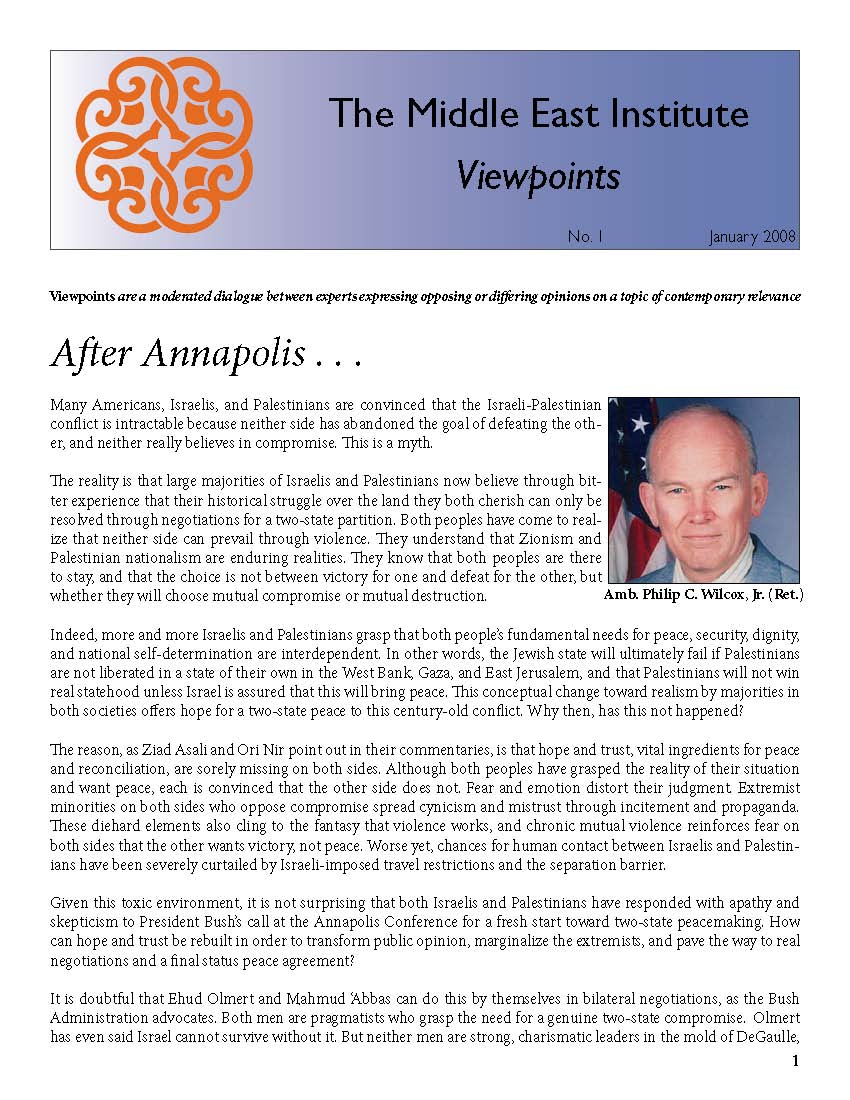
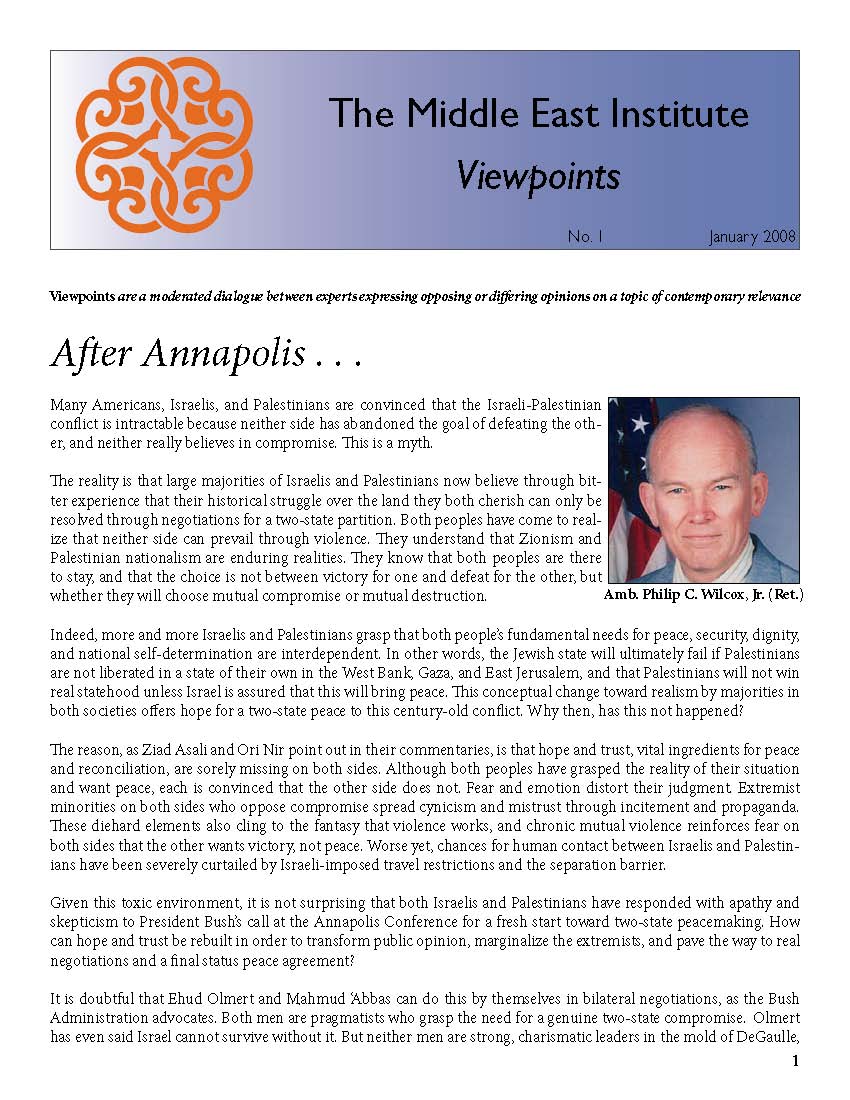
Many Americans, Israelis, and Palestinians are convinced that the Israeli-Palestinian conflict is intractable because neither side has abandoned the goal of defeating the other, and neither really believes in compromise. This is a myth.
Even the most skeptical of us would have to concede that things are better now than they were a few months ago, as they hasten to add that we have been here before and that this too shall pass.
Yes, things are better: Palestinian and Israeli officials are talking, and not about the weather. Final status issues are being discussed, though they are not being resolved.
Last month, I spent seven days in an Israeli living room, sitting “shiva” with my family to mourn the loss of a relative. Hundreds of people came to visit. Hundreds of conversations unfolded on almost any topic imaginable. One of the purposes of the shiva is to distract mourners from their loss through engagement with the living in conversations on the mundane.
Many Americans, Israelis, and Palestinians are convinced that the Israeli-Palestinian conflict is intractable because neither side has abandoned the goal of defeating the other, and neither really believes in compromise. This is a myth.
An Overview of the Turkish Economy: Outlook and Current Perspectives
Turkey is at the center of an economic and political area known as “Eurasia,” where three regions of the world — Europe, the former Soviet Union, and the Middle East — intersect. Turkey’s proximity to the Balkans and the rest of Europe as well as to the growing emerging markets in Central Asia, the Middle East, and North Africa creates unique business opportunities. The experience of numerous global firms confirms Turkey as a predominant investment location and export platform.