Top Iranian Lawmaker Hails Quds Force’s Subversive Activities in Iraq and Syria
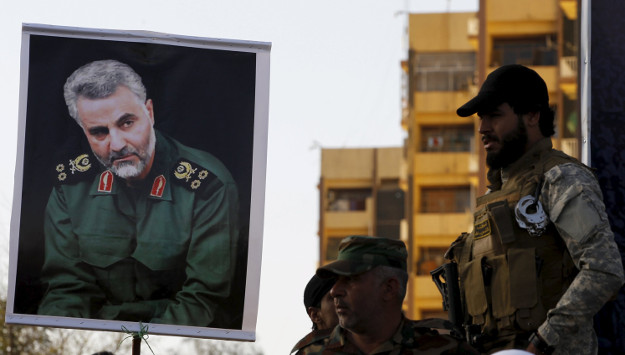
Chairman of the Iranian Parliament’s National Security and Foreign Policy Commission Alaeddin Boroujerdi has commended Iranian Quds Force Commander Qassem Soleimani’s “important” role in regional conflicts.
Concerns in Iran over Trump’s Possible I.R.G.C. Designation
The media and legal experts in Iran have already begun examining the implications a potential decision by the Trump administration to designate the Islamic Revolution Guards Corps (I.R.G.C.) as a terrorist entity. Tabnak, an outlet affiliated with former I.R.G.C.
Iran Tasks Basij to Expand the War on Information and Smother Social Media
Iran’s Deputy Attorney General Abdolsamad Khoramabadi has announced that his office has tasked the Basij organization to take a leading role in cracking down on the country’s cyberspace.
I.R.G.C. Continues to Incite Houthi Attacks against Saudi Arabia
The Islamic Revolution Guards Corps (I.R.G.C.) media outlets continue to justify and encourage attacks by Yemeni Houthi rebels against Saudi Arabia. I.R.G.C.-affiliated Fars News Agency, for example, ran a number of news stories and commentaries today glorifying the Houthis’ latest attacks against Saudi military targets, including a recent attack targeting a Saudi warship and a scud missile that the Houthis claimed hit a military base near the Saudi capital.
Iran's Regime Intensifies Crackdown on Innocent Iranians Traveling Home from West
An Iranian scientist who worked for a Belgian university has been threatened with the death penalty in Iran, the Amnesty International reported on February 7. Dr. Ahmadreza Djalali, a resident of Sweden and a professor at a Belgian university, has been detained in Iran since last April.
Khamenei’s Insincere “Clemency” ahead of Revolution Day
Iran’s Supreme Leader Ali Khamenei has agreed to pardon or commute the sentences of 631 Iranian convicts, the Iranian media reports. The “clemency” was suggested by Iran’s Judiciary Chief Ayatollah Sadegh Amoli Larijani on the occasion of a Shiite religious event and ahead of the anniversary of Iran’s 1979 revolution. The convicts were mostly from Iran’s revolutionary courts, the Judiciary Organization of the Armed Forces and the State Discretionary Punishment Organization.
Afghan Official Says Iran Is Fueling Sectarian Tension in Western Provinces
The BBC Persian reports that Iran has significantly expanded its ideological, cultural and economic sphere of influence in Afghanistan’s western province of Nimroz and is inflaming sectarian tension in the province.
Harsh I.R.G.C. Attack on Turkey in Midst of Syria Talks
Mohsen Rezaei, a top commander in the Islamic Revolution Guards Corps (I.R.G.C.), has waged an exceptionally tough attack on Turkey and accused Ankara to be the minion of the United States in Washington’s “dangerous game in the Middle East.”
Iran Hardliners Urge Escalation in Houthi Attacks on Saudi Arabia
Hardline Iranian media are enthusiastically speculating that the conflict in Yemen will soon enter a more dangerous phase with the intensification in the use of missiles by the Yemeni rebels.
Uranium Shipments from Russia to Iran May Further Alarm Washington
A senior official of the Atomic Energy Organization of Iran (AEOI) has confirmed the shipment of five kilograms of 20 percent enriched uranium from Russia to the Iranian province of Esfahan.
Senior Iranian Official Threatens to Attack Israel, U.S. Bases in Mideast
A senior member of Iran’s parliament’s National Security and Foreign Policy Commission and former Islamic Revolution Guards Corps (I.R.G.C.) official has warned that if Washington “makes any mistake,” Iran will attack Israel and U.S. military bases across the Middle East. “The Fifth Fleet of the U.S.