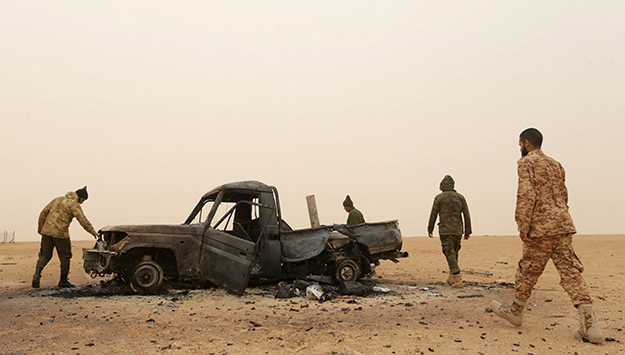
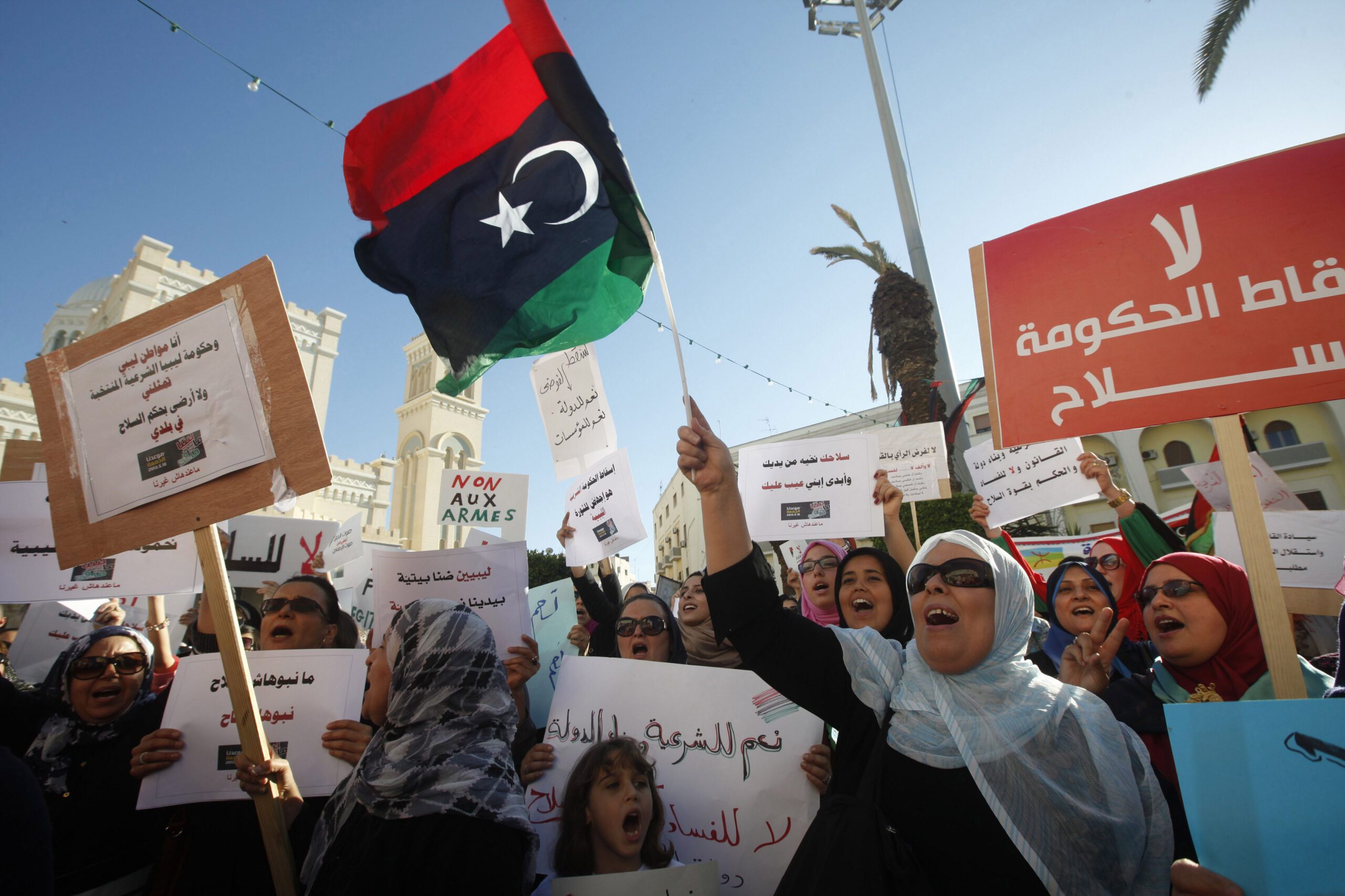
A common theme among many postcolonial countries in the Middle East is the difficulty of placing various religious and ethnic groups under the same state’s flag. Libya is different, as its people are overwhelmingly Sunni Arab. Nevertheless, tribal politics have instilled serious divisions in the country. The friction coalesces around two of the three primary regions of Libya, Cyrenaica in the east and Tripolitania in the west (the third historic province of Libya, Fezzan, is to the south of Tripolitania and tends to align its views with its northern neighbor).
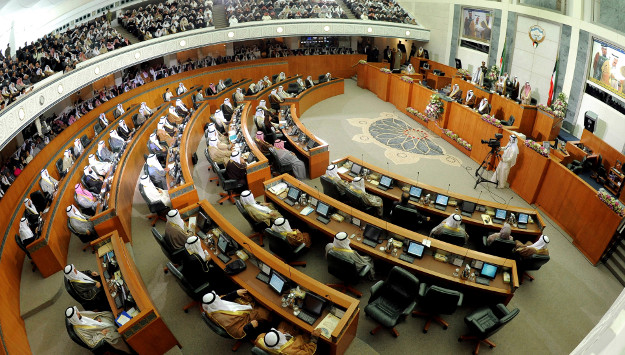
After boycotting parliamentary elections in 2012 and 2013, the Kuwaiti Muslim Brotherhood’s political wing, Hadas, ran their candidates in last year’s snap election. Four out of five of the party’s candidates won, bringing Hadas back into Kuwait’s 50-member National Assembly.
The introduction of the draft in Gulf monarchies — after decades of sovereign statehood — presents an interesting puzzle. What are the reasons behind the newly implemented conscription? What broader implications does this phenomenon have for the Gulf? This essay addresses these questions.
Tehran Views GCC Overture as “Sign of Weakness,” Not Goodwill Gesture
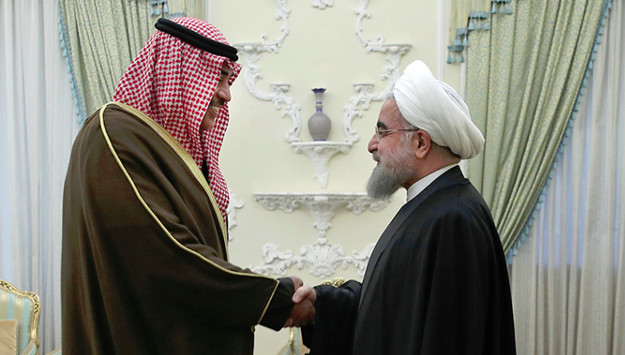
Kuwaiti Foreign Minister Sheikh Sabah Khaled al-Sabah has arrived in Tehran today to deliver a message from Gulf Cooperation Council (GCC) on a strategic dialogue between the Gulf Arab states and Iran, the Iranian and Arab media report. “Gulf states have a true desire that relations with Iran are normal and based on international law,” Sabah said on Tuesday after attending the inauguration of a NATO center in Kuwait.
Hezbollah Front Company Allegedly Training Kuwait University Students
A Lebanese company fronting for Hezbollah allegedly has contracted with Kuwait University to provide students with training in computers and information science, according to the Kuwaiti daily al-Shahed. Alarmed Kuwaitis have asked the Ministry of Education to investigate the reports. According to the al-Shahed report, the sources claim that the front company is using its program to “brainwash” the students and is providing them with free travel to Lebanon, including tickets and accommodations, which includes arranging visits to Hezbollah headquarters in Beirut.
This essay, which draws upon extensive field research in Libya over the period 2011-2013, seeks to shed light on an under-theorized area of research, namely the forces that challenge an emerging civil society during a political transition. In doing so, the essay makes two contributions to knowledge, first by arguing the value and inevitable role of civil society in a divided or conflict-ridden society, and second by helping readers better understand and unpack the case of Libya’s disrupted and dispersed civil society.
Monday Briefing: Shiite Militias to Join Mosul Battle
In this week’s Monday Briefing, MEI experts Randa Slim, Robert S. Ford, and David Mack provide analysis on recent and upcoming events including updates on the battles for Mosul and Aleppo, and the potential meeting of Libyan factions currently locked in a stalemate.
Monday Briefing: President Obama's Final UNGA Address
In this week’s Monday Briefing, MEI experts Paul Salem, Robert S. Ford, Charles Lister, Alex Vatanka, and David Mack provide analysis on recent and upcoming events including Obama’s upcoming final speech to the UN General Assembly, the Syrian collapsed ceasefire, the buildup to an eventual Mosul offensive, Rouhani’s trip to Latin America, and Libya’s oil exports.
After the liberation of Sirte from ISIS, now the really hard work begins. The nine-member Presidential Council (P.C.) and the Government of National Accord (G.N.A.) that it named under Prime Minister Fayez Serraj have yet to receive an affirmative vote from the House of Representatives (H.O.R.) in Tobruk. Although a majority of H.O.R. members were prepared many weeks ago to confirm Serraj and his cabinet, speaker Aquila Saleh declined to bring the matter to a vote.
The Libyan Presidential Council (P.C.), representing a rough consensus of Libyan political forces, is making slow but promising gains in several key areas. There will probably be setbacks on the road to the kind of progress that will generate wider support from both key Libyan factions and the general populace. Signs are encouraging, however, in areas such as security and legitimacy. It is too early to say that the Government of National Accord (G.N.A.) appointed by the P.C. is truly governing, but it is taking steps that provide more confidence to the international community.
Monday Briefing: Responding to Orlando, ISIS in Libya, and Hamas-Fatah Meeting
In this week’s Monday Briefing, MEI chairman Richard A. Clarke responds to the mass shooting in Orlando, and Charles Lister and Antoun Issa provide analysis on events including the pushing back of ISIS in Libya and the upcoming meeting of Hamas and Fatah.
Philip Gordon, a former Middle East policy adviser in the White House, likes to say that President Barack Obama learned three lessons from the region’s unending turmoil.
Some problems cannot be postponed indefinitely, and Libya is one of them. U.N. mediators, fronting for a hesitant and oft-divided international community, are running out of gimmicks for further talks among the feuding parties in Libya’s dysfunctional political process. Moving swiftly after his arrival in Tripoli last Wednesday, Prime Minister Fayez al-Sarraj reached out to the Libyan public, key central government institutions, and regional and municipal authorities.
The intensifying rivalry between Saudi Arabia and Iran is raising sectarian temperatures in some smaller Gulf Cooperation Council (G.C.C.) states. Kuwait’s fractious parliament has seen growing tension and even physical confrontation between its Sunni and Shiite MPs in response to regional developments. Growing tension in Kuwait is also evident in the national media and online forums.
Monday Briefing: Syria Ceasefire, Iran's Elections, and ISIS in Libya
In this week’s Monday Briefing, MEI experts Robert S. Ford, Paul Salem, Alex Vatanka, and David Mack provide analysis on recent events including the ceasefire agreement in Syria, Iran’s elections, and how the United States should respond to the growing threat of ISIS in Libya.