In the Crowded Arena of Tuareg Rockers, Mdou Moctar Stands Tall
Mdou Moctar recently finished his first U.S. tour. In his three October performances in Washington, he set out to do a lot. Pickless, his kinetic guitar licks bounced around the stage, bringing his audience thousands of miles away to the Sahara desert. His calm, welcoming voice sang about the struggles and hopes of his divided homeland.
November 29, 2017- Syrian protest art served as a critical form of non-violent expression during the uprisings against the Assad government starting in 2011. Recognizing the work’s historic significance, the British Museum recently acquired a collection of posters, prints drawings and photographs produced during the conflict, and turned them into a unique exhibit, “Living Histories.”
Climate Change: The Middle East Faces a Water Crisis
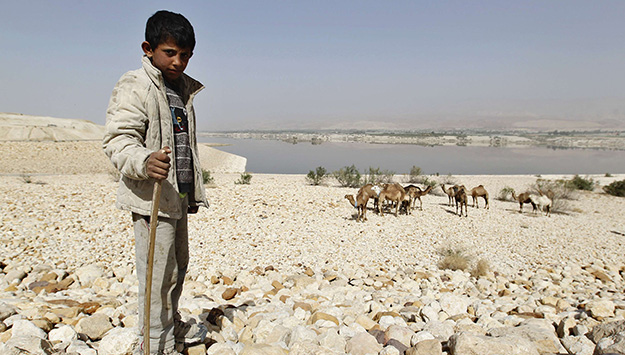
The International Panel on Climate Change (IPCC) projects that the Middle East and North Africa (MENA) will be one of the world’s regions hit hardest by climate change in the 21st century, particularly due to increased heat and aridity. In face of these challenges, interventions in domestic agricultural sectors have the potential to offset many negative impacts on the region.
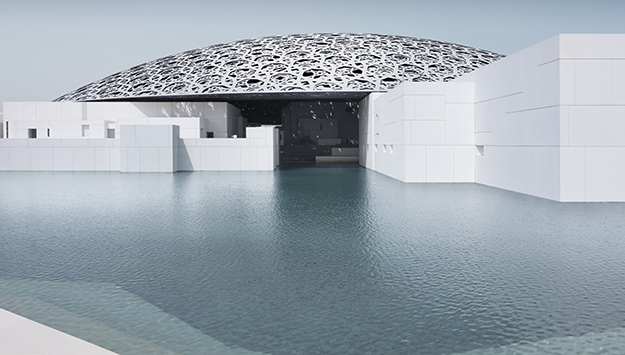
It was a magical moment to come after so many years of anticipation, when the platform below the Louvre Abu Dhabi was carefully flooded with sea water from the surrounding Gulf.
Wars Distracting Middle East from Serious Climate Change Threats
Wars in MENA are causing irreparable damage to water security and resilience to climate change in some of the region’s countries and to their viability. The continuation of this dangerous state could ultimately reinforce even deeper instability in MENA.
Millions of Rural Working Women in Egypt at Risk from Climate Change
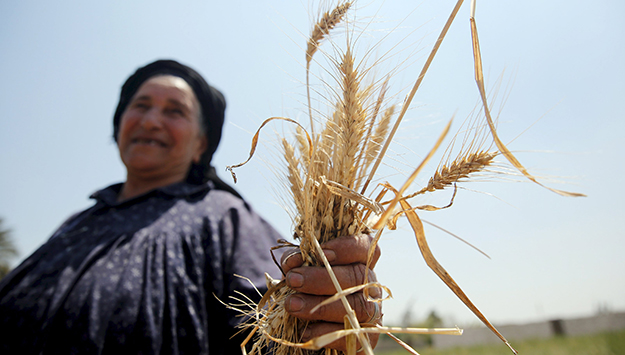
The impacts of climate change on Egypt’s agriculture are likely to be substantial, and will affect the millions of Egyptian women reliant on this economic activity for their livelihoods. The agricultural sector employs a large percentage of Egypt’s working women, a sector known for its low and unstable earnings. Millions of rural Egyptian women working in agriculture already suffer from poverty, and climate change will make matters worse.
The view from El Gouna, the luxury Red Sea resort constructed in the late 1980s by Egyptian business tycoon Samih Sawiris, can be misleading. The plush yachts, pricey food menus and grand parties present an alternative reality to the financially-strapped, religiously conservative one of the capital. In other words, El Gouna is not Egypt. The industry’s muted, skeptic reaction to the establishment of an international film festival in Hurghada’s most affluent town this year was thus quite expected.
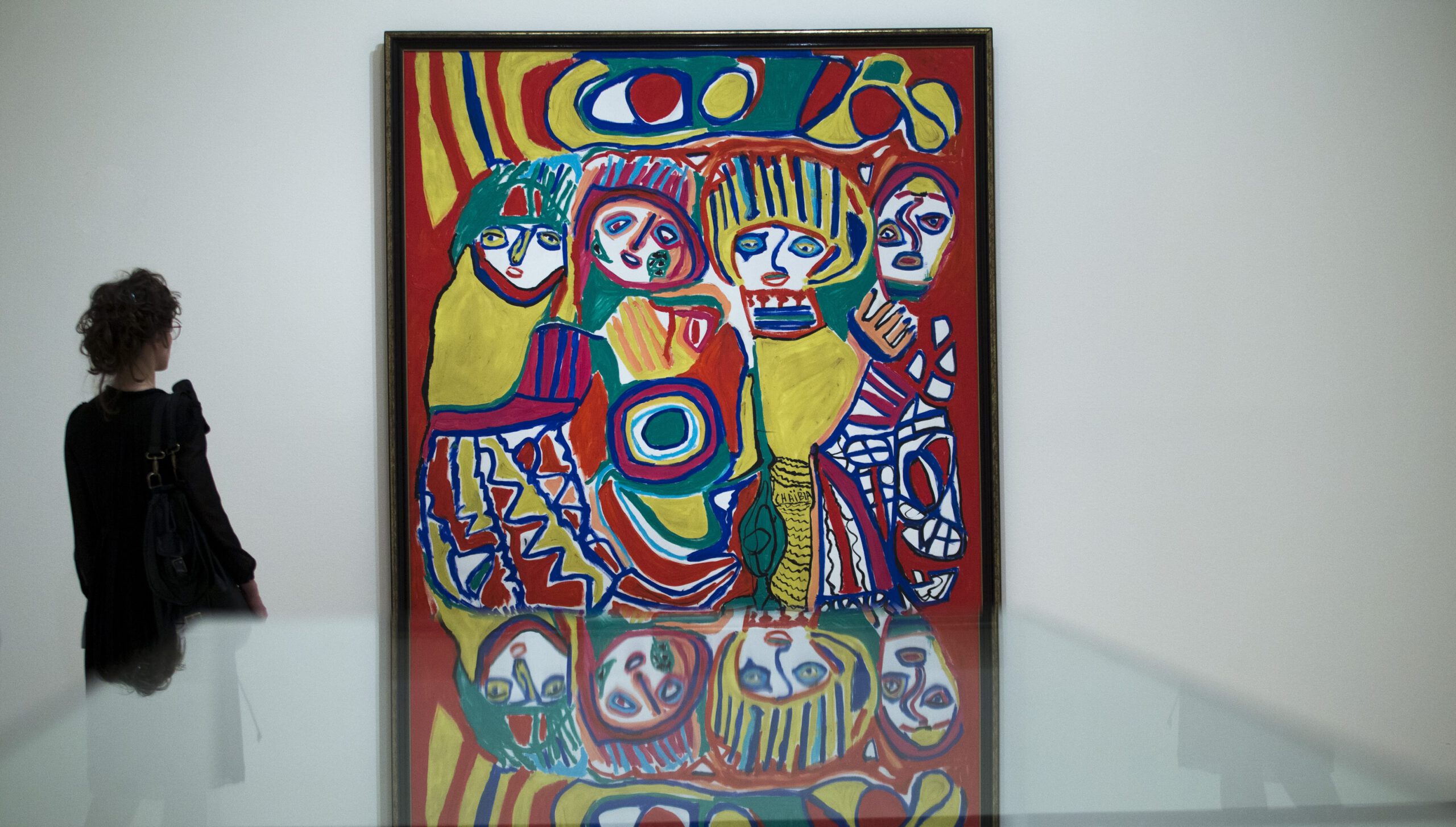
‘Arab,’ ‘Islamic’, or ‘Middle Eastern’ art are all terms used interchangeably. Despite a wide variety of contemporary artistic practices in the region, artists from the Middle East are consistently labeled with ethnic and national markers.
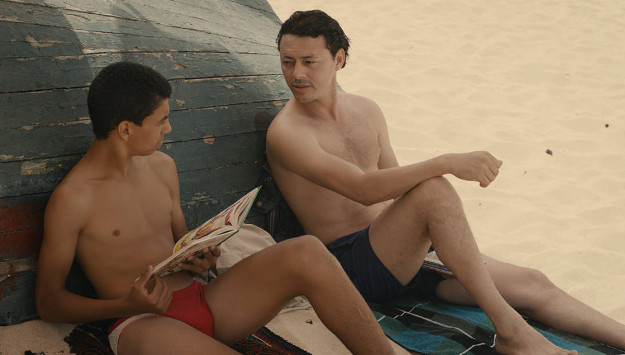
One of the most revealing moments of the recently concluded Ramadan TV season occurred in the new Egyptian series, Don’t Turn Off the Sun. A newly-wedded young wife finds out that her husband is having an affair with his male friend; a liaison that ultimately leads to the dissolution of their marriage. The most telling aspect of what was potentially perceived as a provocative move from the series’ makers was the fact that it didn’t stir any controversy at all.
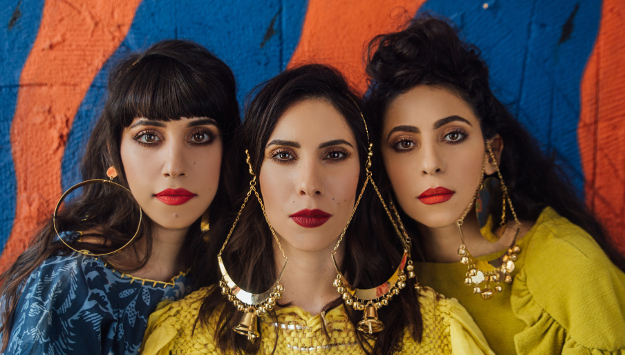
Yemenite pop music has seen a resurgence. The band A-Wa (pronounced “ai-wah,” informal Arabic for “yes!”) and their infectious blend of Yemenite folk, electronic, and hip-hop music can be heard all over the world—from Cairo taxi cabs to Dubai pool parties and Parisian nightclubs. The band, whose mission is to elevate Yemenite music on the international stage, is composed of three Israeli sisters of Yemenite heritage.
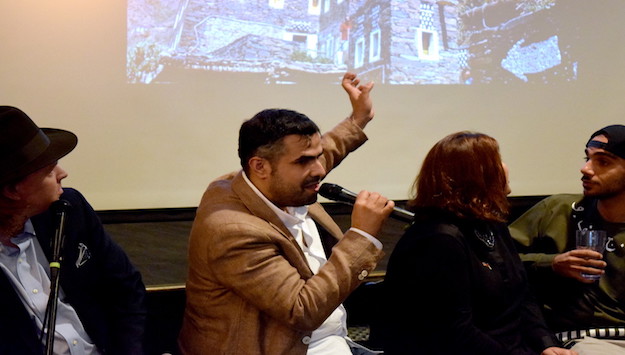
Art has long been both an instrument for openly engaging in dialogue as well as an agent to force an overdue conversation. The installations of international artists, such as Dawn Weleski, Jon Rubin, Ai Weiwei, and Theaster Gates, all engage with social issues and help introduce new perspectives or dialogue. The fusion of art and socio-political commentary thrives especially in the Middle East, where unrestricted criticism of both government and cultural norms can be seen as heresy.
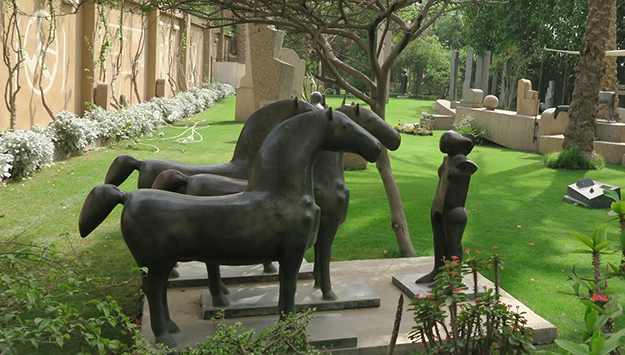
The road to Haraniyya, a formerly rural area just beyond the Giza pyramids, is now an eight-lane highway flanked by red-brick buildings packed and stacked as if designed by some demented cubist. But take the exit, cross a canal and tucked behind a wall of residential towers, the Museum of Adam Henein exists in magical contrast, a verdant stronghold of living art, and one of Cairo’s hidden treasures.
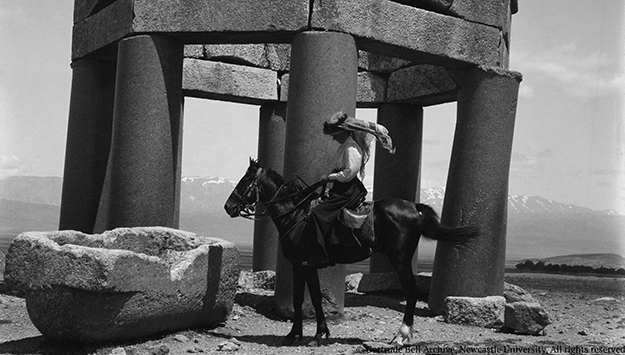
Gertrude Bell: New Documentary Sheds Light on Woman who Helped Shape Iraq
She was a fearless trailblazer who spurned the comforts of Victorian England for a life of adventure and accomplishment, including extensive exploration through uncharted Arabia in the uneasy last days of the Ottoman Empire.
Letters from Baghdad: The Extraordinary Life and Times of Gertrude Bell, a documentary from New York-based filmmakers Zeva Oelbaum and Sabine Krayenbuhl, opened earlier this month in New York City, and will roll out to other major centers through July.
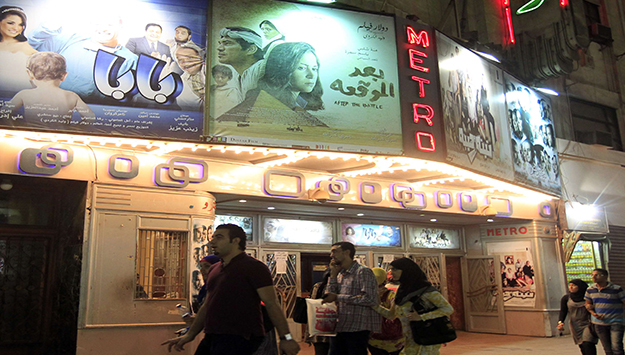
The cinema has long been a contested space in Egypt. Following its nationalization in 1966, a formerly flourishing film industry ran steadily downhill and movie theater operators were subjected to censors’ increasingly puerile whims. The only independent company allowed to operate was Misr International Films—founded in 1972 by Egyptian director Youssef Chahine (1926-2008)—to produce, distribute, and exhibit films while coincidentally enabling the state to posit itself as an indulgent patron of cinematic art. The annual state-run Cairo International Film Festival (CIFF, est.
Saudi Female Conservationist Fights to Preserve Islamic Heritage
The Middle East’s descent into chaos has been accompanied by a growing threat to the region’s historic sites. The breakdown of states and growth in extremism have exposed these ancient sites to looting and destruction. The drivers, however, are varied. Extremist groups like ISIS profit from the smuggling of antiquities, but there are also religious motivations. Extremist movements such as ISIS and al-Qaeda, which adhere to a strictly puritanical view of Islam, perceive heritage sites, including Islamic, as a sinful distraction from faith.