Skip to Content

Research & Commentary Results

Filter by
647 Results
Afghanistan adrift one year after the Taliban takeover
Photo by WAKIL KOHSAR/AFP via Getty Images
  • Analysis
  • Afghanistan adrift one year after the Taliban takeover

    Even prior to al-Qaeda leader Ayman al-Zawahiri’s death in a CIA drone strike on July 31, the last few months have mostly underscored the Taliban’s global isolation and the anguish of the Afghan people. A year on from the Taliban’s takeover of Kabul in August 2021, no foreign government has officially recognized the regime.

    August 9, 2022

    Strike on al-Qaeda leader Zawahiri is a major win for US counterterrorism
    Photo by Visual News/Getty Images
  • Analysis
  • Strike on al-Qaeda leader Zawahiri is a major win for US counterterrorism

    The death of al-Qaeda leader Ayman al-Zawahiri in a U.S. drone strike outside Kabul over the weekend is a major counterterrorism achievement — and a much-needed triumph for the Biden administration, for whom anything to do with Afghanistan has become an issue of acute discomfort. Since late 2019, Zawahiri has been thought to have been based in eastern Afghanistan, and a number of U.S. officials have suggested that in public. That by itself would seem to indicate a certain level of awareness of his probable whereabouts, but his death in the capital Kabul is astounding.

    Russia Created a Refugee Crisis, and Now Putin Is Weaponizing It
  • Commentary
  • Russia Created a Refugee Crisis, and Now Putin Is Weaponizing It

    Vladimir Putin’s hybrid war in Ukraine has created a multifaceted humanitarian crisis that the Kremlin plans to weaponize against the West to further provoke instability and chaos. Refugees have poured out of Ukraine since his February 24 invasion, and Russia’s attacks on Ukraine’s agricultural sector—from grain-export blockades to theft to strikes on agricultural facilities—are creating disruptions to the global food supply that are likely to create even more refugees worldwide. Foreign Minister Sergei Lavrov is touring Africa this week, blaming the West for the food crisis. Western leaders must realize the full destabilizing potential of Russia’s weaponization of the refugee crisis. In response, the United States should combine conventional military support with multilateral information operations to counter Russia’s plans.

    Biden v. Putin: Rival roadshows in an increasingly assertive Middle East
    Photo by ABIR SULTAN/POOL/AFP via Getty Images
  • Analysis
  • Biden v. Putin: Rival roadshows in an increasingly assertive Middle East

    The U.S. and Russian presidents staged high visibility visits to the Middle East in the past week and a half. The visits were designed to assert each great power’s influence in the region at a time of escalating great power conflict. But both presidents cut a diminished figure on the regional stage at a time when leaders in Turkey, Iran, and Saudi Arabia are feeling increasingly empowered.

    July 25, 2022

    Ukraine’s critical minerals and Europe’s energy transition: A motivation for Russian aggression?
    Photo by Jens Büttner/picture alliance via Getty Images
  • Analysis
  • Ukraine’s critical minerals and Europe’s energy transition: A motivation for Russian aggression?

    Russia’s war launched on February 24, 2022, may have partly been motivated by Ukraine’s large reserves of critical metals and their global strategic importance in the production of advanced “green” energy technologies. The cutoff of access to Ukrainian sources, combined with the nature of the partnership between Moscow and Beijing — with China being the largest supplier of the necessary critical minerals — could endanger the very notion of the West’s energy transition.

    July 21, 2022

    The war in Ukraine: A test for Algiers’ non-alignment doctrine
    Photo by APP/NurPhoto via Getty Images
  • Analysis
  • The war in Ukraine: A test for Algiers’ non-alignment doctrine

    Russian President Vladimir Putin’s decision to invade Ukraine in late February could have unprecedented consequences for North Africa. Algeria will be swept up in the resulting shifts, forcing the country’s civilian and military leadership to make difficult international calculations.

    July 7, 2022

    Overshadowed by war in Ukraine, Armenia and Azerbaijan edge closer to a peace deal
    Photo by Dursun Aydemir/Anadolu Agency via Getty Images
  • Analysis
  • Overshadowed by war in Ukraine, Armenia and Azerbaijan edge closer to a peace deal

    Armenia and Azerbaijan, two long-standing adversaries in the South Caucasus, are edging closer to a peace deal that could potentially alter regional geopolitics. The prospective reconciliation also coincides with a nascent rapprochement between Armenia and Turkey. Yet there are significant constraints too, in terms of both wider geopolitics and domestic Armenian politics, that could hinder the process.

    June 30, 2022

    Staying the course … for now: Germany’s MENA policy under the Scholz government
  • Analysis
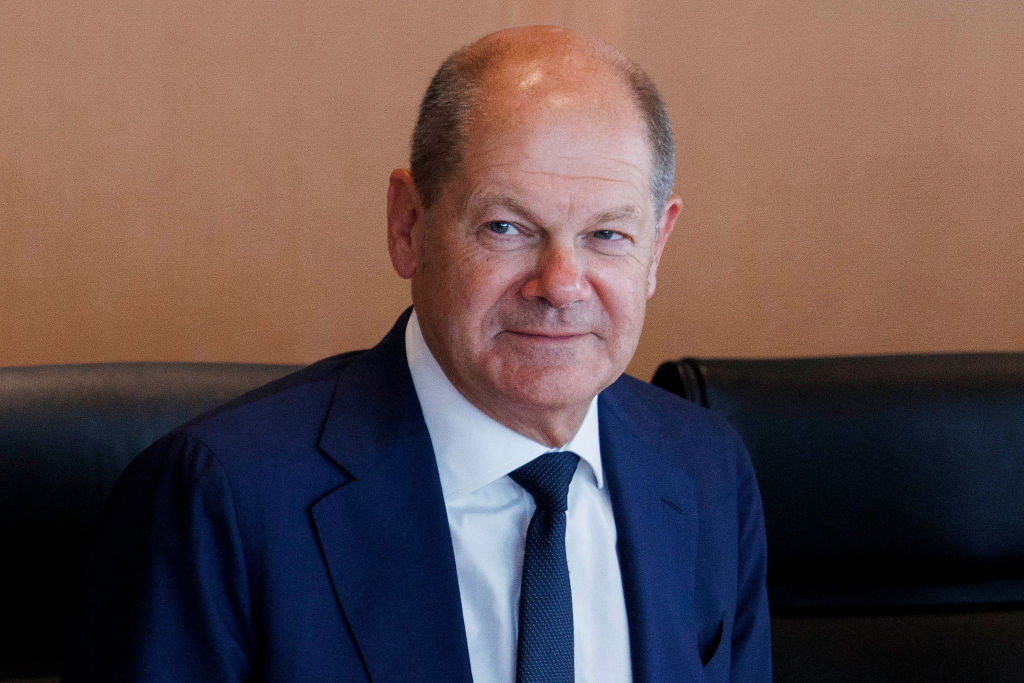
  • Staying the course … for now: Germany’s MENA policy under the Scholz government

    After 16 years under Angela Merkel, Olaf Scholz’s assumption of Germany’s chancellorship on Dec. 8, 2021 marked a new chapter in the nation’s politics. Within the “traffic light” coalition government formed by the Social Democrats, the Free Democratic Party, and the Greens, Annalena Baerbock heads the Ministry of Foreign Affairs. Before taking office, the co-leader of Alliance 90/The Greens was known for both her welcoming attitude toward immigrants and her full-throated condemnation of human rights violations by authoritarian governments. The Middle East and North Africa (MENA) region has no shortage of the latter: According to the Economist Intelligence Unit’s Democracy Index, 17 out of the 20 countries in the region are “authoritarian” and not one is characterized as a “full democracy.” Beyond human rights, other key MENA policy issues for the new government include Iran, Turkey, ongoing conflicts in the region, and immigration. The challenges are numerous, if well-known, but how will Berlin respond? Is Germany’s policy toward MENA likely to change or remain the same under the new government?

    June 22, 2022

    The impact of the war in Ukraine on regional cooperation in the South Caucasus
    Photo by FRANCOIS WALSCHAERTS/AFP via Getty Images
  • Analysis
  • The impact of the war in Ukraine on regional cooperation in the South Caucasus

    Since the collapse of the Soviet Union, the South Caucasus has been unable to find a model for regional cooperation or form regional organizations. The relative calm that followed the Second Nagorno-Karabakh War, especially after the signing of the November 2020 cease-fire agreement, renewed hopes that this might change. Significant challenges to regional cooperation remain, however, and Russia’s war with Ukraine has only complicated matters further.

    June 8, 2022