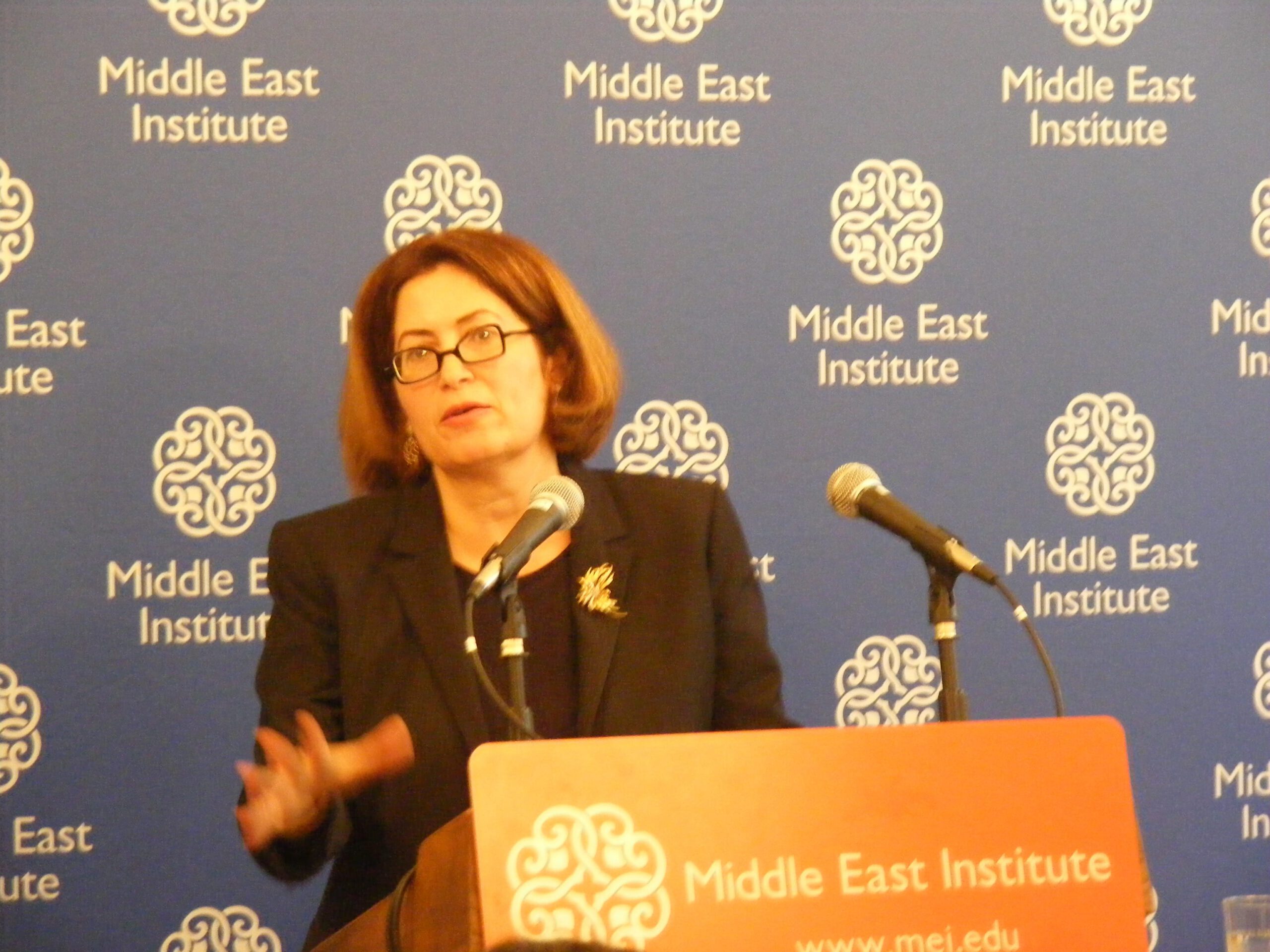
As the United States and its allies have tightened sanctions on Iran, they have sought in particular to isolate the Islamic Revolutionary Guard Corps, the regime’s most aggressive institution. The IRGC, known in Persian as the Pasdaran, fields its own army, navy, and air force, and dominate a large and increasing share of Iran’s national economy.
Iran’s regular military, the Artesh, receives virtually no attention from international media or scholars on Iran. By contrast, its political rival, the Islamic Revolutionary Guard Corps (IRGC, also known in Persian as the Pasdaran), is scrutinized constantly by analysts for its visible, high-profile role in Iran’s political system, its economic resources and corporate activities, and its role as a spearhead of Iran’s regional policies.
Introduction to The Artesh: Iran's Marginalized Regular Military
As the US-Iran showdown continues, among Western analysts there is an infinite desire for more data and analysis relating to the workings of the Islamic Republic. From a US standpoint, a better understanding of the various organs and players in the Iranian regime setup is imperative as Washington weighs its options and sets out to formulate its policies.
MEI scholar Randa Slim led a discussion about Hezbollah and its reaction to shifting regional dynamics in the wake of the Arab Spring. Although Lebanon has not experienced the same levels of unrest as its neighbors, Hezbollah is not immune from the regional instability resulting from the revolutions roiling the Middle East. Hezbollah is currently the principal orchestrator of a new governing coalition that is rife with internal divisions.
This Commentary was first published as an op-ed in the Daily Beast on September 7, 2011
The events of that day were so jarring that they are recorded in our memories as if they had taken place last week. But it has been a long decade, one in which we have made as many mistakes as we have had successes. Now, and not after we suffer another major terrorist attack, is good time to pause, look back, learn lessons, and begin to chart a path away from the past.
The Middle East Institute is proud to host a discussion with Trita Parsi and Michael Singh on the prospects for a diplomatic solution to the Iran nuclear crisis in the wake of recently imposed UN and US sanctions.
Their discussion will draw upon a forthcoming Middle East Journal article entitled "The Case Against the Case Against Iran" written pseudonymously by a European diplomat, who argues for greater engagement by regional actors like Turkey, Saudi Arabia, Russia and China to mediate and mitigate Iran's nuclear ambitions.
This Commentary was first published as an op-ed in the Washington Post on August 4, 2011
The political crisis in Bahrain appears to have subsided, even if the issues that provoked it remain unresolved. Now, the challenge before Washington is redefining the terms on which it deals with an important but seriously tarnished ally.
Supporting Democratic Movements in the Arab World: An Economist's Perspective
The global community was surprised by the suddenness and intensity of democratic movements in the Arab countries. While universally welcomed, the global response in support of these movements has so far been reactive, uncertain, and slow to build up. The only coherent rendering of such an initiative is the declaration of Deauville Partnership by the Group of 8 countries on May26-27, 2011.
This Commentary was first published as an op-ed in the Washington Post on July 29, 2011
With debt talks at an impasse, foreign policy is the last thing on many American minds. But how Congress and the president deal with the debt will affect US relations with other countries and our national security for years to come.
*This Commentary first appeared on neimanwatchdog.org on July 8, 2011
While political debate still roils over the legality of the American role in Libya, other questions have grown more pressing. Those questions include whether the European side of the NATO operation can be sustained and whether the Libyan opposition truly has the ability to achieve their goal of taking down the regime of Muammar Qaddhafi & Co.
These issues are critical for those favoring US participation in NATO operations as well as those opposed.
American policy toward conflict in Libya is bearing disappointing fruit. The conflict there seems to be settling in to a stalemate with the likely prospect of becoming an extended civil war. In the face of this prospect, John McCain and other Senators are calling for greater US involvement. That goes against the grain of American public opinion. It raises in sharp relief the question: Will our current limited engagement policy work? And if so, when?