It is only fitting that “The Iranian Revolution at 30” begin with an introductory essay by R.K. Ramazani and that this project be dedicated to him. For 55 years, Professor Ramazani has been a teacher and mentor to many scholars and practitioners of the Middle East. His body of work on Iran is unrivalled in its scope and originality. Many of his articles and books on Iranian foreign policy are standard works.
This article originally appeared in Foreign Policy’s Middle East Channel on April 9, 2012
BERLIN – If at one time European governments believed the threat of a nuclear-armed Iran was far more frightening for the United States than for those across the Atlantic, those days are in the past. As talks near on Iran’s nuclear program, Tehran should know that European officials’ views are somewhere in the middle between America’s caution and Israel’s alarm.
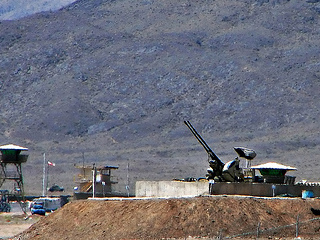
Let us assume that nobody will bomb Iran’s nuclear facilities, at least for quite a while. There is no Iranian nuclear test in the offing. Until now, the inspections of the International Atomic Energy Agency (IAEA) have uncovered no diversion of declared stocks of uranium for use in a nuclear explosive device. Of course, clandestine activities could always take place in some remote stretch of the vast Iranian territory, unknown to the inspectors of the Vienna Agency.
Iran and the West at a Crossroad: Will Recent Elections Make or Break a Deal on Iran's Nuclear Program?
U.S. Secretary of State Hillary Clinton has described upcoming talks with Iran over its nuclear program as "the last chance to resolve the crisis." Yet as the final hour approaches for an opportunity to avert a military attack, there are few apparent signs Iran will make compromises. Recent parliamentary elections have only strengthened the power of Supreme Leader Ali Khamenei and the hardliners in his inner circle who aspire to make the Islamic republic a regional superpower.
Are Iran’s leaders rational actors? This question matters when justifying any decision by Israel to preempt Iran’s acquisition of nuclear weapons. An Iranian regime seen as driven to destroy the Jewish state has to be dealt with differently than one whose objectives are mediated by calculations of costs and benefits. Deterrents that would be normally expected to restrain a state would not work with an irrational Iran.
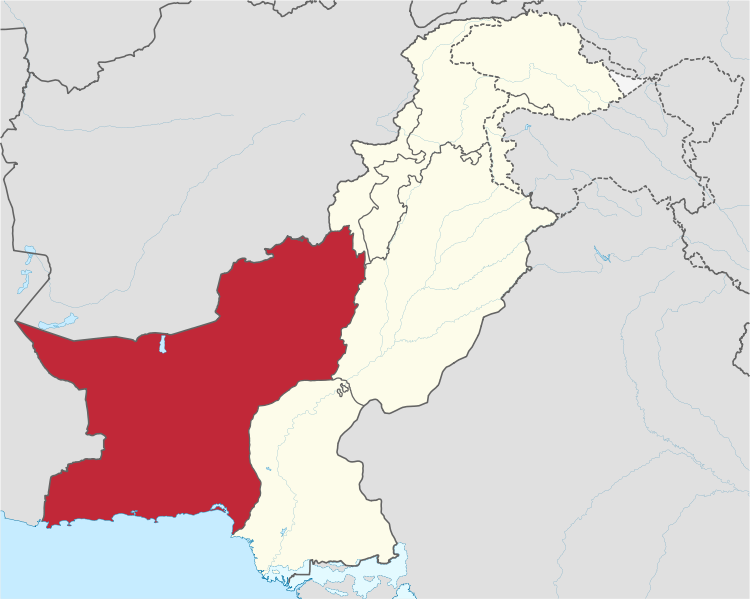
The state of Pakistan seems incapable of learning from its experiences in former East Pakistan (now Bangladesh), and seems therefore doomed to repeat history when it comes to addressing the grievances of Balochistan. Home to nearly ten million of the 180 million-strong population of the country (an estimate at best, since the last census was in 1998), the province has the smallest population in the country but the largest land area.
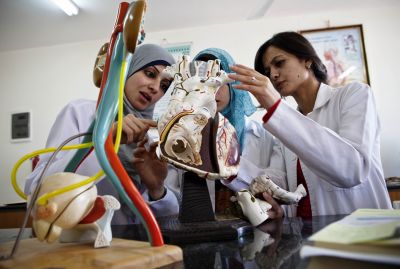
Policy Privatization and Empowerment of Sub-National Forces: The Case of Private English Language Institutes in Iran
Originally posted July 2010
In the past, there was no need for learning a foreign language. Today, however, learning foreign languages should be included in school curricula … Today is not like yesterday, when our voice could not reach beyond the national boundary. Today, we can stay in Iran but publicize [our ideology] and export our revolution to other parts of the world in different languages.