This Commentary was first published as an op-ed in Politico on October 21, 2011
Defense Secretary Leon Panetta asserted recently that critics of the Libyan mission “have been proven wrong.” Now, with the death of dictator Muammar Qadhafi, the secretary’s view is supported by the overwhelming majority of Washington’s foreign policy establishment.
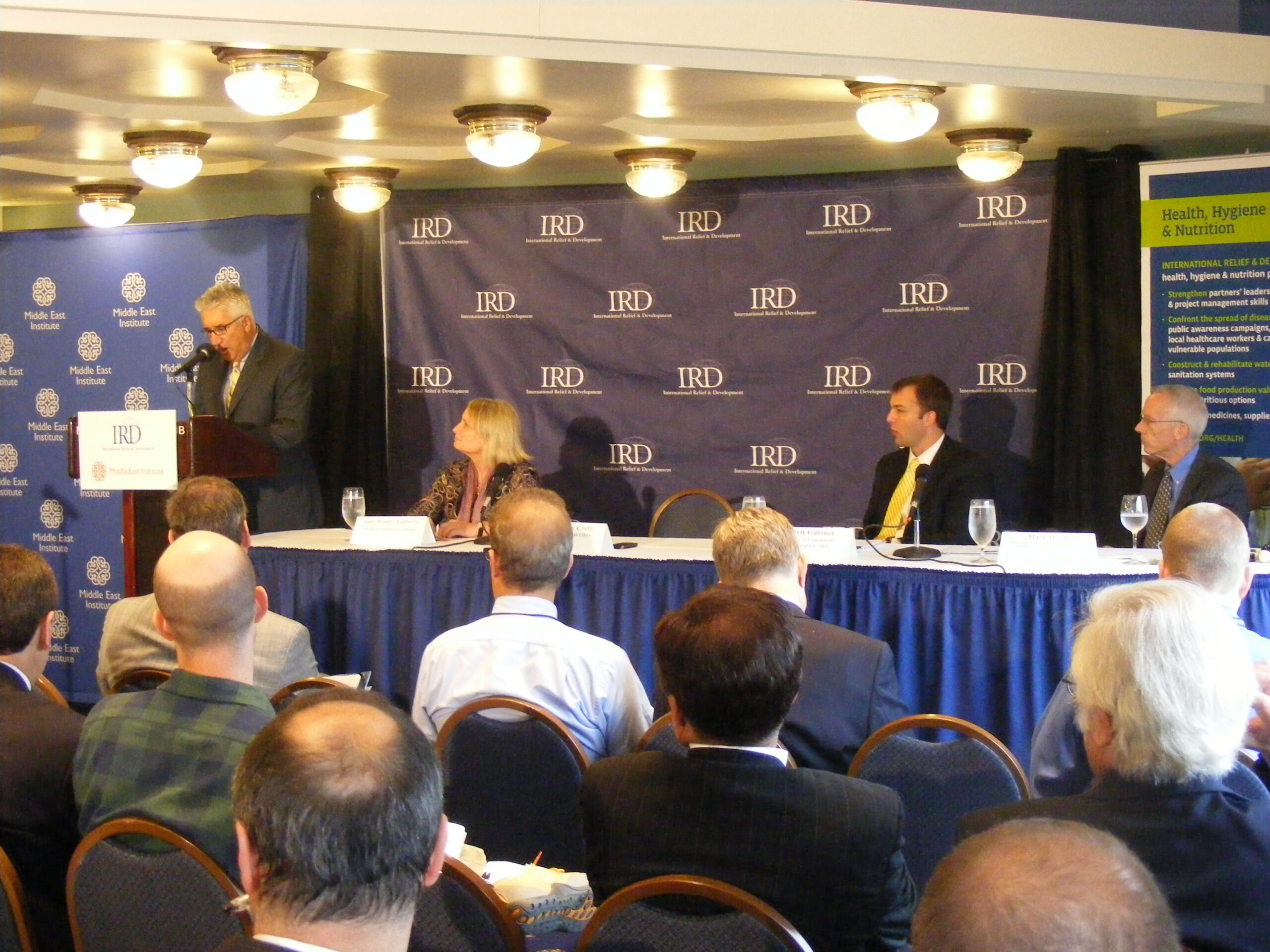
Rebuilding Libya: A Status Report on the Humanitarian Situation on the Ground
Speakers: Amb. Wendy Chamberlin, MEI President
Amb. Gene Cretz, US Ambassador to Libya
Mark Ward, Deputy Assistant Administrator for the Bureau of Democracy, Conflict, and Humanitarian Assistance, USAID
Travis Gartner, Director of Community Stabilization, IRD
Governments in the Middle East and North Africa have long relied on repression to intimidate, harass, and punish political opponents. During the Arab uprisings, dictators under threat have all ordered and used violence against peaceful protestors as a way to maintain power. But this repression has had widely divergent effects on the course of the different conflicts.
This Commentary was first published as an op-ed in the Washington Post on August 22, 2011
A relatively successful transition from the Gaddafi regime to a united, stable, more open and democratic Libya would be seen in the region, and more widely, as a credit to the NATO-led intervention. It would enable Libya to resume its oil and gas exports, demonstrate international community capacity to manage such transitions and encourage positive outcomes to other Arab Spring protests.
The recent uprisings in Bahrain, Egypt, Libya, Syria, Tunisia, and Yemen share associated economic grievances and a common call for responsive government and a more dignified way of life; however, their underlying social dynamics are the product of diverse encounters with the outside world and years of oppression under very different political regimes. This is particularly true in the Libyan case, where socioeconomic and political structures and institutions shaped before as well as during the Qadhafi years have combined to produce a unique political economy.