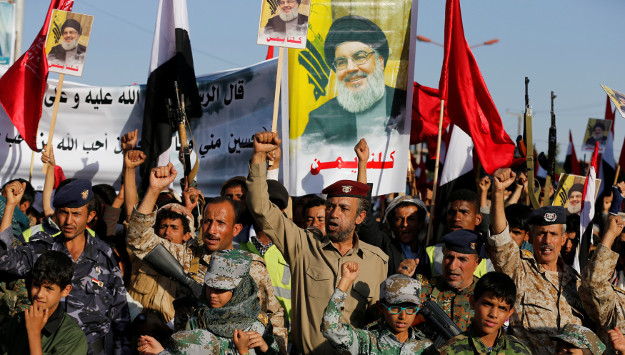
The Lebanon Crisis Pivots on Hezbollah’s Presence in Yemen | Monday Briefing
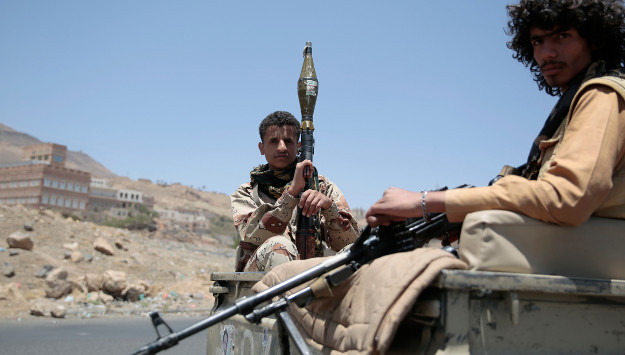
In this week’s Monday Briefing, contributors Paul Salem, Eran Etzion, Alex Vatanka, and Bilal Saab provide analysis on recent and upcoming events including the rising tension between Saudi Arabia and Lebanon over Hezbollah’s presence in Yemen, rumors that an Israeli attack on Lebanon is imminent, the Saudis’ latest attempt to round up collective action against Iran, and the new phase in the Saudi-Iran proxy war following the recent explosion of a pipeline in Bahrain.
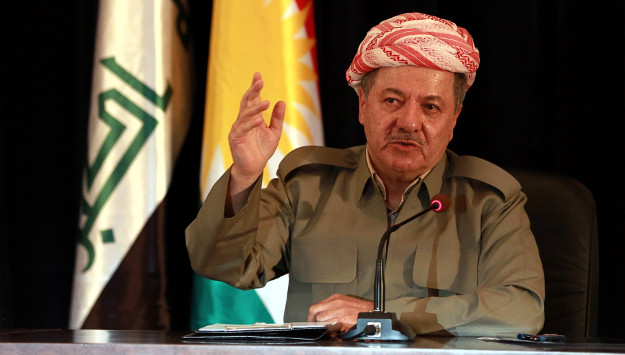
Barzani Stands Down as K.R.G. President | Monday Briefing
In this week’s Monday Briefing, MEI experts Randa Slim, Yousef Munayyer, Charles Lister, Charles Schmitz, and Alex Vatanka provide analysis on recent and upcoming events including President Barzani’s decision to step down from the KRG, the Trump administation’s silent response to Israeli settlement expansion in Jerusalem , the Armed Syrian Opposition’s attendance of the seventh round of Astana Talks, Saudi foreign minister blaming Iran for lack of progress in peace talks in Yemen, and President Rouhani’s failure to advance the reform cause in Iran.
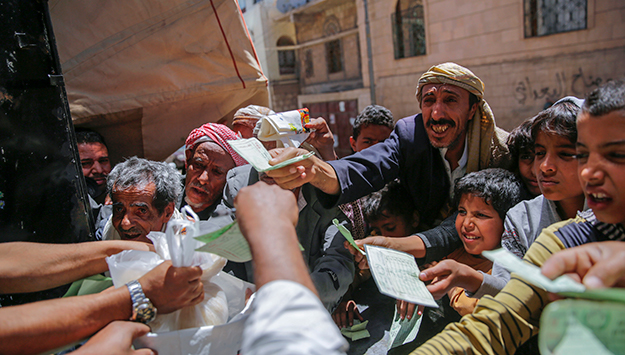
Yemen’s Humanitarian Disaster: Halting the Famine Threat
Summary
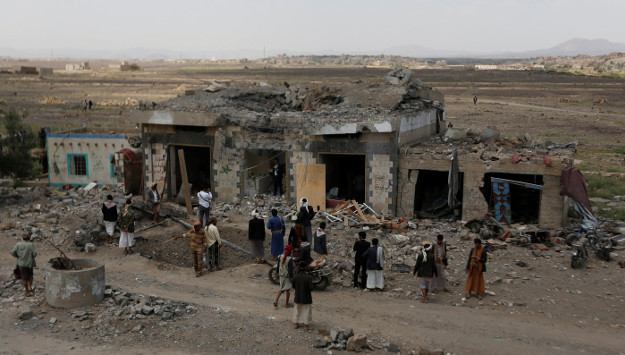
Only several months after the Saudi-led military coalition waged its ongoing campaign against the Iranian-backed Houthi rebels in March 2015, the United Nations began issuing warnings about famine. Today, millions of Yemenis are on the brink of famine, with about half a million suffering from a cholera outbreak. This paper analyzes the causes of Yemen’s humanitarian catastrophe and offers the Trump administration recommendations for helping the impoverished Arab state avoid a famine.
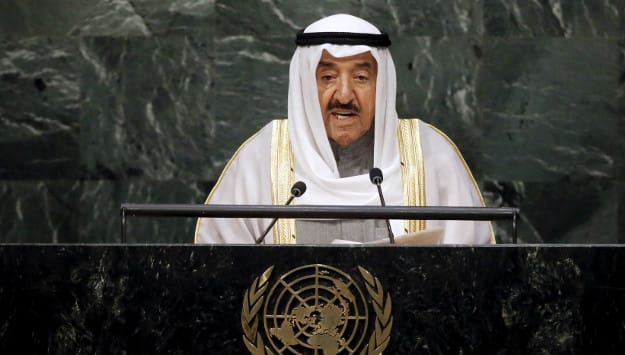
Qatar to Top Agenda of Kuwaiti Emir’s Washington Visit | Weekly Briefing
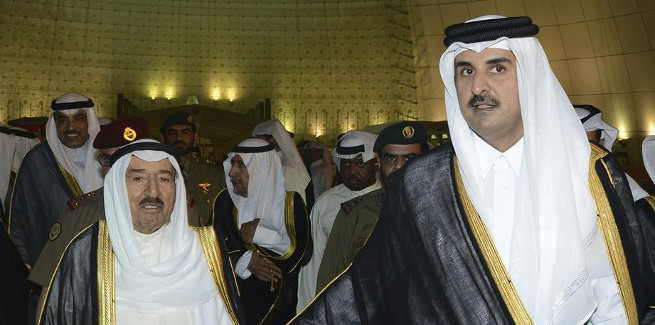
In this week’s briefing, MEI experts Gerald Feierstein, Charles Schmitz, Jonathan M. Winer, and Yousef Munayyer provide analysis on recent and upcoming events including Kuwaiti Emir Sheikh Sabah al-Sabah’s upcoming visit to Washington, recent clashes in Yemen, the French Foreign Minister’s trip to Libya, and the U.N. Human Rights Council’s discussion on Israel/Palestine.
The Middle East Dialogue, a regional Track 1.5 group in which officials and non-officials from the region and beyond meet to discuss current issues in their personal capacities, met May 12-13 in Malta. Read the full report (PDF).
Diplomatic Moves Signal Possible De-escalation of Regional Conflicts
Do a series of recent diplomatic moves by Saudi Arabia signal an opportunity for de-escalation of regional conflicts in Iraq, Syria, and Yemen? MEI scholars Gerald Feierstein, Randa Slim, and Charles Lister join Paul Salem to discuss the dynamics playing out between Riyadh and Tehran as the war against ISIS enters its final phase.
Yemenite pop music has seen a resurgence. The band A-Wa (pronounced “ai-wah,” informal Arabic for “yes!”) and their infectious blend of Yemenite folk, electronic, and hip-hop music can be heard all over the world—from Cairo taxi cabs to Dubai pool parties and Parisian nightclubs. The band, whose mission is to elevate Yemenite music on the international stage, is composed of three Israeli sisters of Yemenite heritage.
Yemen War and Qatar Crisis Challenge Oman’s Neutrality
Living on the periphery of the tumultuous Middle East, Omanis do not take their security for granted. Oman has been free of violent unrest since the Sultanate crushed the Dhofar Rebellion in 1976. Yet Oman is situated in a dangerous neighborhood, and the Arab Gulf country is not immune to transregional threats.
The ongoing Qatar crisis poses a major dilemma for Kuwait and Oman. Consistent with their “neutral” foreign policies, these two Arab Gulf states have maintained ties with Doha and seek to resolve the gravest internal Gulf Cooperation Council (G.C.C.) row since the organization’s establishment in 1981. Officials in Kuwait City and Muscat fear that failure to settle the Qatar crisis will break up the council, which would directly undermine vital Kuwaiti and Omani national interests given the potential for such a scenario to dramatically exacerbate regional geopolitical instability.
Iranian Officials and Media Outlets React to Gulf Crisis by Blaming U.S. and Saudi Arabia
Iranian leaders and media outlets today reacted to a decision by Saudi Arabia and several other Arab nations to sever diplomatic and commercial ties with Qatar by blaming Washington and Riyadh for regional tension and discord. Alaeddin Boroujerdi, the chairman of Iranian Parliament’s Committee on National Security and Foreign Policy, said the rising tension is a direct result of President Donald Trump’s visit to the Middle East.
If President Trump travels to Riyadh later this month, as reported, he will find that the six leaders of the Gulf Coordination Council (GCC) countries hold widely divergent views on Iran, the extent of the Iranian threat, and how to resolve the conflict in Yemen.
Iranian Cleric Admits I.R.G.C. Provides Weapons to Houthis in Yemen
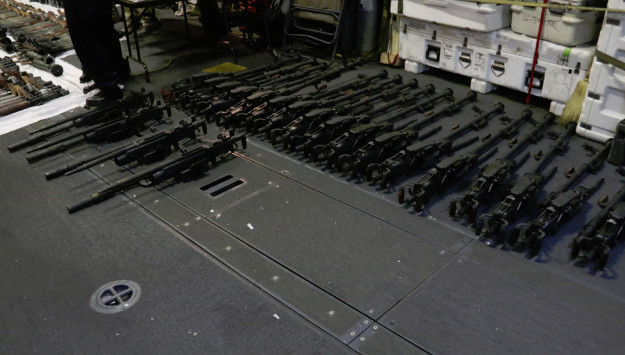
A senior Iranian cleric, who reportedly advises Supreme Leader Ali Khamenei, has in a rare video admitted that Iran provides weapons to the Houthi rebels in Yemen.
Turkey's Erdogan Gets His Presidential Wish | Monday Briefing
In this week’s Monday Briefing, MEI experts Gonul Tol, Gerald Feierstein, Alex Vatanka, and Marvin G. Weinbaum provide analysis on recent and upcoming events including the victory of Turkish President Erdogan’s “Yes” constitutional referendum campaign to increase his powers, Secretary of Defense Mattis’ trip to the Middle East, the entry of 1,600 candidates for the upcoming Iranian presidential elections, and the alarming violence in Pakistan against accused “blasphemers”.
Enhancing India-Oman Economic Engagement: Four Promising Initiatives
India’s interests and capabilities extend well beyond the sub-continent. This essay is part of a series that explores the geopolitical dimensions, economic ties, transnational networks, and other aspects of India’s links with the Middle East (West Asia) — a region that plays a vital role in India’s economy and its future. More ...