China and the Middle East: Rising Power and a Region in Turmoil
China and the Middle East: Rising Power and a Region in Turmoil Featuring:Dr. Yitzhak Shichor, Professor of political science and Asian studies, University of Haifa Dr. Dawn Murphy, Princeton-Harvard China and the World Postdoctoral Fellow Moderated by: Sam Chester, Masters candidate in China and the Middle East studies, Johns Hopkins University’s School of Advanced International Studies Tuesday, December 4, 201212:00-1:30pm Middle East InstituteBoardman Room1761 N Street, NWWashington D.C., 20036 This program features three experts on China’s relations with the Middle East.
The Middle East Institute’s 66th Annual Conference
The Middle East Institute’s 66th Annual Conference
November 13-14, 2012
The Grand Hyatt Hotel
1000 H Street, NW
Washington, DC 20001
Banquet:
Tuesday November 13
Keynote Speaker: Ambassador (Ret.) Ryan C. Crocker
Ryan C. Crocker recently left his post as U.S. ambassador to Afghanistan.
He has also served as U.S. ambassador in Iraq, Pakistan, Syria, Kuwait, and Lebanon.
The Middle East Institute’s 66th Annual Conference
The Middle East Institute’s 66th Annual Conference
November 13-14, 2012
The Grand Hyatt Hotel
1000 H Street, NW
Washington, DC 20001
Banquet:
Tuesday November 13
Keynote Speaker: Ambassador (Ret.) Ryan C. Crocker
Ryan C. Crocker recently left his post as U.S. ambassador to Afghanistan.
He has also served as U.S. ambassador in Iraq, Pakistan, Syria, Kuwait, and Lebanon.
The Middle East Institute’s 66th Annual Conference
The Middle East Institute’s 66th Annual Conference
November 13-14, 2012
The Grand Hyatt Hotel
1000 H Street, NW
Washington, DC 20001
Banquet:
Tuesday November 13
Keynote Speaker: Ambassador (Ret.) Ryan C. Crocker
Ryan C. Crocker recently left his post as U.S. ambassador to Afghanistan.
He has also served as U.S. ambassador in Iraq, Pakistan, Syria, Kuwait, and Lebanon.
The Middle East Institute’s 66th Annual Conference
The Middle East Institute’s 66th Annual Conference
November 13-14, 2012
The Grand Hyatt Hotel
1000 H Street, NW
Washington, DC 20001
Banquet:
Tuesday November 13
Keynote Speaker: Ambassador (Ret.) Ryan C. Crocker
Ryan C. Crocker recently left his post as U.S. ambassador to Afghanistan.
He has also served as U.S. ambassador in Iraq, Pakistan, Syria, Kuwait, and Lebanon.
The Middle East Institute’s 66th Annual Conference
The Middle East Institute’s 66th Annual Conference
November 13-14, 2012
The Grand Hyatt Hotel
1000 H Street, NW
Washington, DC 20001
Banquet:
Tuesday November 13
Keynote Speaker: Ambassador (Ret.) Ryan C. Crocker
Ryan C. Crocker recently left his post as U.S. ambassador to Afghanistan.
He has also served as U.S. ambassador in Iraq, Pakistan, Syria, Kuwait, and Lebanon.
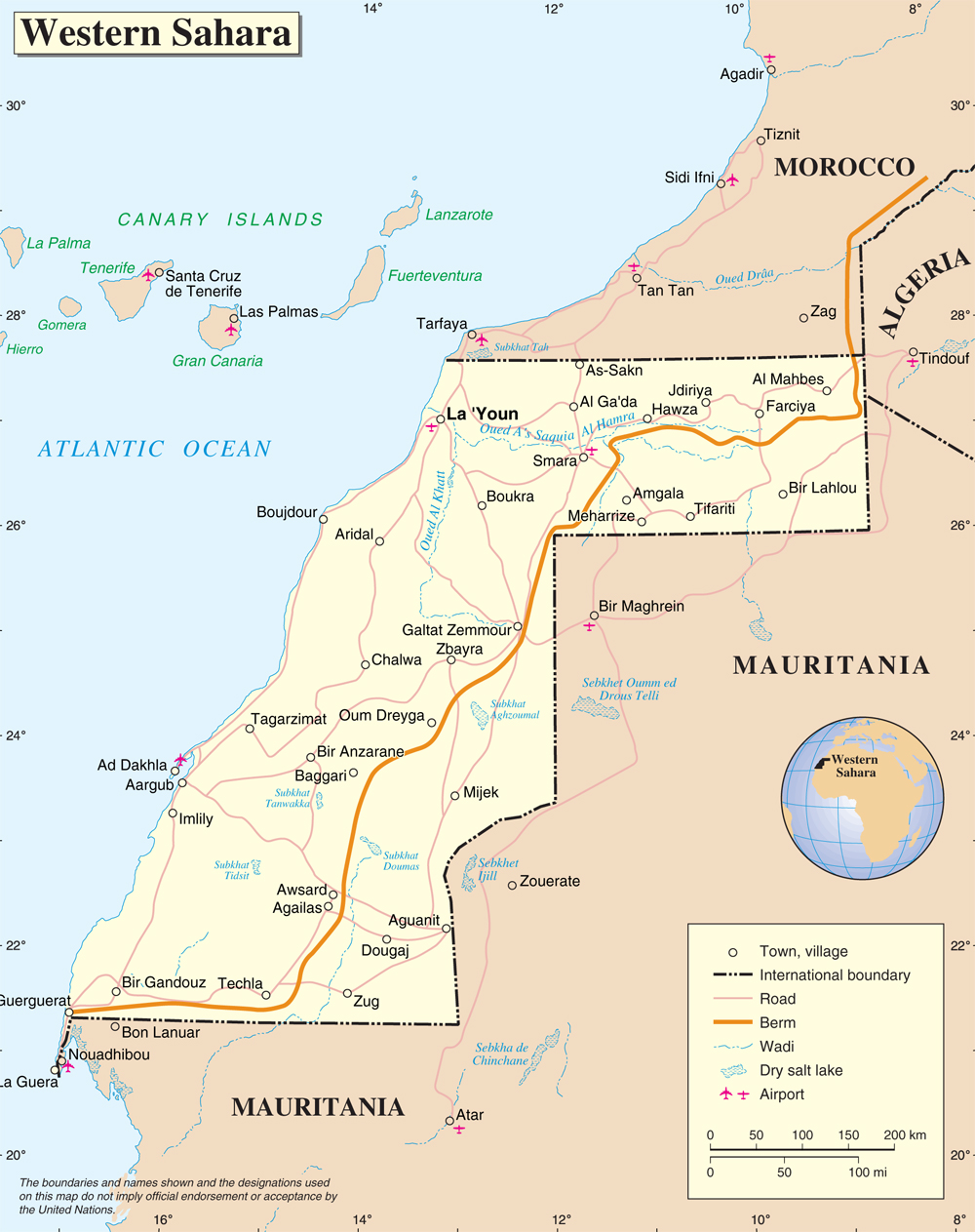
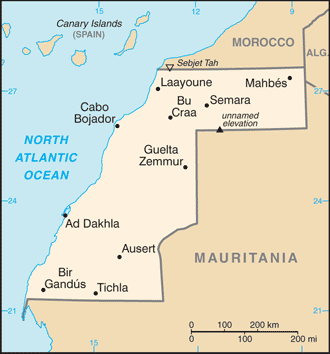
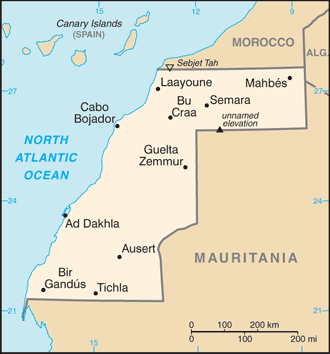
What more can be done to resolve the problem in Western Sahara?
Mr. (Carne) Ross, Undersecretary General Miyet, and I have be trading opinions for six months and it is clear that Mr. Ross has no intention to propose or agree on any kind of political settlement or compromise, regardless of arguments to the contrary. It is time to quit deluding ourselves and allowing the refugees to be used as hostages in an effort to advance the cause of a few thousand Polisario rebels. Rather, we should reach out together for a common middle-ground solution.
Western Sahara: It’s Time for the People to Choose
The latest diplomatic dance on whether or not former US Ambassador Christopher Ross should be allowed to continue to mediate UN-led talks between the Frente Polisario and Morocco on the future of Western Sahara is symptomatic of a much bigger problem ― the large powers’ unwillingness to advance an end to a dispute that they mistakenly see as peripheral to their strategic interests, and their resultant acquiescence in the brutal and illegal occupation of Western Sahara by Morocco for more than 35 years.
Western Sahara: Deferred Referendum or Lasting Settlement?
Over the last decade, the dispute over the future status of the Western Sahara territory, which has set Morocco and the Algeria-backed pro-independence Polisario front in opposition, has entered a qualitatively new phase. This is due to attempts at finding a negotiated outcome instead of the long-delayed self-determination referendum. The idea of a political solution to break a twice deadlocked (1997 and 2000) UN self-determination referendum for the Western Sahara territory has steadily revived the prospect of autonomous status for the territory within Moroccan jurisdiction.