Skip to Content

Research & Commentary Results

Filter by
8738 Results
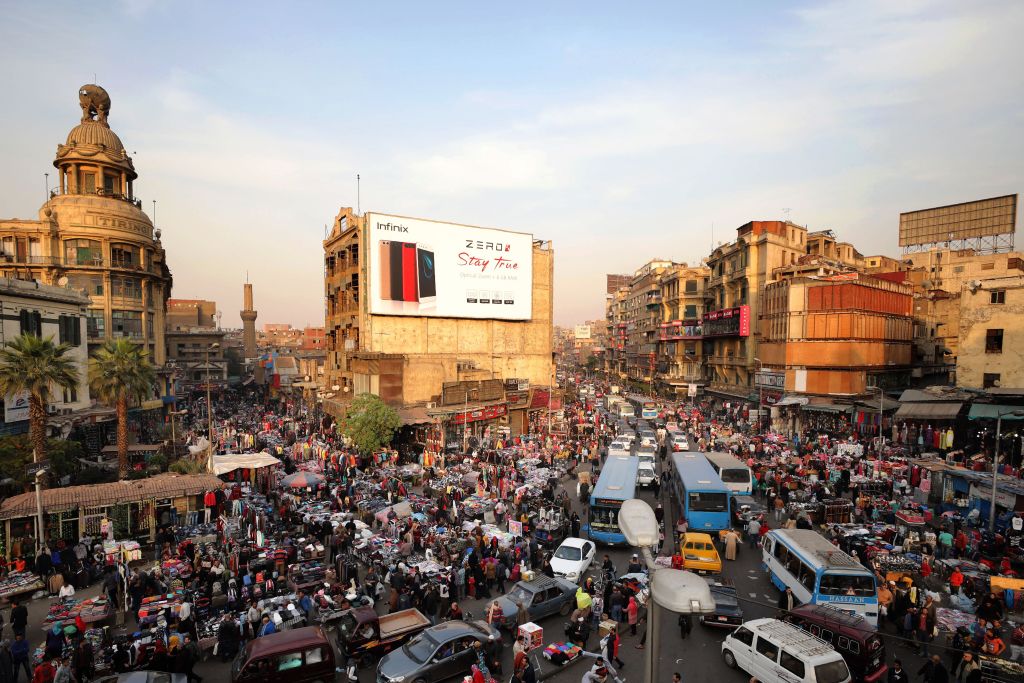
Monday Briefing: Strengthening Egypt’s ties with Africa
  • Analysis
  • Monday Briefing: Strengthening Egypt’s ties with Africa

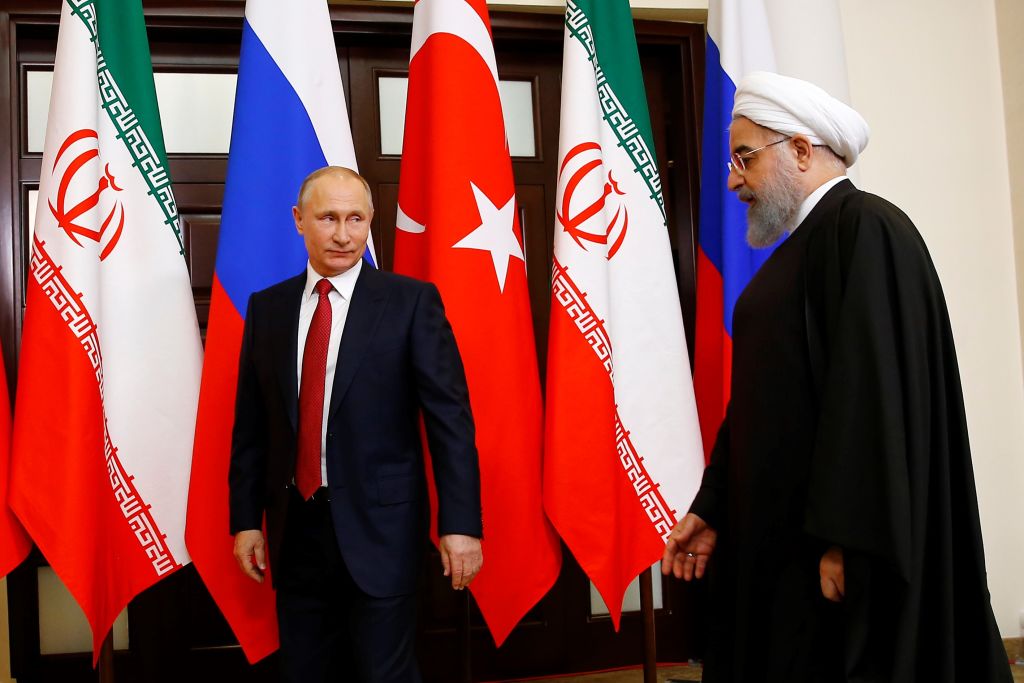
    In this week’s Monday Briefing, MEI experts Mirette F. Mabrouk, Charles Lister, Gonul Tol, and Alex Vatanka provide analysis on recent and upcoming events including Egypt’s engagement with Africa to boost trade and investment, the reshuffling of leadership of Syria’s security apparatus, the firing of Turkey’s central bank governor, and Russia’s positioning to act as mediator between Iran and the Gulf states.

    How Iran might respond to a US military offensive
    Members of Iran's Revolutionary Guards Corps (IRGC) march during the annual military parade marking the anniversary of the outbreak of the devastating 1980-1988 war with Saddam Hussein's Iraq, in the capital Tehran on September 22, 2018.
  • Analysis
  • How Iran might respond to a US military offensive

    Having earlier threatened Iran with “obliteration” in the event of war, U.S. President Donald Trump warned on July 2 that the Islamic Republic was “playing with fire” after it breached the 300-kg cap on the stockpile of low-enriched uranium set by the nuclear deal. Yet, despite reportedly engaging in suspected “sabotage attacks” on a number of oil tankers, Iran is very unlikely to initiate a direct conflict with the U.S., but the scale and scope of its response to potential U.S. military action is not clear. Will it resort to overwhelming strategic force in the hope of dissuading the “aggressor” from further escalation, thus risking a major confrontation, or respond surgically to potential U.S. “tactical” strikes?

    July 3, 2019

    Russia's growing role in the Middle East
    Middle East Institute
  • Podcast
  • Russia's growing role in the Middle East

    Becca Wasser, policy analyst at the RAND Corporation, and NPR national security correspondent and MEI scholar Greg Myre join host Alistair Taylor to discuss Moscow’s growing political, economic, and military footprint in the region.

    July 3, 2019

    As violence flares up in Daraa, control can be an illusion
    A young boy rides his bicycle in the southern Syrian city of Daraa on August 14, 2018. Behind him is a gate ornated with images of Syrian President Bashar al-Assad (L) and his late father Hafez al-Assad. (Photo by Andrei BORODULIN / AFP) (Photo credit should read ANDREI BORODULIN/AFP/Getty Images)
  • Analysis
  • As violence flares up in Daraa, control can be an illusion

    Violence has been flaring up at an alarming rate in the southern Syrian province of Daraa, amid dozens of unclaimed attacks by gunmen. Over the last three months, assassinations, checkpoint attacks, fires, and sporadic clashes have wreaked havoc in the area and signaled a potential return of conflict. 

    UNIFIL and the Lebanese Army, a worthwhile US investment
    A picture taken from Naqoura city of Lebanon shows UNIFIL bases as construction works those are being conducted by Israeli Army along the Israel-Lebanon border on April 20, 2017. Hezbollah militias hosted press members to let them observe the mined border line, known as
  • Analysis
  • UNIFIL and the Lebanese Army, a worthwhile US investment

    My colleagues and I at the American Task Force for Lebanon (ATFL) visited the LAF southern headquarters, the UNIFIL headquarters, and the Blue Line, established in 2000, separating Israel and Lebanon. We were encouraged by what we saw.

    July 2, 2019

    The Gulf-backed counter-revolution in Khartoum
    Mohamed Hamdan Dagalo, known as Himediti, deputy head of Sudan's ruling Transitional Military Council (TMC) and commander of the Rapid Support Forces (RSF) paramilitaries, waves a baton to supporters on a vehicle as he arrives for a rally in the village of Abraq, about 60 kilometers northwest of Khartoum, on June 22, 2019. (YASUYOSHI CHIBA/AFP/Getty Images)
  • Analysis
  • The Gulf-backed counter-revolution in Khartoum

    One hallmark of Sudan’s most recent protests has been the protestors’ fierce determination that the military not be their partner in the struggle for democratization. Some GCC states, however, are getting involved in Sudan, using their financial means to influence the country’s future. In doing so, they risk making it the Arab world’s next theater for intra-GCC rivalry.

    July 2, 2019

    Balancing local autonomy and national unity in Yemen
    A view of a main street in Yemen's second city of Aden, held by forces loyal to the Saudi-backed government, amidst protests against inflation and the rise of living costs.
  • Analysis
  • Balancing local autonomy and national unity in Yemen

    International attention on the Yemen conflict remains focused heavily on the humanitarian dimensions of the crisis, Saudi-Iranian competition for advantage there, and the UN’s fitful efforts to return the parties to the negotiating table. But another aspect of the conflict may have more significant long-term consequences for both Yemenis and the international community: the declining relevance of Sana’a at the center of a unified Yemeni state and the increasing local autonomy in large parts of the country.

    July 2, 2019

    Monday Briefing: Iran exceeds nuclear deal enrichment limits
  • Analysis
  • Monday Briefing: Iran exceeds nuclear deal enrichment limits

    In this week’s Monday Briefing, MEI experts Alex Vatanka, Gonul Tol, Gerald Feierstein, Marvin G. Weinbaum, Rauf Mammadov, and Robert S. Ford provide analysis on recent and upcoming events including Iran’s announcement that it has exceeded its enriched uranium limit, Turkey’s purchase of Russia’s S-400s missile defense system over American objections, an Emirati announcement that it will downsize military involvement in Yemen, the resumption of intra-Afghan peace talks, Russia’s continuing embrace of OPEC+ oil production cuts, and the emergence of potential threats to Tunisia’s democracy.

    A way out for Russia and Turkey from Idlib's spiral of violence
    Heavy armoured vehicles of Syrian opposition forces are being withdrawn from Syria's Idlib to complete the establishment of the disarmament field due to the Sochi Agreement, agreed by Turkey and Russia, on October 08, 2018. (Photo by Gokhan Balci/Anadolu Agency/Getty Images)
  • Analysis
  • A way out for Russia and Turkey from Idlib's spiral of violence

    Since the start of the regime’s military campaign in Idlib last month, a group of Free Syrian Army factions that fought alongside Turkish soldiers has gradually entered the region. This development may balance the Hayat Tahrir al-Sham presence and ultimately help to force the group out of the demilitarized zone, ensuring a continued Turkish-Russian consensus on Idlib.

    July 1, 2019

    The Bahrain workshop and the dwindling prospects for Israeli-Palestinian peace under Trump
    US-led economic conference in Bahrain MANAMA, BAHREIN - JUNE 26: Former British Prime Minister Tony Blair (R) and Jared Kushner (L), U.S. President Donald Trumps senior White House adviser and son-in-law attend U.S.-led workshop in Manama, Bahrain on June 26, 2019. U.S.-led conference opened in Bahrain on Tuesday, during which U.S. officials are expected to unveil the economic portion of the American back-channel Middle East peace plan known as
  • Analysis
  • The Bahrain workshop and the dwindling prospects for Israeli-Palestinian peace under Trump

    The Trump administration’s economic workshop in Bahrain produced some noteworthy moments that reflected recent changes in Israeli-Gulf relations, but it fell well short of its original declared intent. Neither Israeli nor Palestinian officials attended, and it did not conclude with any tangible steps to advance the peace process.

    June 28, 2019

    Istanbul’s Election Rerun
  • Podcast
  • Istanbul’s Election Rerun

    Unal Cevikoz, MP for Turkey’s CHP, and MEI’s Gonul Tol join host Alistair Taylor to discuss the outcome of the June 23 rerun vote for control of Turkey’s largest city and economic powerhouse, and what it signals for President Erdogan and the AK party.

    June 27, 2019

    Landscape, loss, and Palestinian identity: Intimate Terrains
    Middle East Institute
  • Analysis
  • Landscape, loss, and Palestinian identity: Intimate Terrains

    Part survey show, part historical document, the latest exhibition at the Palestinian Museum just outside of Ramallah, “Intimate Terrains: Representations of a Disappearing Landscape,” covers work from the 1930s until today. The show explores how representations of landscape evolved over time via a selection of iconic, rarely seen works, and special commissions by artists from Palestine and its diaspora, encompassing painting, photography, installation, video and film, natural media, sculpture, and even an “intervention” in the museum’s gardens.

    June 26, 2019

    Stuck in the Middle With Iran
  • Analysis
  • Stuck in the Middle With Iran

    Although relations between the neighbors have had their ups and downs, Tehran has invested deeply in Iraq, both politically and economically, and these investments will only multiply in the short term. After all, U.S. sanctions on Iran have made Iraq an essential link in Iran’s potential chain of commerce. How such plans play out will put the Iranians, the Iraqis, and the administration of U.S. President Donald Trump to the test.

    Gas heats up the Eastern Mediterranean
    Worker at a gas refinery in the Western Desert, Egypt
  • Analysis
  • Gas heats up the Eastern Mediterranean

    Competition for security and energy is at the center of recent developments in the Eastern Mediterranean. Countries from Egypt to Turkey are moving to secure, exploit, and market their (not always fair) share of the game-changing offshore natural gas reserves. Russia, China, and Iran are securing port facilities, and in the case of Russia, drilling rights, in Lebanon and Syria. 

    June 25, 2019