Skip to Content

Research & Commentary Results

Filter by
709 Results
Stalemate and violence in Israel-Palestine
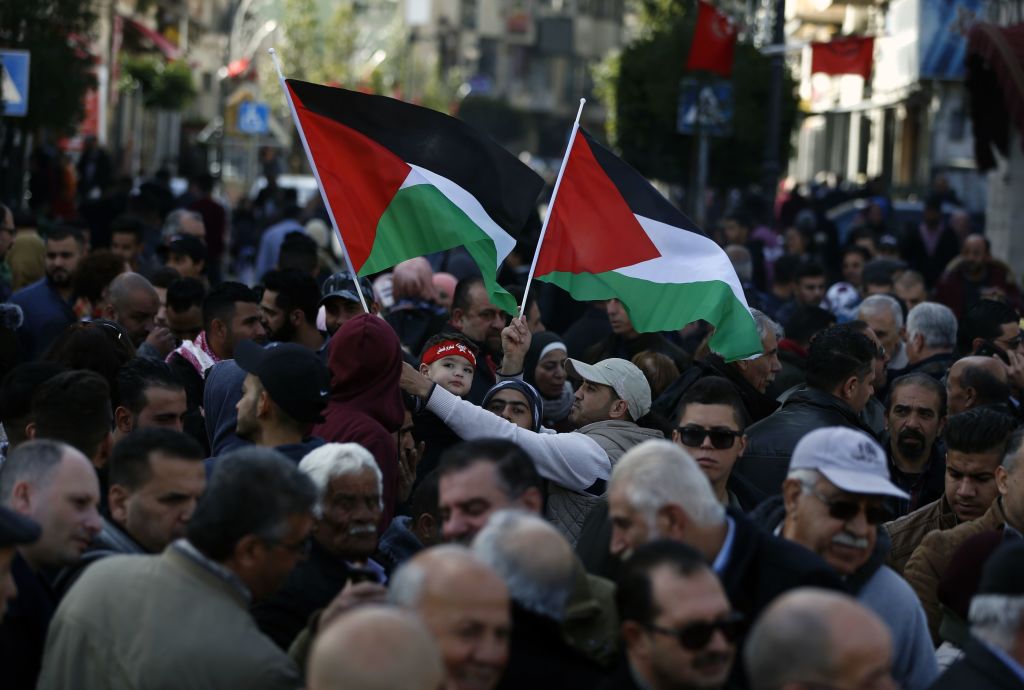
Palestinians wave national flags as they march in the streets of the occupied West Bank city of Ramallah, calling for the cessation of divisions between Fatah and Hamas and the unification of the West Bank and Gaza Strip, on January 12, 2019.
  • Commentary
  • Stalemate and violence in Israel-Palestine

    Holding long overdue elections for the Palestinian presidency and the legislative arm of the Palestinian Authority could be a step toward redressing the Fatah-Hamas conflict.

    January 6, 2020

    The intra-GCC competition over the Palestinian heart
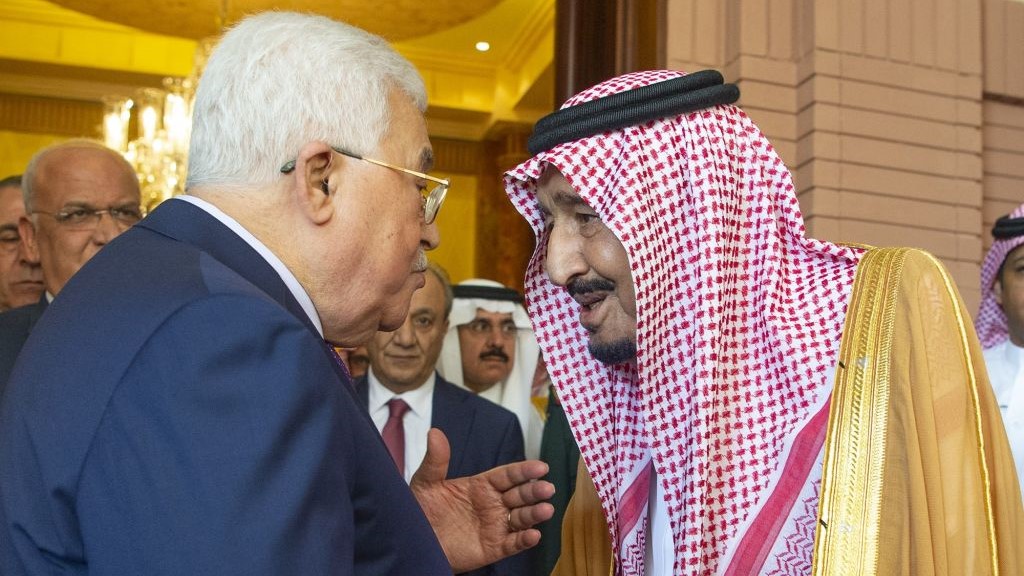
    Palestinian President Mahmoud Abbas (L) meets Saudi Arabian King Salman bin Abdulaziz al-Saud (R) in Riyadh, Saudi Arabia on October 15, 2019.
  • Analysis
  • The intra-GCC competition over the Palestinian heart

    Since 2017 three separate blocs have emerged within the Gulf. Driven by the region’s divisions, rival power centers, and conflicting interests, the Gulf states are playing an ever-greater role in Palestinian affairs.

    December 18, 2019

    Pompeo’s audience: The Trumpian base
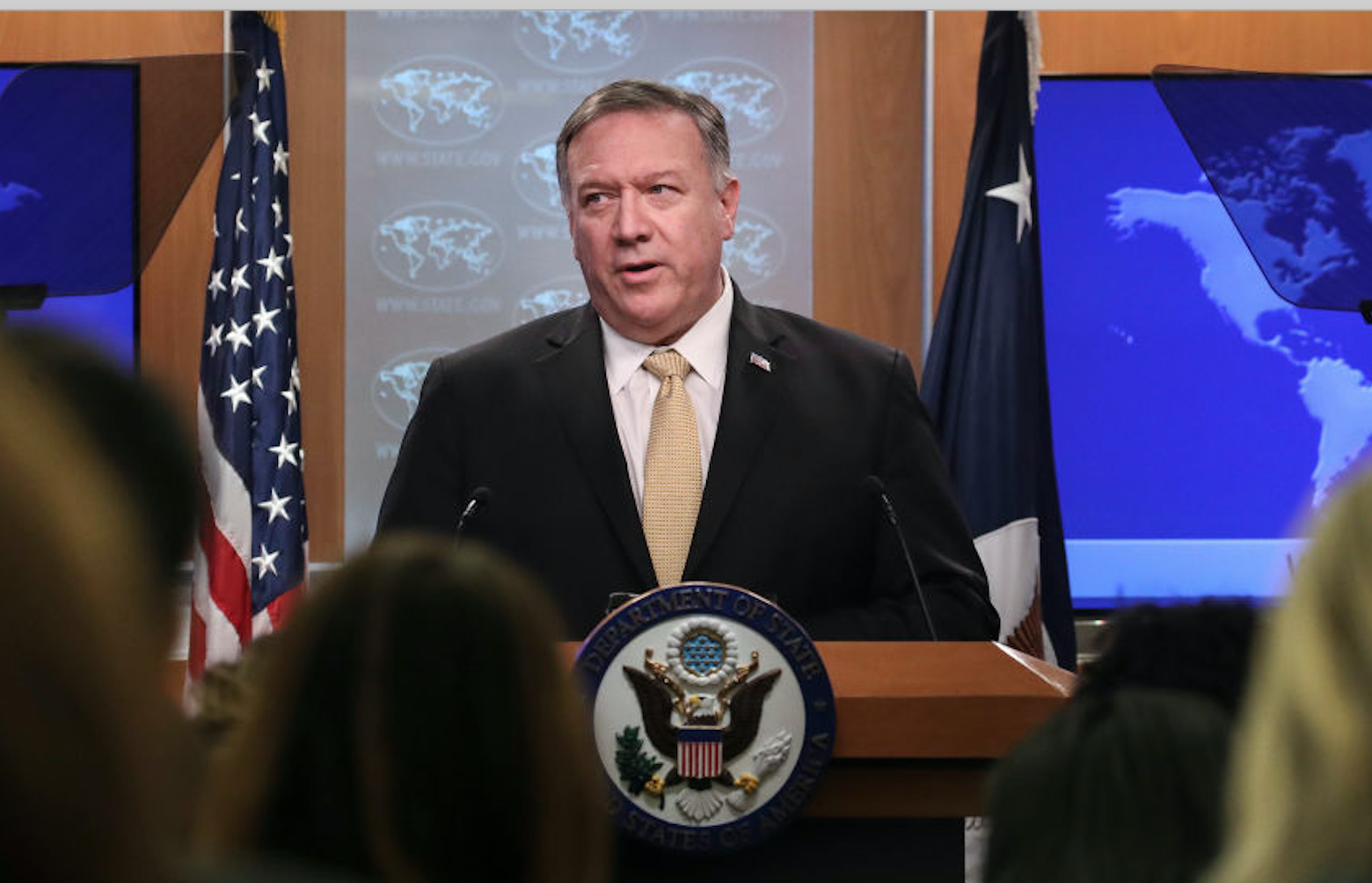
    U.S. Secretary of State Mike Pompeo speaks during a press conference at the U.S. Department of State on November 18, 2019 in Washington, DC
  • Analysis
  • Pompeo’s audience: The Trumpian base

    It is not always recognized that Secretary of State Mike Pompeo’s Nov. 18 declaration that Israeli “settlements are not inconsistent with international law” was primarily political, not diplomatic, designed for domestic American consumption as part of the president’s reelection campaign. Secondarily, it was intended to strengthen Israeli Prime Minister Benjamin Netanyahu’s hand in the current coalition negotiations and/or the likely upcoming Knesset election, if coalition negotiations fail. Third on the list, almost an afterthought, is the effect on the Palestinians, whose future state’s boundaries it purports to impact.

    November 21, 2019

    Escalation in Gaza tests Israel-Hamas détente
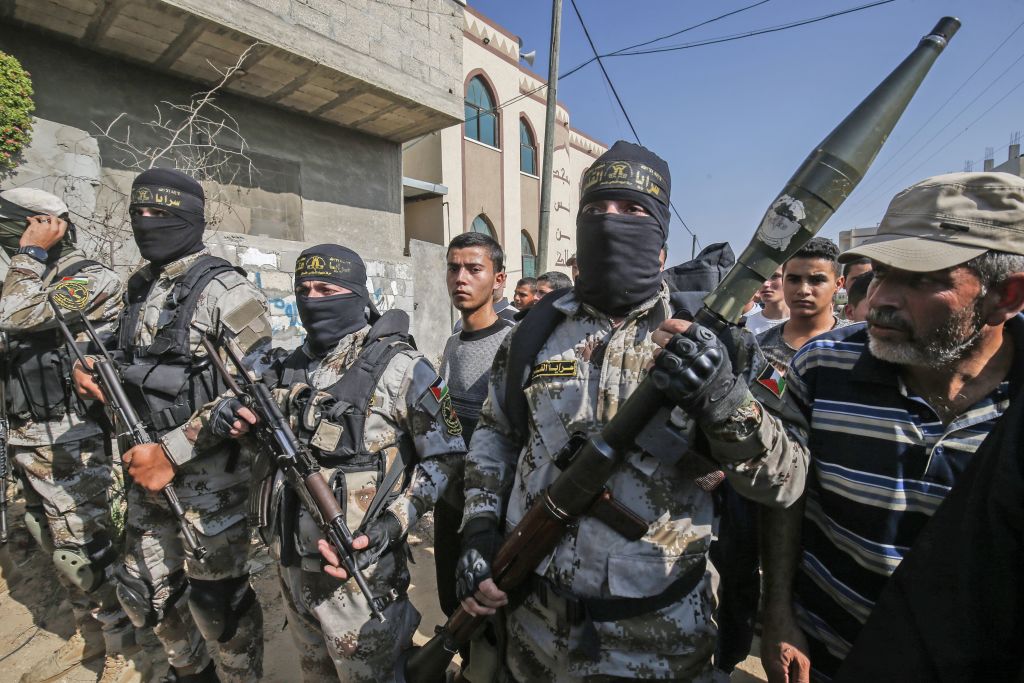
    Palestinian Islamic Jihad militants attend the funeral of a comrade in Khan Yunis in the southern Gaza Strip November 14, 2019.
  • Commentary
  • Escalation in Gaza tests Israel-Hamas détente

    A Nov. 12 Israeli airstrike on the Gaza Strip killed Baha Abu al-Ata, a commander with the Palestinian Islamic Jihad (PIJ) militant group. Over the ensuring 48 hours, the PIJ launched some 450 rockets from Gaza into southern and central Israel. Hamas, the Palestinian political party/militant group that acts as the de facto government of Gaza, stayed out of the fighting — despite relatively high civilian casualties and the killing of one of its fighters.

    November 18, 2019

    Disrupting a delicate status quo: The Hamas crackdown on Salafi-jihadists
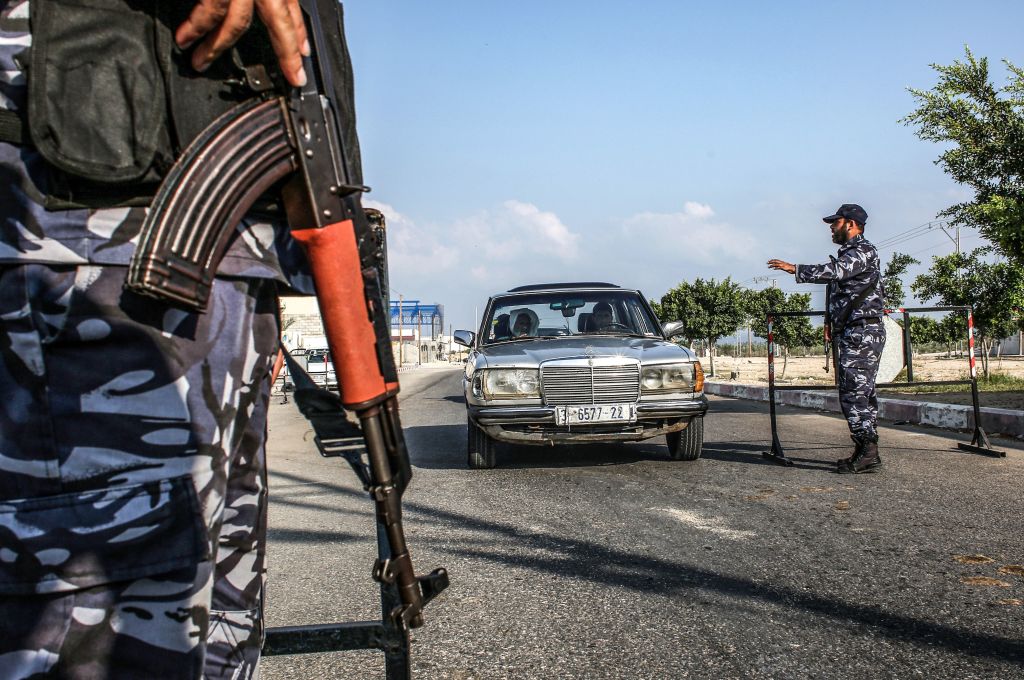
    Security forces loyal to Palestinian Islamist movement Hamas stop a vehicle at a checkpoint in Khan Yunis in the southern Gaza Strip on August 28, 2019.
  • Analysis
  • Disrupting a delicate status quo: The Hamas crackdown on Salafi-jihadists

    Reports of a secret war being waged by Hamas against Salafi-jihadist groups in the Gaza Strip are indicative of increasing challenges to the former’s security control within the enclave. Hamas’ current approach to violent Salafist cells in Gaza is equally demonstrative of an ongoing warming of relations between Cairo and Hamas, and one that has afforded Hamas international legitimacy and an ease in border restrictions.
    October 22, 2019

    Monday Briefing: Attack on Saudi oil facilities has an impact far beyond the kingdom
  • Analysis
  • Monday Briefing: Attack on Saudi oil facilities has an impact far beyond the kingdom

    This week’s briefing on recent news and upcoming events in the region featuring Ruba Husari, Paul Salem, Gerald Feierstein, Amal Kandeel, Grace Wermenbol, Robert S. Ford, Charles Lister, and Gonul Tol.

    September 16, 2019

    What will the European Council's new president mean for EU-MENA relations?
    Belgium's Prime minister Charles Michel (R) addresses journalists as he arrives for the second day of an European Union leaders summit to discuss Syria, relations with Russia, trade and migration, on October 21, 2016 at the European Council, in Brussels
  • Analysis
  • What will the European Council's new president mean for EU-MENA relations?

    While some changes may be in the offing, for now most signs suggest that regional leaders should expect neither new opportunities, nor new challenges, but more likely a broad continuity of existing EU policy toward the region.

    August 20, 2019

    There Is No "Status Quo": Drivers of Violence in the Israeli-Palestinian Conflict
    A picture taken on February 1, 2019 from Jabel Mukaber, a Palestinian neighbourhood in Israeli-occupied East Jerusalem shows the Dome of the Rock mosque (golden dome) and al-Aqsa Mosque (silver dome) at the al-Aqsa Mosque compound in Jerusalem's Old City.
  • Analysis
  • There Is No "Status Quo": Drivers of Violence in the Israeli-Palestinian Conflict

    The Israeli-Palestinian conflict remains a destabilizing element in an already volatile Middle East. The Palestinians are too weak to wrest their independence from Israel. But as long as their right to self-determination is denied, they are likely to engage in regular violence targeting Israel. Absent outside intervention, Israel is powerful enough that it can suppress Palestinian demands for freedom — but it is not able to completely pacify the Palestinians. Thus, the conflict continues, punctuated every few years by rounds of more significant violence.

    August 20, 2019

    Ambassador Friedman: Palestinians already have autonomy
    A Palestinian protester waves a Palestinian flag during a demonstration in the village of Ras Karkar west of Ramallah in the occupied West Bank on September 4, 2018.
  • Analysis
  • Ambassador Friedman: Palestinians already have autonomy

    Autonomy is normally given to a specific cultural or national group as part of a political agreement. For Palestinians, the idea that autonomy is the goal of talks is unhelpful because they already have autonomy.

    August 15, 2019

    Oman's new embassy in Palestine
    In this handout from the Palestinian Press Office, Palestinan President Mahmoud Abbas (R) meets with Oman's Sultan Qaboos bin Said on January 14, 2010 in Muscat, Oman.
  • Analysis
  • Oman's new embassy in Palestine

    The news came eight months after Israeli Prime Minister Benjamin Netanyahu paid a visit to the Omani capital for surprise talks with Sultan Qaboos in October 2018, and four months after Minister Responsible for Foreign Affairs Yusuf bin Alawi bin Abdullah met with Netanyahu in Poland during the Trump administration’s “Peace and Security in the Middle East” summit.

    August 12, 2019

    Monday Briefing: Syria’s deadly status quo
  • Analysis
  • Monday Briefing: Syria’s deadly status quo

    This week’s briefing on recent news and upcoming events in the region including Kazakhstan’s upcoming “Astana talks” on Syria, Jared Kushner’s planned visit to the Middle East, the shift in US-Pakistan relations, and Abbas’ announcement that the Palestinian Authority will halt all signed agreements with Israel, featuring Charles Lister, Gerald Feierstein, Marvin G. Weinbaum, and Khaled Elgindy.

    The Gulf states, the “deal of the century,” and the Iranian threat
    Former British Prime Minister Tony Blair and Jared Kushner, U.S. President Donald Trumps senior White House adviser and son-in-law attend U.S.-led workshop in Manama, Bahrain on June 26, 2019.
  • Analysis
  • The Gulf states, the “deal of the century,” and the Iranian threat

    Many analysts have been dismissive of the plan’s prospects, but for Gulf states like Saudi Arabia, the UAE, and Bahrain, there’s at least one major reason to line up with Washington on the issue: Iran.

    July 25, 2019

    The Israeli-Palestinian battle for Latin America
    Abbas leaves Palestino football club in Santiago, Chile
  • Analysis
  • The Israeli-Palestinian battle for Latin America

    With the increased influence of right-wing populism and evangelicalism, Mahmoud Abbas has seen the region’s historic commitment to the Palestinian cause wane. These internal changes, along with a pivot toward Washington, have, in turn, aided Israeli Prime Minister Benjamin Netanyahu in making further inroads on the South American continent.

    July 16, 2019