
The Middle East Economy in 2010
Audio recording from The Middle East Economy in 2010
Syria on the Verge: Implications for a Nation in Revolt
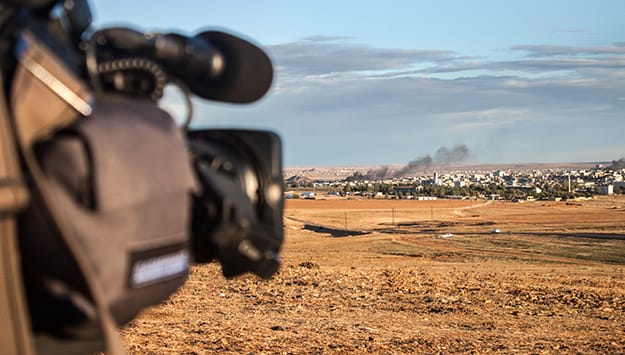
International response has been growing to the violent crackdowns in Syria, yet the government remains mostly unresponsive. Radwan Ziadeh, Ausama Monajed, Amb. Theodore Kattouf, and Andrew Tabler discuss the domestic and regional implications of the ongoing political unrest and violence in Syria.
Syria Under Growing International Pressure
Podcast from the December event.
Hezbollah in the Wake of the Arab Spring
Join MEI Scholar and Levant expert Randa Slim for a discussion about Hezbollah and its reaction to shifting regional dynamics in the wake of the Arab Spring. Although Lebanon has not experienced the same levels of unrest as its neighbors, Hezbollah is not immune from the regional instability resulting from the revolutions roiling the Middle East. Currently, Hezbollah is the principal orchestrator of a new governing coalition in Lebanon that is rife with internal divisions.
Community based-Health Initiatives: Healthy Villages in Jordan
Health for All — First Principles to Action
The International Conference on Primary Health Care was held in Almaty, Kazakhstan in 1978. Nearly all of the members of the World Health Organization (WHO) and the United Nations Children’s Fund (UNICEF) were in attendance. The conference culminated in the issuing of the Almaty Declaration — a major landmark in the field of public health.
The Lesson from Morocco and Jordan: Reform or Perish
The basic legitimization of political authority and the specific logics of domination that have for decades regulated Arabs’ behavior and subjugated their life patterns are under siege in much of the Arab world. Only those regimes that still enjoy the historical prestige of traditional authority have so far managed to weather the assaults on the legitimacy of their rule.
Uprising in Syria: Implications for US and Regional Policy
The Middle East Institute is proud to host Syria experts Ammar Abdulhamid, Helena Cobban, and Steven Heydemann for a discussion about the ongoing protests in Syria and the international and regional reactions to the shifting Syrian landscape. As the uprising continues into its third month, how sustainable is the protest movement? Are the Syrian government's tactics in crushing dissent succeeding? What impact has the violence had on the Assad regime's relationship with its neighbors like Turkey and close allies like Iran, Hezbollah and Hamas?
Transboundary Conservation and Peacebuilding
Various Track Two approaches to peacebuilding in the Middle East have been pursued through ecumenical dialogue and educational programs such as The University of the Middle East Project.[1] Yet the direct use of environmental conservation as a mutually agreeable way to approach territorial conflict resolution has thus far not been seriously deliberated. Some “realists” might be dismissive of such a prospect, but the concept of “peace parks” has shown practical promise in resolving territorial disputes.
Environmental Peacebuilding in the Eastern Mediterranean
Environmental peacebuilding is both the theory and practice of identifying environmental initiatives that promote a sustainable peace between those who have previously been adversaries, and implementing those initiatives. Environmental peacebuilding combines two elements.
Arava Institute for Environmental Studies: Teaching Environment as a Bridge to Peace & Understanding in the Middle East
The Arava Institute for Environmental Studies (AIES) is the premier environmental studies institute in the Middle East and is accredited under the auspices of the Ben Gurion University (BGU) of the Negev. Since 1996, the Institute has been teaching environmental studies to university students from the Middle East and other parts of the world. The unique approach of the Institute is to teach the environment, in which all share, as a bridge to cooperation and peacebuilding in the Middle East.
Israel's Flawed Electoral System: Obstacle to Peace and Democracy
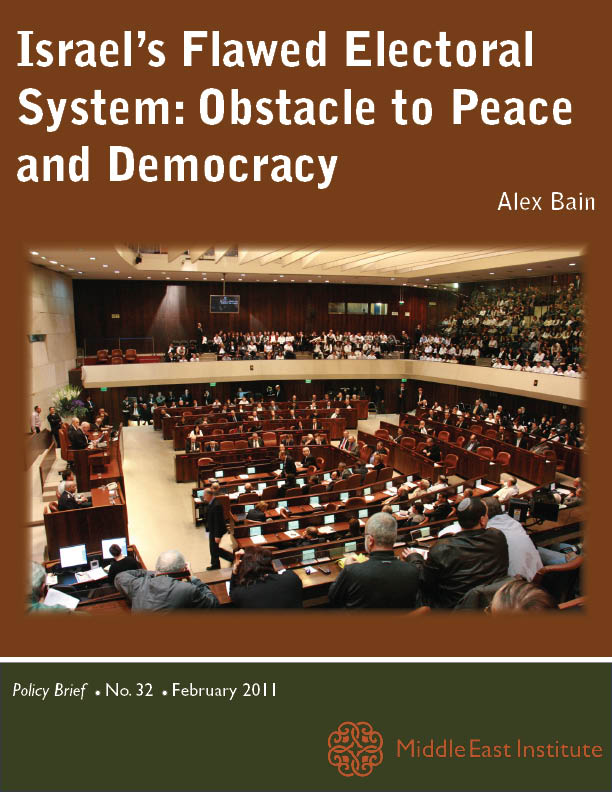
Israeli politics is notable for its wide array of parties and unstable coalition governments. The main institutional cause of this chronic instability is the system of nationwide proportional representation, which gives disproportionate influence to minor parties. This instability limits the ability of Israeli governments to pursue coherent long-term strategies and leads to policies that address the concerns of minority groups at the expense of the national interest.
Internationalization of Higher Education in Jordan
There is a growing need in Jordan for universities to establish joint programs with overseas universities in countries such as the United Kingdom and to uphold partnerships with universities in the United States, Europe, and the Gulf states. Public universities are already highly regarded. Private universities are also seeking partnerships or joint programs with foreign institutions.