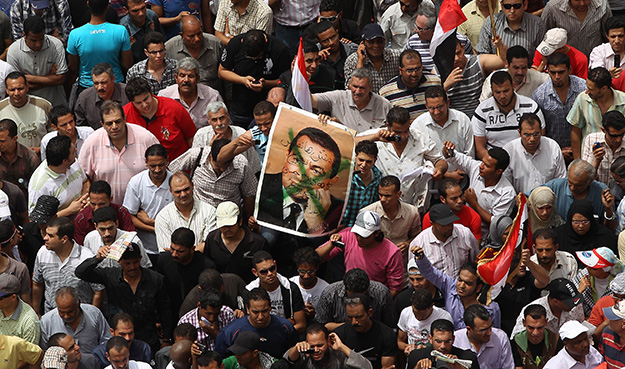
The situation in Egypt has been very complicated, with the democratic process and path toward transitional justice shifting under four different ruling systems—Mubarak, SCAF, the Muslim Brotherhood, and the interim ruling authorities—over a short period of time. All four systems committed abuses against the people, leaving victims and cases to be investigated. The combination of sharp divisions within society, disagreements about transitional justice itself, and delayed government responses to people’s demands has made the situation particularly charged.
Copts in Egyptian Civil Society: Challenge and Hope in Transition
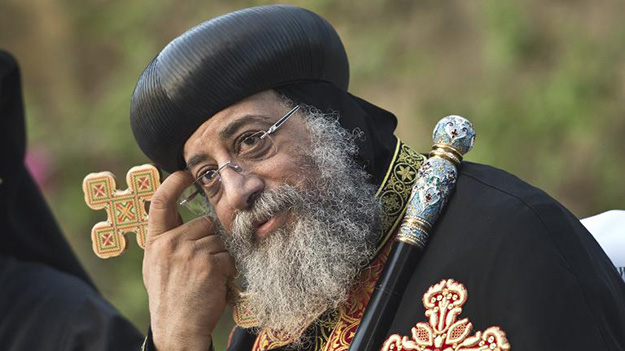
“Through wisdom a house is built, and by understanding it is established.” Pope Tawadros II, the Pope of the Coptic Orthodox Church, tweeted this verse of scripture in December 2012. He wrote it as one of a series of daily reflections on the book of Proverbs. This phrase, however, also provides an entry point into the Coptic Orthodox Church and its place in Egyptian civil society. Egypt is in the midst of rebuilding its government and society following an 18-day revolution in 2011, 18 months of military rule that ended with the election of Mohamed Morsi, and the removal of President Morsi one year later by the Egyptian military in July 2013. Egyptian Christians now have the opportunity and challenge to renegotiate their place in Egyptian civil society during this time of unrest and transition. What wisdom, understanding, and vision will Christian clergy and lay leaders put forth in order to co-labor with their neighbors, the state, and other stakeholders to build a new house for Egyptian society? This new vision must be rooted in Copts’ historical experience and include the possibility for new models of engagement and representation.
Since the inception of its transitional justice and accountability program in November 2012, the Egyptian Initiative for Personal Rights (EIPR) has faced a number of challenges related to its work. Of these, one of the most arduous has been operating in a context of ongoing political and social upheaval. The period since November 2012 can generally be divided into three distinct phases, each marking a change in EIPR’s organizational and conceptual approaches to transitional justice. Though EIPR sees its work in Egypt less in phases and more as a long and complicated struggle against injustice and impunity that will likely continue for the foreseeable future, the three phases are helpful for documenting its approach to transitional justice since 2012.
This article was first published on Al Jazeera on December 24, 2013.
The downfall of Egypt’s Muslim Brotherhood (MB) has put political Islam at a crossroads. Not only has it shown that ideology per se is not a guarantor of political success, but also that Islamists need to rethink their strategy and tactics in order to deal with the new environment following the Arab Spring.
Samy M. has been providing currency exchange services on the black market in Cairo’s hectic neighborhood of Nasr City for nearly a decade. He does this from the crammed office of his other, formal business, which offers real estate services.
“Money exchange has always been lucrative, but it was even busier last year,” he says. With the Egyptian pound weak, hovering at around 6.9 pounds to the dollar on the official market for the past few months, people are drawn to black market rates, which are sometimes as high as 7.20 pounds to the dollar.
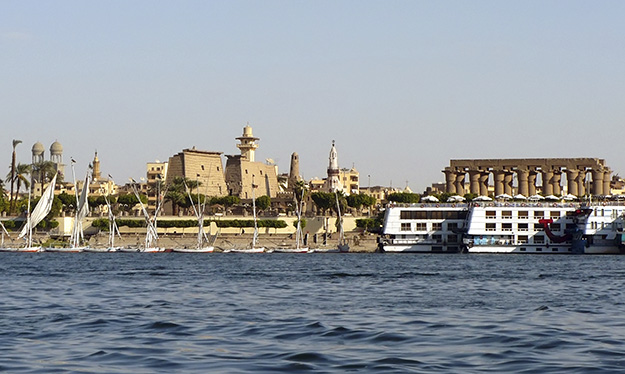
In the eyes of the world, Egypt is Cairo, where political unrest leads the news. With around a quarter of the nation’s 90 million inhabitants concentrated around the capital, in addition to the bulk of wealth and industry, it’s easy to forget the rest of the country, which is what state officialdom has done for decades. For administrative purposes, Egypt is divided into 29 governorates, each with a capital city.
Unrequited Desire: Egyptians' Passion for Justice and Accountability
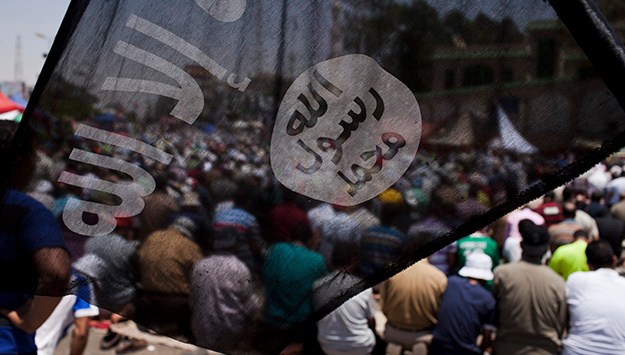
Egyptians who believed that the removal of President Hosni Mubarak in February 2011 would lead to the establishment of a democratic government have faced many setbacks. Youthful revolutionary activists unsuccessfully challenged the power of the Supreme Council of the Armed Forces (SCAF) transitional government and the autonomy of the military. The electoral triumph of Islamist parties and candidates in parliamentary and presidential elections in 2011 and 2012 eclipsed weak and inexperienced secular parties and brought to power leaders who failed to ensure adequate representation of political opponents, women, and Copts in key aspects of governing, or to protect Copts from rising attacks. Continuing divisions among opposition forces, along with the roundup of Islamists and other opponents by the military, which engineered the July 2013 removal of President Mohamed Morsi, suggest that the struggle to achieve justice and create an accountable government will be prolonged.
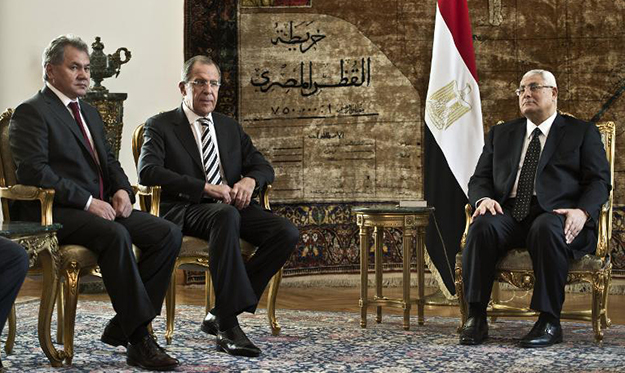
Egyptian-Russian relations have recently been marked by a substantial increase in diplomatic activity amid a media frenzy over a potential arms deal. These developments have given rise to suggestions that Egypt’s foreign policy is shifting away from the United States and toward Russia—a major realignment given Egypt’s extensive political and military ties with the United States since the 1970s.
Salafyo Costa were once the darlings of the media. Featured both in Egyptian outlets[1] and foreign publications such as CNN, the Los Angeles Times, and the Huffington Post,[2] the groundbreaking youth movement founded in April 2011 brought together ultraconservative Salafis, Muslim Brotherhood supporters, political liberals and leftists, and Coptic Christians.
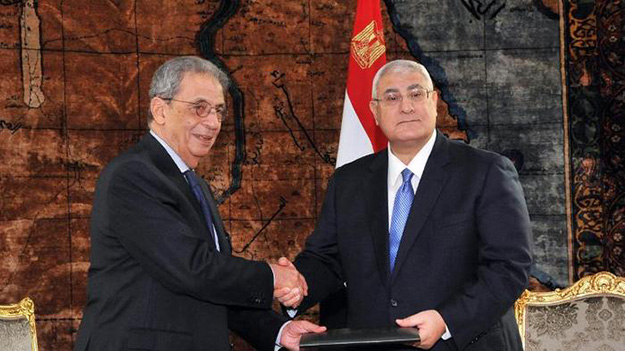
On December 1, a 50-member panel given the task of amending Egypt’s constitution approved a draft of the document. It now goes to Interim President Adly Mansour for his approval and will then go to the public in a referendum. MEI spoke with its Senior Fellow, Khalil al-Anani, about the draft, how it differs from the 2012 constitution passed under Mohamed Morsi, and how the Muslim Brotherhood has reacted to it.
MEI 67th Annual Conference – Assessing the Transitions: Egypt and Tunisia
Panel 1: Assessing the Transitions: Egypt and Tunisia
Moderator: Paul Salem, The Middle East InstituteKhalil al Anani, The Middle East InstituteLarry Diamond, Stanford UniversityNoureddine Jebnoun, Georgetown UniversityRabab El Mahdi, American University of Cairo
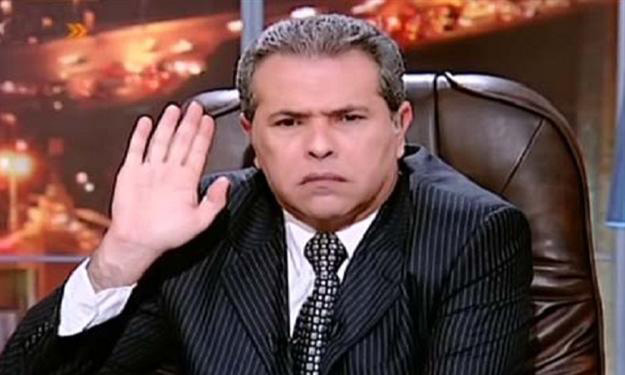
The Egyptian media landscape both before and after Hosni Mubarak’s ouster has been one in which the polemical television personality Tawfik Okasha has thrived. But Okasha, known for his conspiracy theories and strident rhetoric, particularly against the Muslim Brotherhood, has perhaps risen to greater fame and influence recently. With a convergence between anti-Brotherhood positions and Egyptian government policy and public opinion occurring since the mass protests that culminated in Mohamed Morsi’s removal by the military on July 3, Okasha’s views have become more mainstream.
Reporting on Egypt since the July 3 ouster of former president Mohamed Morsi has focused on political dimensions and unrest. However, it is the new government’s success—or lack thereof—in meeting the country’s economic challenges that will largely determine whether Egypt returns to stability, just as surely as it was Egypt’s economic woes that underpinned the country’s repudiation of Morsi.