Skip to Content

Research & Commentary Results

Filter by
1791 Results
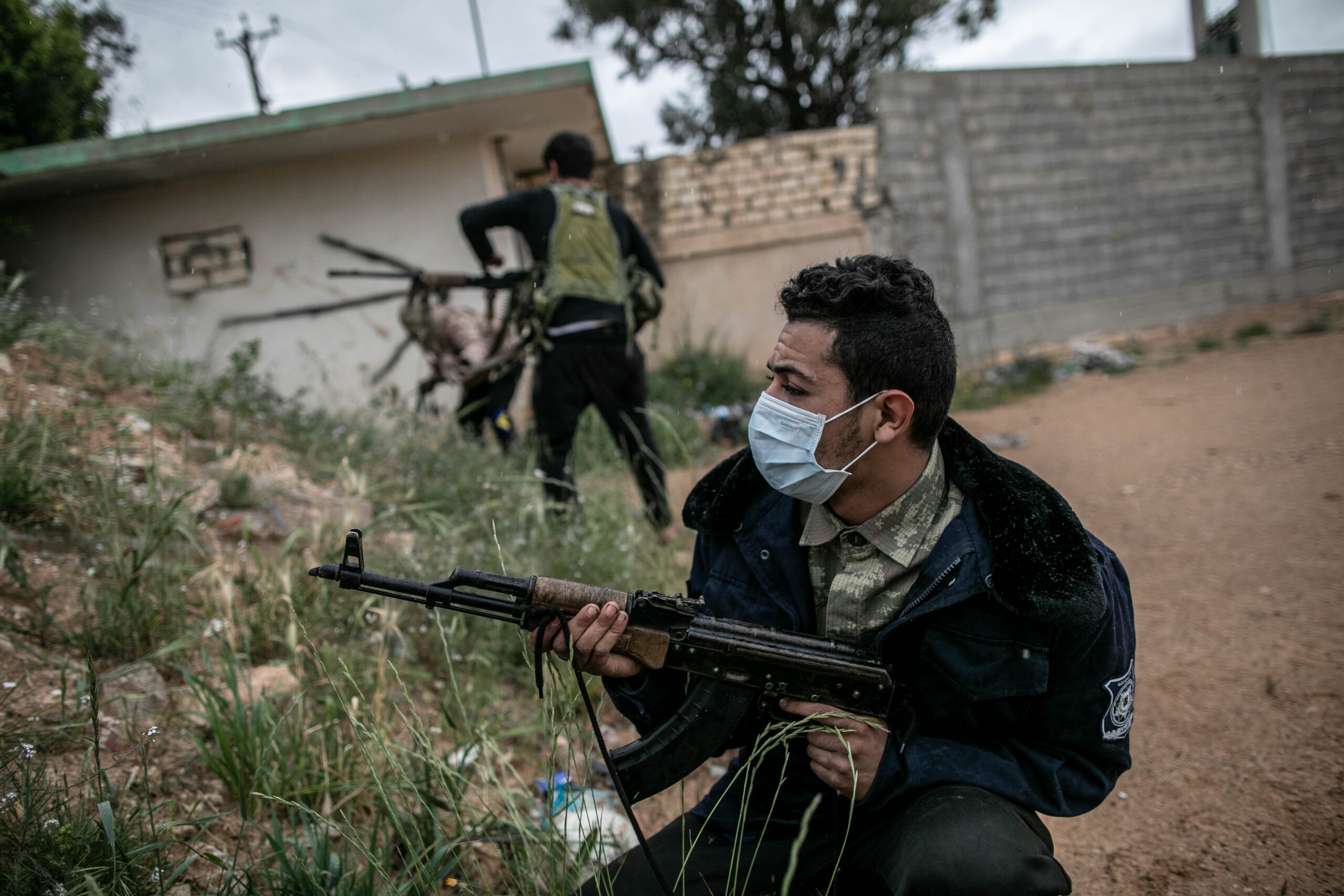
Trusted networks: How the Assad regime subverts clan ties in Daraa
Photo by MOHAMAD ABAZEED/AFP via Getty Images
  • Analysis
  • Trusted networks: How the Assad regime subverts clan ties in Daraa

    In 2018, Assad’s Syrian government forces, with Russian support, managed to regain control of opposition-held areas in Daraa. Russia has emerged as the primary power broker by arranging agreements between the rebels and the regime, which, in turn, has allowed the rebels to keep some of their arms under the banner of the Russian-formed Eighth Brigade. Nevertheless, since 2018, the tight-knit tribal networks in Daraa have functioned as a nucleus for the continuation of the uprising against the Assad regime. The same tribal attributes that create interconnectedness among the people of Daraa, however, also render them susceptible to the regime’s strategy of pitting clans against each other and leveraging the resulting strife to justify the use of force with the goal of asserting full control.

    November 18, 2020

    Between Trump’s Iranian lens and Obama’s indifference: What might a Biden presidency mean for Iraq?
    US Vice President Joe Biden meets with General Lloyd Austin, the commander of United States Forces - Iraq (USF-I), and US ambassador in Iraq James Jeffrey at the US embassy upon the former's arrival at Baghdad on a surprise visit on November 29, 2011, during which he is due to meet top Iraqi officials, as American troops depart Iraq ahead of a year-end deadline.
  • Analysis
  • Between Trump’s Iranian lens and Obama’s indifference: What might a Biden presidency mean for Iraq?

    Joe Biden is no stranger to Iraq and this informs how Iraqi politicians have responded to his victory in the U.S. presidential election. Some have welcomed the news, while others are more cautious given concerns that a Biden presidency might lead to greater Iranian influence in the country. Indeed, Biden has a mixed record on Iraq. Though a Democrat, he voted for the 2003 Iraq War. But later as vice president, he was President Barack Obama’s right hand and fast-tracked their campaign promise to withdraw U.S. troops in 2011. Looking ahead to his presidency, his familiarity with the political class in Baghdad, forthright proposals about Iraq’s territorial integrity, and previous role in tipping power between major actors may falsely lead to a conclusion that Iraq will be a focus for his upcoming administration. The reality, however, is much different.

    November 16, 2020

    A course correction on Syria under Biden
    A row of U.S. troops with flags waving in Syria.
  • Analysis
  • A course correction on Syria under Biden

    When a Biden administration begins to settle into its offices in just a few months, Syria’s crisis will have reached a dreadful milestone, marking a decade in March 2021. Though many of President Biden’s senior team presided over U.S. policy throughout Syria’s most deadly years of 2011-16, it is clear that the tragedy that has befallen Syria and its extraordinary global ramifications are a source of sincere regret. Moreover, after four years of the Trump administration, during which American leverage has been repeatedly and illogically spurned and U.S. credibility eroded by repeatedly embarrassing flip-flops, there is a newfound determination to correct today’s trajectory and work determinedly toward the core objectives of defeating ISIS and pursuing a negotiated Syrian settlement.

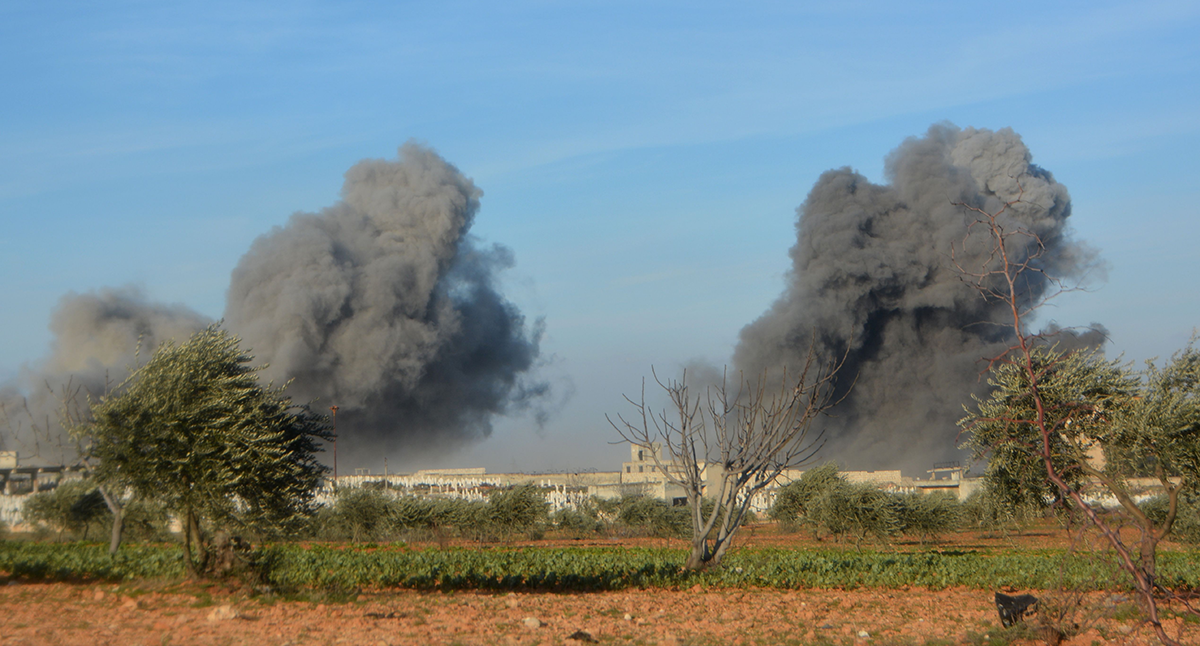
    Is escalation in Idlib on the horizon?
    Photo by BAKR ALKASEM/AFP via Getty Images
  • Commentary
  • Is escalation in Idlib on the horizon?

    As the conflict in Nagorno-Karabakh rages between Armenia and Azerbaijan, Russia and Turkey once again find themselves on opposite sides in a regional geopolitical war. With the reverberations from the fighting now spreading across the region, the fate of Idlib could be tied to battles elsewhere as Moscow potentially seeks to open up another front against Ankara.    

    Between the Coalition, ISIS, and Assad: Courting the Tribes of Deir ez-Zor
  • Analysis
  • Between the Coalition, ISIS, and Assad: Courting the Tribes of Deir ez-Zor

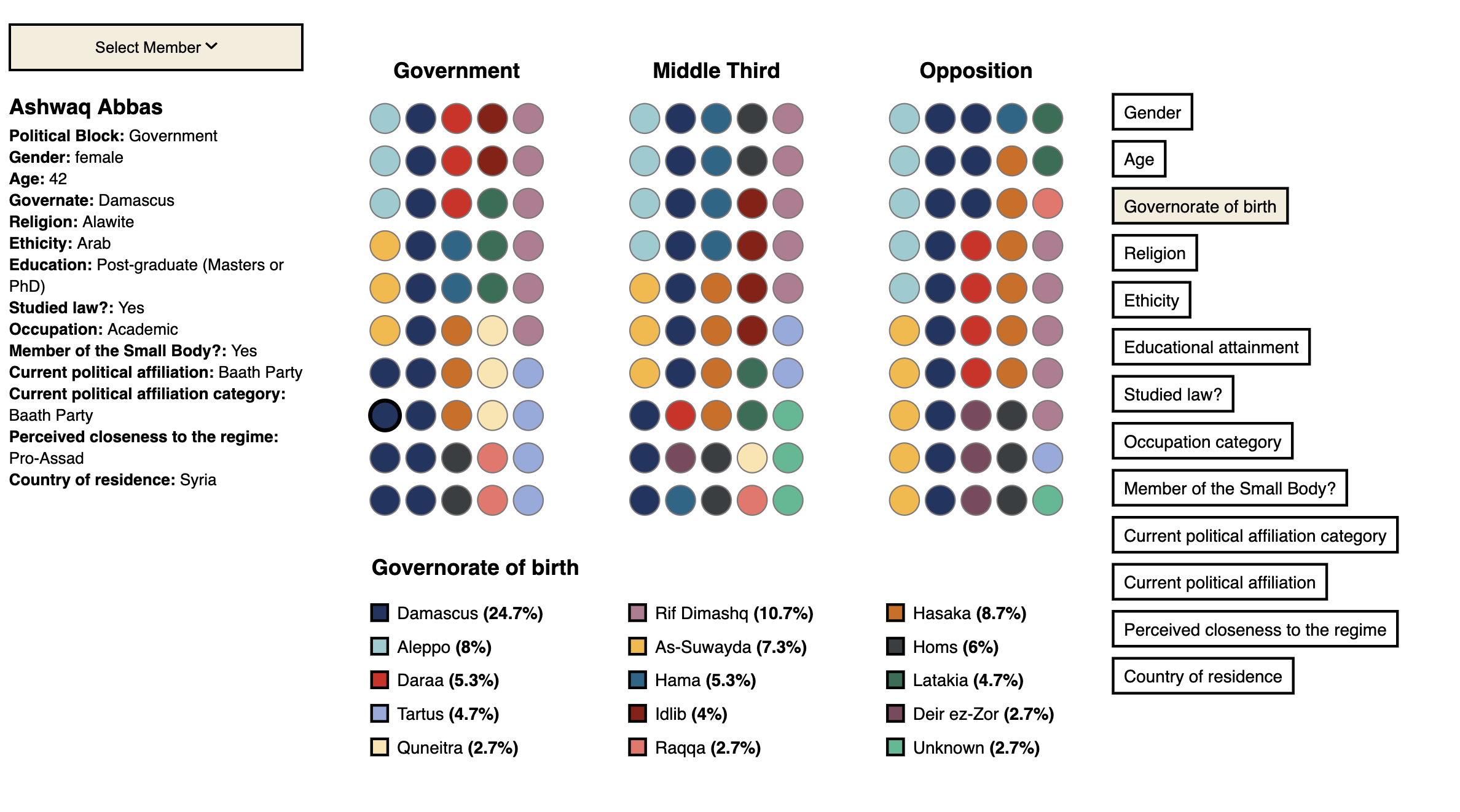
    In areas under the control of both the Syrian regime and Autonomous Administration in North and East Syria (AANES) in Deir ez-Zor Province, the governing bodies are failing to secure the loyalty and support of locals. The security structures built by the regime and the AANES have coopted and incorporated local tribes to a significant extent, but a lack of support from the central governing bodies amid increasing ISIS attacks threatens long-term stability in the province. These two regional dynamics are outlined and compared in this paper to illustrate the dual challenges both governance bodies face in appealing to locals and thwarting the resurgence of ISIS in the area.

    November 3, 2020

    Iraq’s reform program: A white paper with no action plan
    Photo by Murtadha Al-Sudani/Anadolu Agency via Getty Images
  • Analysis
  • Iraq’s reform program: A white paper with no action plan

    Iraq’s economic and fiscal crises, which came to the forefront this year following the onset of the coronavirus pandemic, were bound to happen at some point. What corona and the ensuing drop in oil prices and declining demand for oil did is accelerate the timing, according to the recently released Iraqi government white paper, a report of the Emergency Cell for Financial Reform. What the paper doesn’t predict is that in the next 6-12 months, and possibly beyond, we could see a worsening of the crisis with both current and future governments trying to adjust oil production and revenues in an effort to contain public discontent.

    November 2, 2020

    Shifting Gears: HTS’s Evolving Use of SVBIEDs During the Idlib Offensive of 2019-20
  • Analysis
  • Shifting Gears: HTS’s Evolving Use of SVBIEDs During the Idlib Offensive of 2019-20

    Since May 2019, a series of Syrian loyalist offensives backed by the Russian air force has gradually encroached upon the country’s northwestern Idlib Province, home to the last major pocket of opposition-held territory. As the chief rebel group in control of Idlib, Hayat Tahrir al-Sham (HTS) has employed dozens of suicide car bombs as part of its continued defense of the area. Formally known as suicide vehicle-born improvised explosive devices (SVBIEDs), these weapons have been a cornerstone of the group’s — and by extension, the entire opposition’s — military strategy since early stages of the war, when rebel forces began capturing and holding territory. In an attempt to further understand this strategy and how it has evolved over time, this case study seeks to compare and contrast HTS’s past and current use of SVBIEDs, with a heavy focus on the latter. It will also examine HTS’s evolving SVBIED design, paying particular attention to technical innovations such as environment-specific paint schemes, drone support teams, tablets with target coordinates, and live camera feeds, as well as upgraded main charges.

    October 28, 2020

    Syria and US policy after the election
    Middle East Institute
  • Podcast
  • Syria and US policy after the election

    Charles Lister and Jomana Qaddour join host Alistair Taylor in a discussion about the current situation in Syria, US policy under the Trump administration, and what lies ahead following the presidential election.

    October 23, 2020

    Using the Convention against Torture to hold Syria to account
    A general view of the Peace Palace is seen as Myanmar State Counsellor Aung San Suu Kyi leads its delegation to the International Court of Justice to defend the national interests of Myanmar during Gambia's genocide case against Myanmar on December 11, 2019 in The Hague, Netherlands.
  • Analysis
  • Using the Convention against Torture to hold Syria to account

    Last month, the Netherlands announced its intent to hold Syria responsible for gross human rights violations and torture under the U.N. Convention against Torture (CAT). With only one other case — Belgium v. Senegal — brought to the International Court of Justice (ICJ) under the CAT, the Netherlands is entering relatively uncharted waters. Indeed, it would be the first country to litigate the substance of Article 1 of the Convention. While it is unlikely that the Netherlands’ claims will reach the ICJ for another year or more, its announcement serves as an important step in the push for broader accountability in Syria.

    October 22, 2020